


Chinese Decorative Sculpture
Chinese decorative sculpture brings ritual weight and animal grace into a room through centuries of carved wood, bronze, jade and enamel.
Chinese Decorative Sculpture
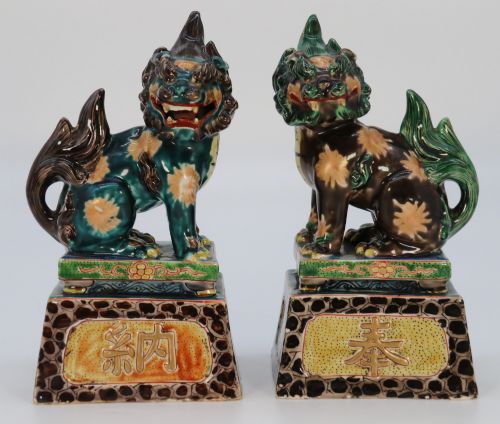
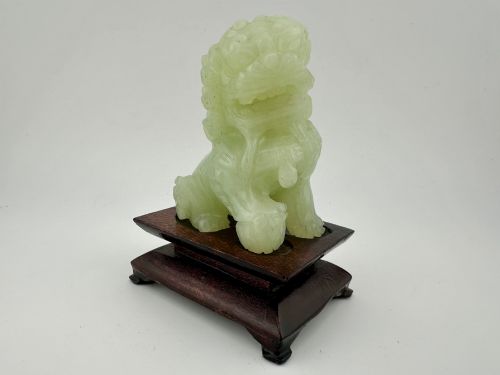
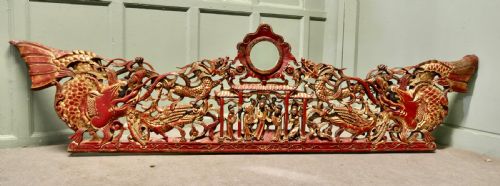
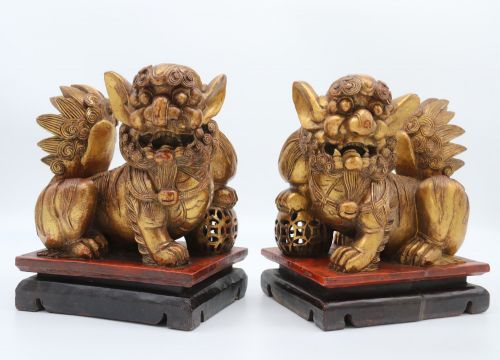
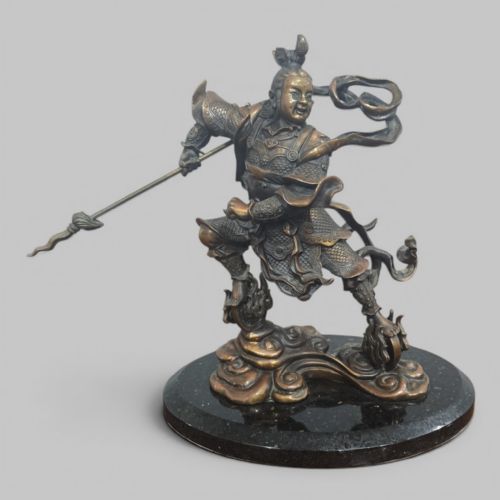
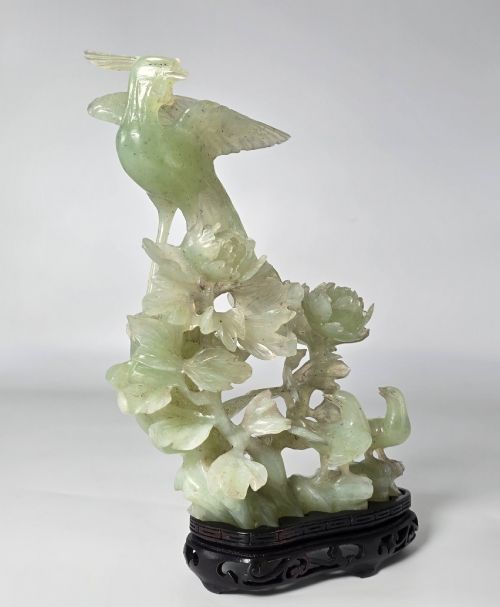
Chinese decorative sculpture spans temple pediments, Foo dogs, birds, and religious figures created across the nineteenth and early twentieth centuries. These pieces appear in carved hardwood, gilt wood and lacquer, cast bronze, cloisonné enamel, and pale green hardstone.
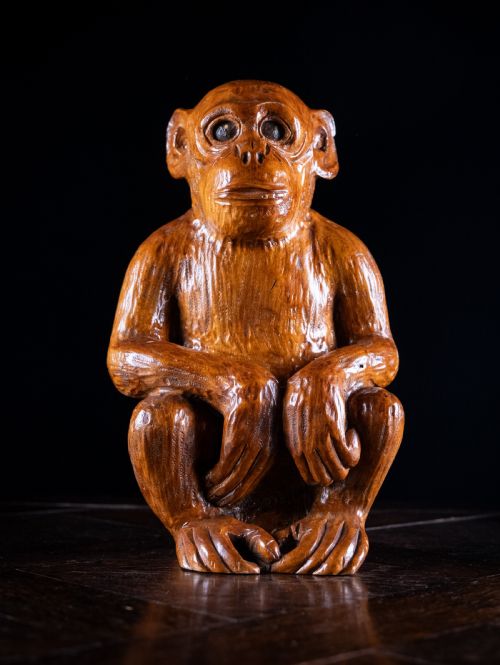
The selection ranges from large architectural carvings and temple pairs to modest desk figures, bonsai jardinières, and bamboo headrests. Animal subjects dominate, including cranes, horses, ducks, elephants, monkeys, and roosters alongside traditional Buddhist and Taoist iconography.
Most examples hail from the Qing dynasty through the Republic period, reflecting traditional craftsmanship adapted for both domestic display and export. Buyers encounter everything from small jade roosters to monumental bronze horses and pairs of cloisonné quails.
Materials and technique
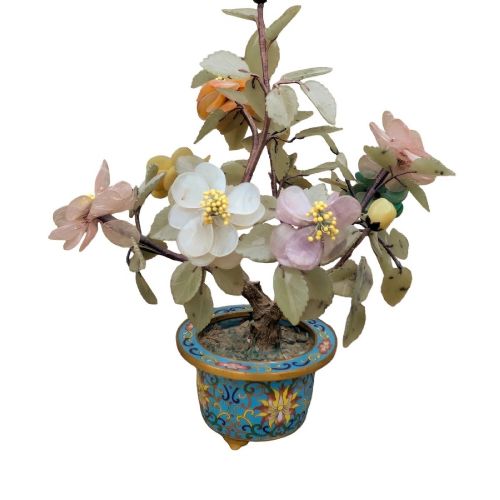
Carvers shaped dense hardwoods, bamboo, and gnarled timber with intricate hand chiselling, sometimes applying gilt and lacquer surfaces to wood figures of Buddhist lions and temple guards. Hardstones such as jade and pale green stone required meticulous abrasive cutting and polishing to render birds and floral bonsai arrangements.
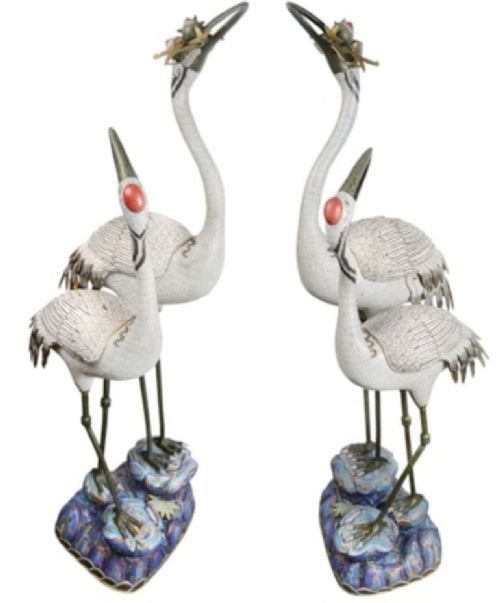
Metalworkers utilised bronze and copper casting alongside cloisonné enamel techniques, soldering delicate wire compartments to form cells that were filled with coloured enamel pastes and fired. Potters employed sancai glazes on earthenware and porcelain figures of horses, ducks, and Luohans following imperial ceramic traditions.
One gnarled timber carving cleverly depicts a man carrying a small boy on his shoulders.
Judging quality
Quality rests in the sculptural confidence of the carving or casting, where the energy of a monkey, horse, or Foo dog remains convincing from every angle. Natural materials show their superiority through the skilful use of grain in wood or the translucency and colour depth in jade and hardstone.
Enamel and ceramic versions depend on the precision of the wirework in cloisonné and the richness of the sancai or Famille Rose glaze application. Pairs maintain higher distinction when both figures match closely in scale, surface wear, and decorative detail.
The Chinese Decorative Sculpture Glossary
- Cloisonné enamel
- A metalwork technique where flat metal wire is soldered onto a bronze or copper base to create compartments filled with enamel paste. These pieces are then fired and polished to a smooth finish.
- Sancai glaze
- A three-colour ceramic glaze tradition using lead-based mineral oxides to produce amber, green, and creamy white tones. This glaze style appears on Tang dynasty style horses and pottery figures.
- Jardinière
- An ornamental pot or vessel designed to hold plants or miniature trees such as decorative bonsai. They frequently incorporate cloisonné enamel, hardstone, and jade flowers.
Chinese Decorative Sculpture: Frequently Asked Questions
Where should I place a bronze horse?
Bronze and brass animal sculptures suit heavy timber sideboards, entrance halls, or library shelves where their weight anchors the display. Their dark patination contrasts well against panelled walls or light stone surfaces.
Keep them away from direct heat sources and damp environments to protect the metal patination over time.
How do I care for cloisonné enamel?
Dust cloisonné enamel gently with a dry microfibre cloth to prevent abrasive particles from scratching the glassy surface. Avoid using chemical cleaners, polishes, or water immersion, which can damage the fine wire cells.
Display these pieces out of direct sunlight to maintain the vibrancy of the coloured enamel pastes.
What is a bamboo headrest?
Bamboo headrests were traditional support items carved from bamboo segments to keep the head elevated during sleep or rest. They double as compact decorative sculptures featuring pierced carving and aged patination.
Position them on a bookshelf or desk where the intricate tubular grain and carved ends remain visible.
How do I distinguish jade from hardstone?
Genuine jade displays a characteristic fibrous microcrystalline structure and a cool, dense weight in the hand. Pale green hardstone and other minerals often show distinct banding, inclusions, or different fracture patterns under close inspection.
Both materials require careful handling to avoid chipping delicate carved extremities like bird beaks or flower petals.
Are these figures from the Qing dynasty?
Many sculptures date from the nineteenth and early twentieth centuries, spanning the late Qing dynasty and the Republic period. Some pieces deliberately adopt earlier Ming or Tang styles while maintaining the manufacturing techniques of their actual production era.
Examine the base, surface wear, and material ageing to understand the true period of creation.