
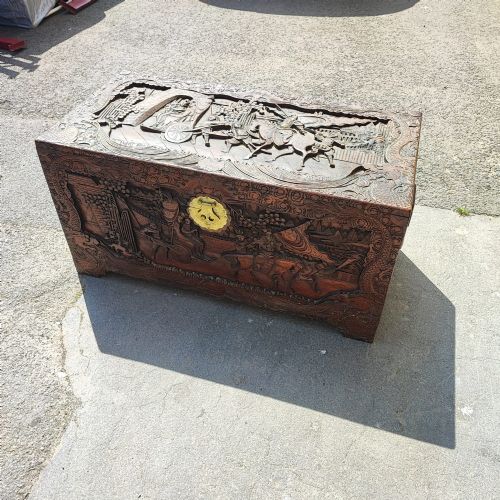
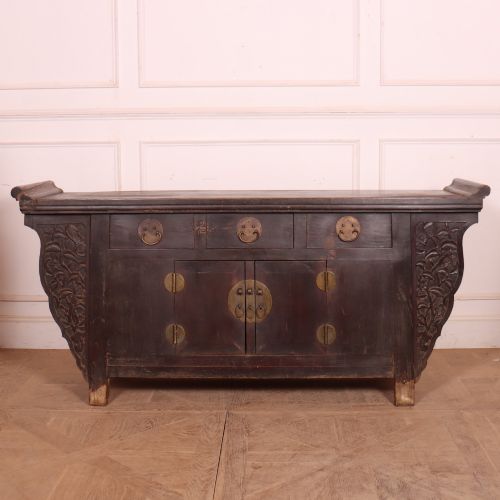


Chinese Carved Storage Chest
A Chinese carved storage chest brings aromatic camphor wood and deep relief carving directly into a room, offering practical storage with distinct cultural heritage.
Chinese Carved Storage Chest
A Chinese carved storage chest primarily takes the form of a camphor wood trunk, blanket box, or coffer designed to protect garments and textiles while providing a decorative focal point.
Buyers will most frequently encounter nineteenth-century examples and pieces from the early twentieth century, spanning periods such as 1900, 1920, and 1930.
Materials and construction methods
Makers utilised fragrant camphor wood and sturdy elm, often combining the timber with brass hardware, brass bindings, and occasional mother-of-pearl inlay.
Surface decoration relies heavily on deep hand-carving techniques, alongside black lacquer, red lacquer, and limed oak finishes seen in later Art Deco interpretations.
Listings feature camphor wood, elm, and brass alongside lacquer and mother-of-pearl inlay, spanning the nineteenth century through to the 1930s.
Distinctions in craftsmanship and design
The depth, crispness, and complexity of the hand-carved relief work set standard production apart from exceptional, highly decorative masterworks.
The choice of primary timber and secondary materials, such as heavy brass mountings or intricate mother-of-pearl inlay, dictates the overall presence and refinement of the piece.
The Chinese Carved Storage Chest Glossary
- Camphor wood
- Aromatic timber traditionally utilised for storage chests because its natural scent repels insects. It remains the most prevalent material found in these trunks.
- Coffer
- A robust box or chest historically used for holding valuables and textiles. These sturdy items double easily as low coffee tables in contemporary interiors.
- Chinese Export
- Items manufactured in China specifically for Western markets during the nineteenth and early twentieth centuries. These pieces often blend traditional Eastern forms with Western aesthetic preferences.
- Black lacquer
- A durable, polished resin finish applied to wooden surfaces in multiple layers. It provides a deep, glossy dark ground often contrasted with intricate carving or inlay.
- Brass-bound
- Furniture reinforced with brass corners, straps, and corner brackets. This hardware originally added structural strength for maritime travel and luggage transport.
Chinese Carved Storage Chest: Frequently Asked Questions
How do I use a camphor chest at home?
These chests function exceptionally well at the foot of a bed for spare blankets or as a low coffee table in a living room.
The natural aromatic properties of the timber also make them suitable for storing woollens and linens safely away from moths.
How do I care for lacquered cabinets?
Keep lacquered surfaces away from direct sunlight and excessive heat to prevent the finish from drying or cracking over time.
Dust gently with a soft, dry cloth and avoid harsh chemical polishes that can damage historical finishes.
What is the difference between a trunk and a coffer?
Trunks generally feature hinged lids designed primarily for travel and portable storage of personal luggage and garments.
Coffers are typically heavier, stationary storage boxes built with sturdier frames for domestic household use.
How do I date a Chinese carved chest?
Examining the joinery, hardware style, and the depth of the carving helps place a piece within the nineteenth or early twentieth century.
Specific stylistic indicators, such as Art Deco limed oak influences, point precisely to the period around 1930.