




Vintage Camphor Wood Chest
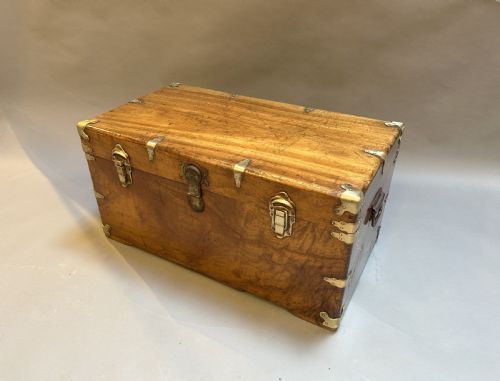
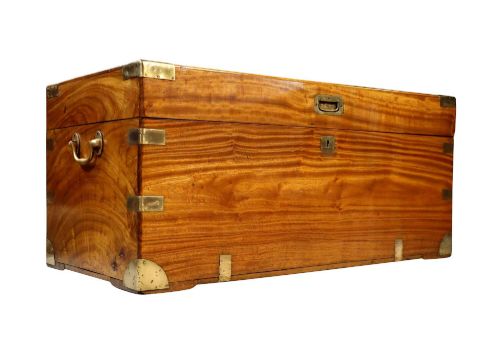
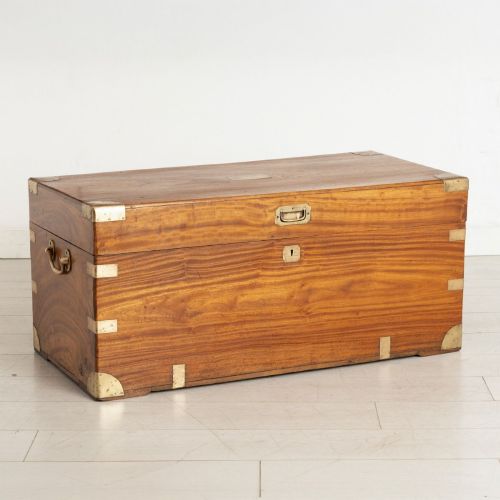
A vintage camphor wood chest is a durable travel trunk or storage box prized for its aromatic timber and robust military hardware.
Vintage Camphor Wood Chest
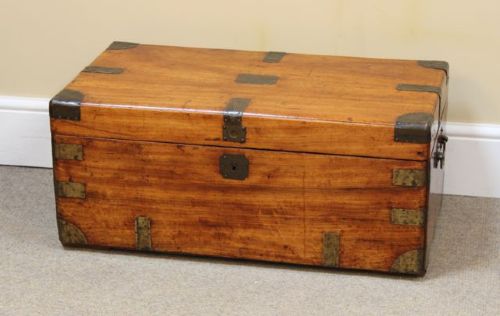
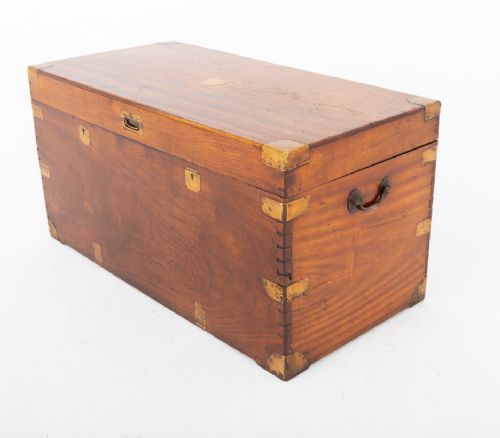
When you examine a vintage camphor wood chest on this page, you are looking at practical storage boxes and trunks built for travel and trade across the nineteenth and early twentieth centuries. These pieces appear in forms ranging from simple blanket boxes and steamer trunks to structured military campaign chests and Chinese export luggage.
The pieces listed here date from the nineteenth century through the 1930s, encompassing Victorian military styles alongside traditional Chinese and Ceylonese workshop items. Buyers seek these trunks for their distinctive natural timber scent, which traditionally deterred insects, and their robust construction designed for long voyages.
How they were made
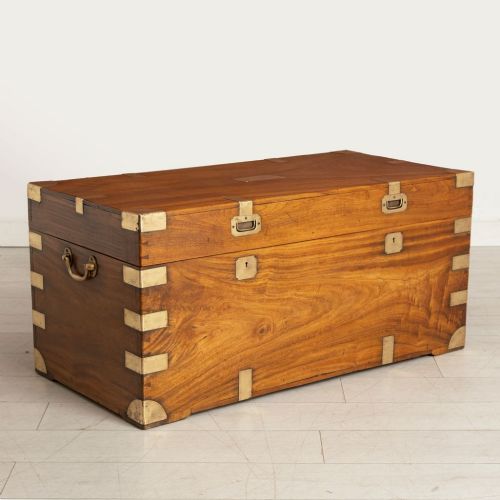
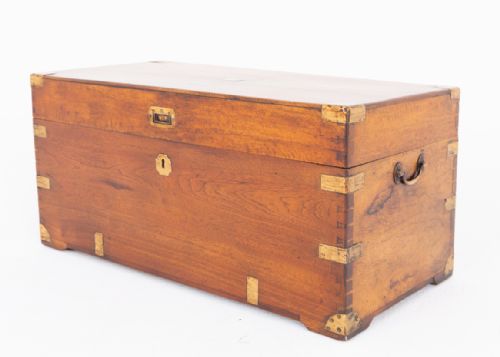
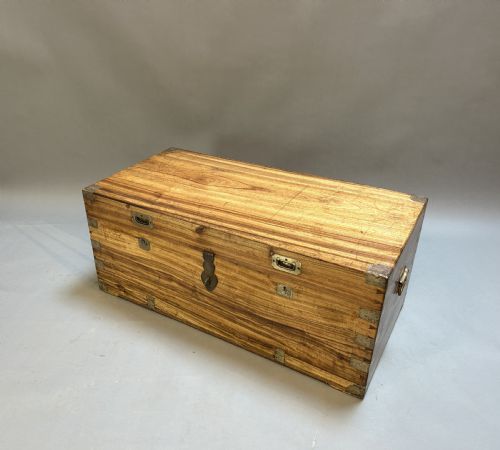
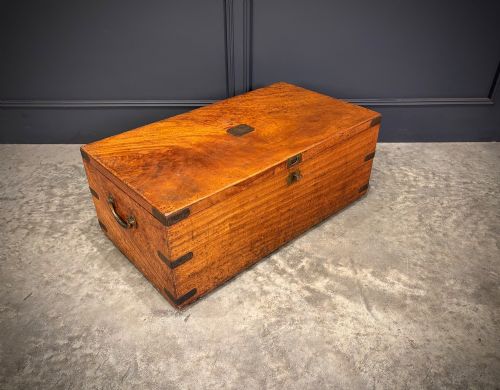
Maker workshops built these trunks primarily from solid camphor wood or camphorwood, chosen for its insect-repelling qualities and stability. The timber is frequently paired with brass bindings, corner brackets, flush handles, and iron fittings to protect the edges during transit.
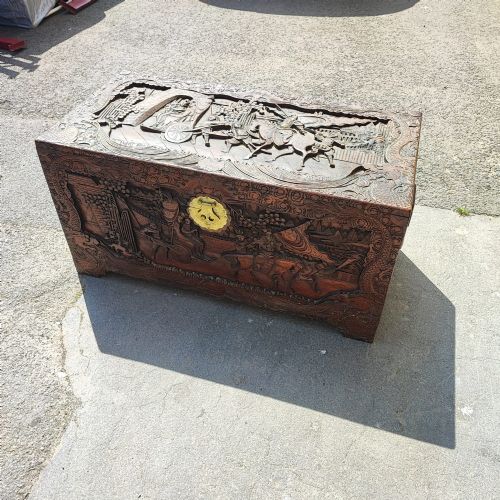
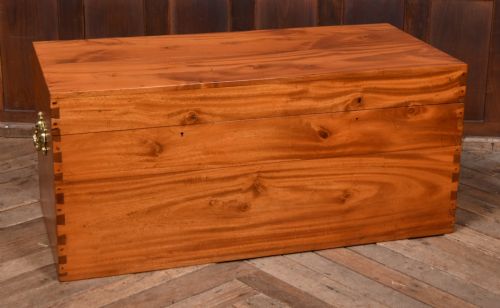
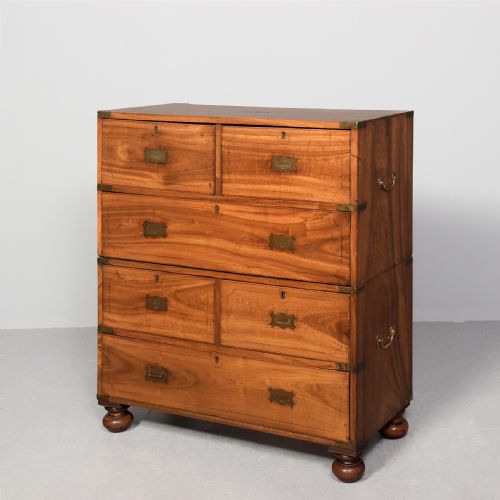
Many examples feature specialised construction such as two-part modular campaign chests or fitted interiors designed for military officers and overseas travellers. Surface finishes vary from plain polished wood and red leather coverings to deeply carved oriental reliefs and polychrome painted details.
Listings span the nineteenth century through the 1930s, featuring materials such as camphor wood, brass, iron, and leather.
What varies in quality
Quality in these chests rests upon the structural integrity of the timber and the standard of the metal hardware. Heavy brass binding, original corner mounts, and functional locking mechanisms distinguish high-grade military pieces from simpler domestic storage boxes.
The refinement of the joinery and the depth of any carved ornamentation also define the tier of the piece. Crisp hand-carved panels on Chinese export trunks or well-engineered two-part campaign divisions separate superior workshop production from standard utility luggage.
The Vintage Camphor Wood Chest Glossary
- Campaign chest
- A modular wooden chest built in two or more sections with recessed brass handles, designed to dismantle easily for military travel.
- Camphor wood
- An aromatic hardwood native to Asia, known for its insect-deterring properties and pale to rich honey-brown grain.
- Brass binding
- Metal reinforcement strips fixed along the edges and corners of a trunk to withstand heavy travel and rough handling.
- Steamer trunk
- A lower-profile luggage chest designed to fit easily beneath the cabin berths of passenger ships during the early twentieth century.
- Chinese export
- Goods manufactured in China specifically for Western markets, often combining traditional carpentry with European furniture forms.
Vintage Camphor Wood Chest: Frequently Asked Questions
What are vintage camphor wood chests?
These pieces are sturdy storage trunks and travel chests constructed primarily from aromatic camphor timber. They were utilised by military officers and international traders for transporting personal belongings across long sea voyages.
Today, they serve as practical household storage for blankets and clothing while adding a distinctive historical aesthetic to a room.
Do camphor wood chests still smell?
Yes, genuine camphor wood retains its characteristic aromatic scent for decades, though the intensity can vary depending on age and previous exposure. Lightly sanding the interior can sometimes refresh the natural fragrance if it has faded over time.
This distinct scent is precisely why the wood was originally selected to protect stored garments from moths and insects.
How should I care for a camphor trunk?
Keep the wood away from direct heat sources and strong sunlight to prevent the natural timber from drying out or splitting. Dust the surface regularly with a dry cloth and occasionally apply a neutral beeswax to maintain the finish.
Avoid using harsh chemical polishes that might damage the antique surface or alter the natural aroma of the wood.