
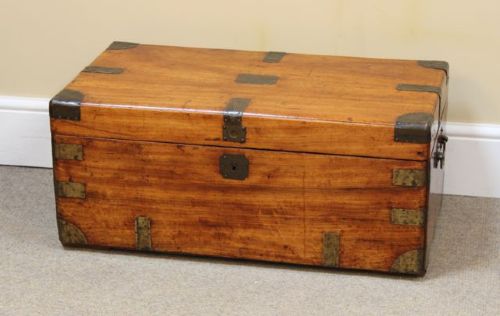
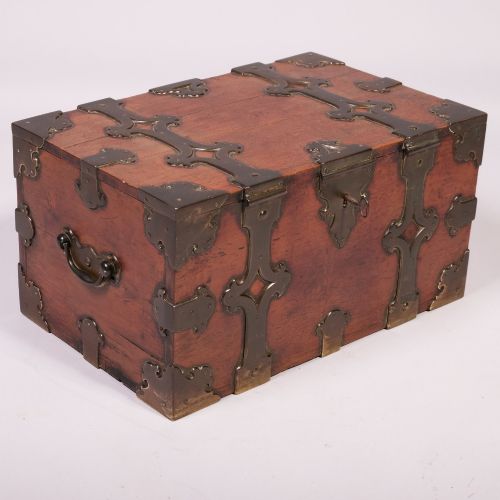
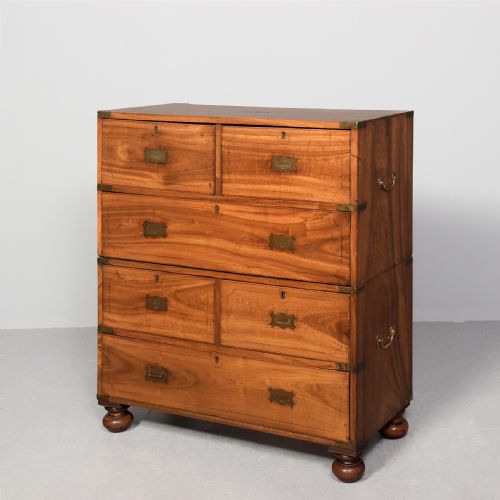


Chinese Campaign Trunk
A Chinese campaign trunk is a robust wooden chest built for travel, offering sturdy storage and distinct historical character.
Chinese Campaign Trunk
When you search for a Chinese campaign trunk, you encounter travel chests designed for colonial officers and traders, frequently constructed in camphor wood. The examples found here span from the eighteenth century to the early twentieth century, including pieces from the Victorian era and the 1920s.
Most items on this page appear as storage chests, trunks, or coffers, alongside smaller boxes and caskets. The selection includes two-part military chests, travelling boxes, and brass-bound trunks made for export.
Originating through trade and military movement, these pieces merge traditional forms with practical travelling requirements. Buyers frequently meet Anglo-Chinese, Chinese Export, and China Trade variants across the listings.
How they were made
Makers constructed these pieces primarily using solid camphor wood, valued for its insect-repelling properties during long voyages. Workshops incorporated secondary timbers, burl wood, and Hongmu, applying black lacquer, pigment, or leather finishes to the exterior.
To withstand transit, craftsmen reinforced corners, edges, and seams with heavy brass or copper mountings and bound the structures in metal. Two-part constructions allowed large chests to separate into manageable sections for military transport.
Opening an antique camphor wood chest releases a sharp, enduring aroma that has survived decades of international travel.
What varies in quality
Quality separates simple utility boxes from finer export pieces through the weight of the timber and the precision of the brass mounts. Solid camphor wood chests with integrated metal hardware and intact lacquer or leather coverings represent the higher tier of production.
The sophistication of the joinery and the presence of specialised compartments, such as those found in travelling jewellery boxes or two-part military chests, distinguish superior examples. Scale also plays a role, ranging from small caskets to very large trunks.
The Chinese Campaign Trunk Glossary
- Camphor wood
- A fragrant timber native to Asia, utilised for its durability and natural insect-repelling qualities in storage chests. It forms the primary material for the majority of these travelling trunks.
- Campaign trunk
- A portable chest designed for military officers or travellers on the move, featuring reinforced corners and secure metal bindings. These pieces frequently separate into modular sections for ease of transport.
- Chinese Export
- Goods manufactured in China specifically for Western markets during the eighteenth and nineteenth centuries. These items combine traditional Eastern craftsmanship with European functional demands.
- Hongmu
- A dense, dark hardwood category used in traditional Chinese furniture and travelling boxes. It provides exceptional weight and a polished finish.
- Coffre fort
- A strongbox or heavily secured chest utilised for transporting valuables during travel. Examples appear with brass mountings and robust locking mechanisms.
Chinese Campaign Trunk: Frequently Asked Questions
What is a Chinese campaign trunk?
A Chinese campaign trunk is a portable wooden chest, frequently made of camphor wood and bound in brass, designed for travel and colonial use.
These pieces range from large storage trunks to smaller travelling boxes and jewellery cases dating from the eighteenth to the early twentieth century.
How were campaign trunks used?
Officers, merchants, and travellers utilised these trunks to transport uniforms, documents, and valuables across long sea and land journeys.
The robust construction and secure metal mounts protected contents from moisture and rough handling during transit.
Why use camphor wood?
Camphor wood emits a strong, distinct aroma that naturally deters insects and moths, protecting stored textiles and garments.
This timber also resists moisture, making it ideal for trunks subjected to maritime climates and long voyages.
How do I date a trunk?
Dating relies on stylistic clues, materials, and construction methods, ranging from eighteenth-century caskets to Victorian and 1920s lacquer examples.
Earlier pieces often feature heavier brass mounts and traditional export designs, while later items reflect changing Victorian and twentieth-century tastes.