
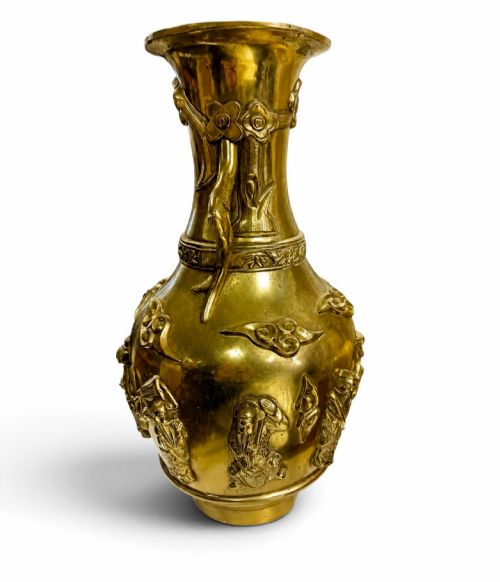


Chinese Bronze Baluster Vase
A Chinese bronze baluster vase brings heavy, sculptural presence and rich patination to a room, forged in classic trumpet-neck proportions.
Chinese Bronze Baluster Vase
When you search for a Chinese bronze baluster vase, you are looking at substantial metal vessels defined by a flared foot, swelling body and trumpet neck. The examples you are most likely to meet on this page hail primarily from the nineteenth century, often bearing high-relief casting or dragon motifs.
These pieces encompass both ancient metalwork and nineteenth-century interpretations of archaic forms. Alongside traditional bronze, the listings show related copper-alloy and champleve enamel variations produced for export and domestic collections.
Many of these vases have been adapted over time into table lamps, incorporating ormolu mounts while retaining their original baluster silhouette. Whether kept in their original form or wired for modern lighting, they anchor a mantelpiece or side table with distinct historical weight.
How they were made
Makers shaped a Chinese bronze baluster vase through detailed casting techniques, frequently employing high-relief methods to depict Daoist immortals, dragons and intricate patterns. These metal surfaces often display deep patination achieved through controlled cooling and finishing processes.
Surface decoration frequently incorporated champleve enamel work, where vitreous enamel fills recessed channels cut directly into the bronze. Other variations combine the cast metal body with added ormolu mounts and gilt highlights to enrich the final appearance.
Some nineteenth-century artisans thoughtfully included twin-dragon base marks, giving even the dragons a place to anchor their feet.
What varies in quality
Quality in a Chinese bronze baluster vase rests heavily on the crispness and depth of the casting. Pieces featuring sharp, high-relief details like dragons or figures demonstrate superior workmanship compared to softer, flat surfaces.
The integrity of the material and the richness of the patination distinguish finer examples. Furthermore, the presence of well-executed base marks or integrated champleve enamel elevates the artistic ambition of the piece.
The Chinese Bronze Baluster Vase Glossary
- Baluster
- A tall vase form characterised by a rounded body that tapers towards the base and flares at the neck. This silhouette echoes classical architectural pillars.
- Champleve
- An enamelling technique where troughs or cells are carved into the bronze surface and filled with vitreous paste before firing. This creates vibrant coloured patterns against the metal.
- Ormolu
- Gilded bronze mounts cast and finished to adorn decorative objects. These mounts frequently frame nineteenth-century adaptations of Asian vessels.
- Archaistic
- A design style that consciously imitates the ancient forms, bronzes and motifs of earlier dynasties. Makers used these archaic references to lend a sense of deep history.
- Celadon
- A type of jade-green or grey-green glaze found on related ceramic pieces. It appears alongside bronze examples within the broader scope of these listings.
Chinese Bronze Baluster Vase: Frequently Asked Questions
How do I date these bronzes?
Dating relies on examining the casting style, surface patination, and any associated marks on the base. Nineteenth-century examples often display specific high-relief techniques and distinct alloy compositions.
Comparing the workmanship and decorative motifs against documented historical periods helps narrow down the probable era of manufacture.
Can I use these vases as lamps?
Many of these vessels have been safely converted into table lamps over the decades. These adapted pieces often incorporate ormolu mounts or custom fittings to support a shade.
Such conversions allow heavy metal antiques to function in modern interiors while preserving the integrity of the original body.
What motifs appear on them?
Common decorative elements include dragons, Daoist immortals and intricate geometric borders. These are frequently cast in high relief to create strong shadows and tactile depth across the bronze surface.
Such imagery draws upon traditional symbolism and historical narratives deeply rooted in East Asian art.