



Chinese Bird Painting
These pieces of chinese bird painting capture feathered subjects across delicate silk, paper and porcelain from the eighteenth century onwards.
Chinese Bird Painting
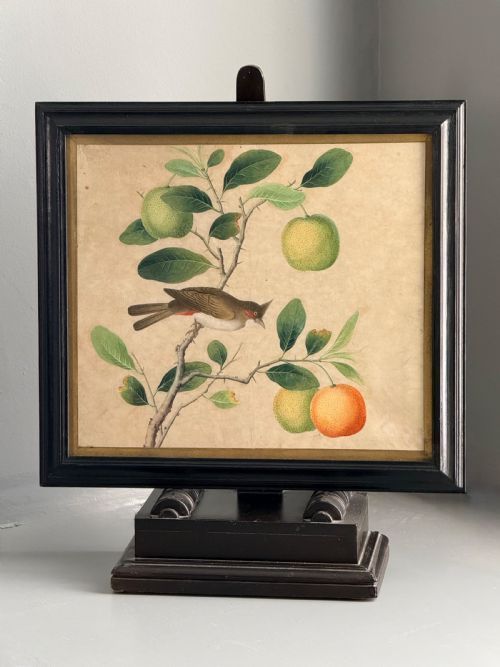
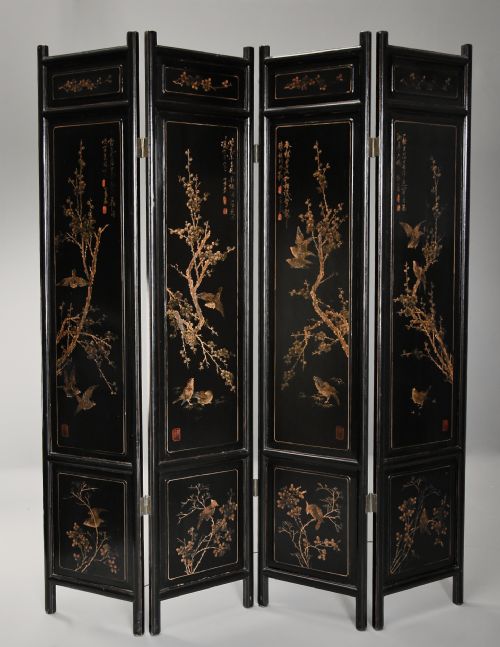
A chinese bird painting brings avian subjects into domestic interiors through diverse material forms, spanning watercolours on pith paper and silk scrolls to painted porcelain vessels and lacquer screens.
The evidence shows works emerging across the eighteenth, nineteenth and twentieth centuries, produced in single sheets, framed artworks, multi-leaf sets and painted ceramics.
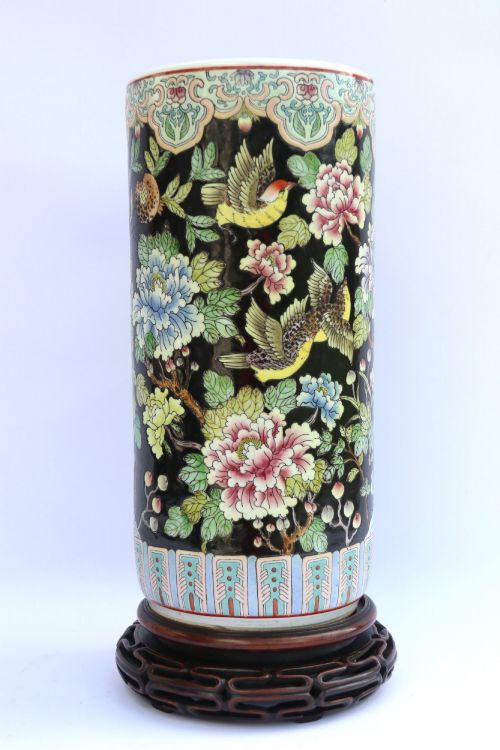
Buyers frequently encounter nineteenth-century watercolour studies on pith paper and silk, alongside famille rose and famille noire porcelain depicting birds among blossom branches and flora.
Materials and Technique
Watercolour and gouache pigments are applied directly to delicate plant-derived pith paper or woven silk grounds, capturing fine feather details and botanical accuracy.
Ceramic pieces utilise porcelain bodies decorated with famille rose, famille noire or sancai glazes, often fired with specific period marks.
Framed works, wall hangings and screens incorporate wooden supports, brass fittings, enamel and reverse-painted mirror glass to frame the avian imagery.
Exotic parrots and plump ducks share the brushwork alongside traditional pheasants and small birds among blossom branches.
Standards of Execution
Superior examples demonstrate confident brushwork and precise pigment saturation, particularly in the rendering of plumage, eyes and surrounding botanical elements like plum blossom and peonies.
Condition and medium integrity separate finer survivors from heavily distressed pieces, especially with fragile pith paper and delicate silk hanging scrolls.
The harmony of the composition, whether on a porcelain vase, a lacquer screen or a framed watercolour set, determines the overall visual success of the piece.
The Chinese Bird Painting Glossary
- Pith paper
- A delicate material cut from the pith of the Tetrapanax papyrifer plant, commonly used in nineteenth-century watercolour paintings for its velvety surface texture.
- Famille rose
- A prominent palette of opaque enamel colours dominated by pink or rose, introduced during the Qing dynasty and widely seen on porcelain jars and plates.
- Famille noire
- A ceramic glaze family defined by a glossy black ground that highlights brightly enamelled birds and floral motifs.
- Sancai glaze
- A traditional three-colour lead glaze technique used on pottery, creating mottled green, amber and cream effects.
- Chinoiserie
- European decorative style reflecting Chinese artistic motifs, often found applied to lacquered furniture and cupboards depicting birds and flowers.
Chinese Bird Painting: Frequently Asked Questions
How do I care for pith paper paintings?
Keep pith paper works away from direct sunlight and high humidity, as the plant-derived material is sensitive to moisture and light damage.
Display them behind UV-filtered glass and maintain stable indoor temperatures to preserve the delicate watercolours.
What is the difference between pith and silk works?
Pith paper is a soft, spongy plant material that takes watercolour with a unique velvety depth, whereas silk offers a tightly woven, shimmering fabric ground.
Silk pieces often appear as hanging scrolls or framed studies, while pith paintings generally survive as smaller independent sheets.
How are these paintings usually displayed?
Framed works and wall hangings suit living spaces and studies, while porcelain vases and jars function as freestanding decorative objects on hardwood stands.
Screens and room dividers integrate bird motifs into larger architectural layouts.
Are these works signed by artists?
Some pieces feature stamps, signatures or seal marks, while many nineteenth-century export works were produced by studio workshops without individual artist signatures.
Imperial or transitional pieces may carry period marks that help indicate their approximate era.