


Chinese Wall Decor
Chinese antique wall decor brings rich narrative and craftsmanship into a room, offering everything from carved panels to embroidered birds.
Chinese Wall Decor
Chinese antique wall decor encompasses a varied group of hanging artefacts spanning centuries of domestic and artistic production.
Buyers searching for chinese antique wall decor commonly encounter carved wooden plaques, lacquered platters, painted glass, and embroidered silk panels.
Pieces range from traditional nineteenth-century export works and Qing dynasty items to mid-century oil paintings and early twentieth-century decorative pieces.
How they were made
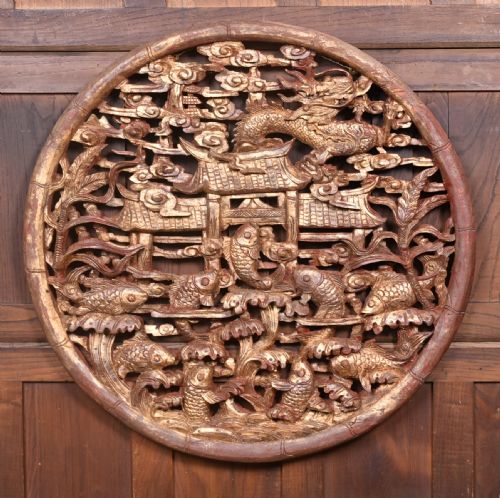
Wood serves as the primary structural base, often shaped into carved panels, platters, or architectural elements like painted cart doors.
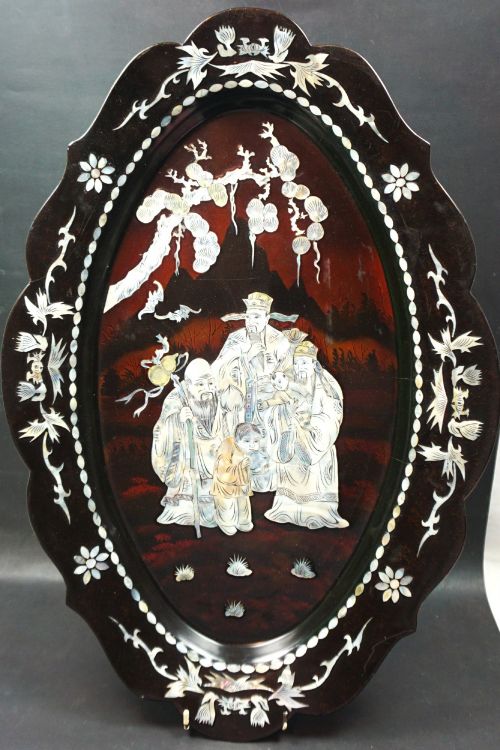
Surface decoration relies heavily on detailed lacquering, mother of pearl inlay, gilding, and fine silk embroidery depicting garden scenes and wildlife.
Glass and canvas also appear, utilised for reverse paintings and traditional oil or watercolour compositions.
One listed item began life as a four-foot painted cart door before finding a second career as large-scale interior wall art.
What varies in quality
Quality rests in the precision of the carving, the depth of the lacquer, and the fineness of the needlework or brushwork.
Superior examples demonstrate careful hand-finishing, well-preserved inlay work, and robust materials that retain their structural integrity over generations.
E. Cremer
The Chinese Wall Decor Glossary
- Qing Dynasty
- The final imperial dynasty of China, lasting from 1644 to 1912. Pieces from this era often show high levels of traditional craftsmanship.
- Chinoiserie
- European artistic style reflecting Chinese artistic influences. This aesthetic was widely adopted in Western decorative arts.
- Mother of Pearl
- Iridescent inner layer of a shell used for inlay work. Craftsmen shape it into tiny pieces to catch the light on dark lacquered surfaces.
- Reverse Painting on Glass
- Technique where an image is painted directly onto the back of a piece of glass and viewed from the front. This method creates a glossy, vibrant finish.
- Giltwood
- Wood that has been treated with gold leaf or gold paint. It adds a reflective, decorative quality to carved panels and architectural fragments.
Chinese Wall Decor: Frequently Asked Questions
Are silk embroideries sensitive to sunlight?
Silk threads and natural dyes fade quickly when exposed to direct, strong sunlight. Hang embroidered textile panels away from south-facing windows to preserve their colour.
Consider UV-protective glass if framing delicate silk works to prevent degradation over time.
What is the difference between reverse glass paintings and watercolours?
Reverse glass paintings are executed on the rear surface of the glass pane, protecting the paint layer from dust and moisture. They possess a distinctive glossy sheen.
Watercolour and silk paintings remain exposed on paper or fabric, requiring protective framing behind standard glazing.
How should I clean lacquered wood and mother of pearl?
Dust lacquered surfaces gently with a soft, dry microfibre cloth. Avoid chemical polishes, water, or abrasive cleaners which damage the delicate finish.
Mother of pearl inlay requires no special treatment beyond gentle dusting to maintain its natural iridescence.