
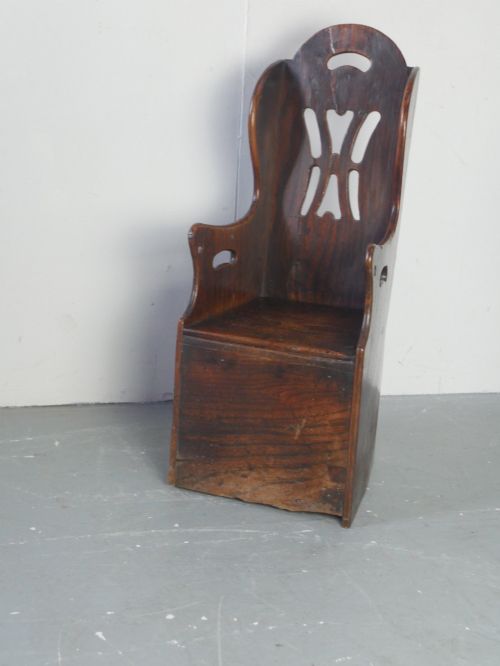
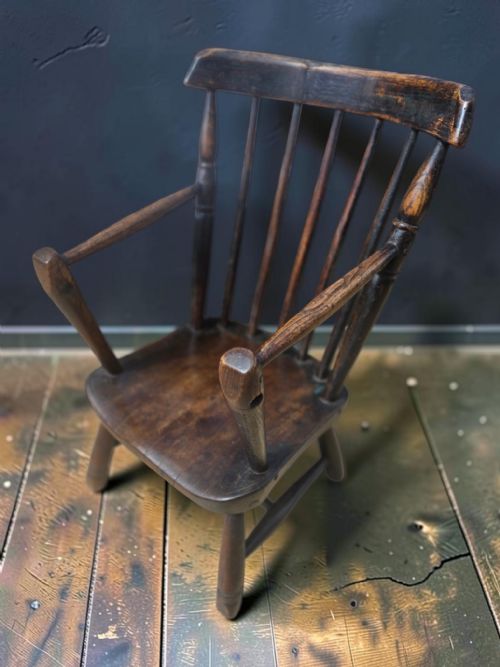
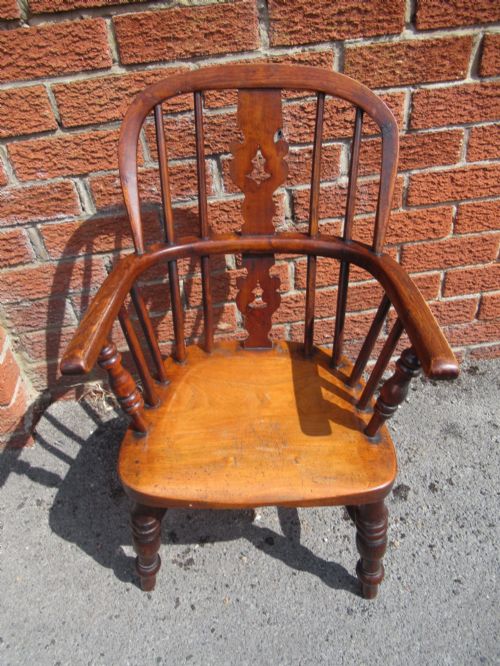


Childs Elm Armchair
A childs elm armchair is a miniature vernacular seat scaled for the nursery, offering rustic character and traditional joinery.
Childs Elm Armchair
When you search for a childs elm armchair, you encounter compact vernacular seating produced across the eighteenth and nineteenth centuries. These pieces translate full-scale country chair designs into miniature proportions for young children.
The examples on this page predominantly span the Georgian and Victorian eras, reflecting English regional furniture traditions. You find stick backs, Windsor forms, and occasional rocking or potty variants among the selection.
Makers built these chairs for domestic nursery use rather than formal display, which accounts for their sturdy construction and practical forms. Elm frequently pairs with ash, yew, or beech in these regional pieces.
How they were made
Cabinet makers and local bodgers utilised solid elm for seats, often pairing it with bent ash for hoops and spindles. This combination provided the necessary strength for daily childhood use.
Turned components like legs and stretchers were shaped on pole lathes using native hardwoods such as beech and fruitwood. Yew appears in higher status examples, offering rich grain patterns and durability.
The listings show regional English chairs built from elm, ash, yew, oak, beech, and fruitwood across the Georgian and Victorian eras.
What varies in quality
The standard of timber selection and the complexity of the turning dictate the tier of a childs elm armchair. Plainer stick backs sit at one end, while figured yew Windsors with crinoline stretchers represent finer regional work.
Proportion and patination separate standard nursery seating from exceptional vernacular examples. Original surfaces and honest wear without excessive restoration preserve the integrity of these miniature chairs.
The Childs Elm Armchair Glossary
- Windsor
- A chair built with a solid wooden seat into which the legs and back spindles are wedged directly. This construction method defines many traditional country seating forms.
- Crinoline stretcher
- A curved metal or wooden brace linking the legs of a chair to provide extra stability. You see this feature on superior regional Windsor chairs.
- Vernacular
- Furniture made by local craftsmen following regional traditions rather than metropolitan pattern books. These pieces rely on available local timbers like elm and ash.
- Splat back
- A chair back featuring a central vertical wooden slat or splat framed by uprights. This design appears in various regional country seating formats.
- Potty chair
- A specialised childs chair featuring a cut-out seat to accommodate a chamber pot underneath. These functional pieces date primarily from the Georgian period.
Childs Elm Armchair: Frequently Asked Questions
What is a childs elm armchair?
A childs elm armchair is a small-scale country chair built with a solid elm seat and traditional wooden framing. These pieces date from the eighteenth and nineteenth centuries.
They replicate full-sized vernacular seating designs for domestic nursery use. The construction typically employs regional timbers alongside elm.
How old is my childs elm armchair?
Dating relies on stylistic clues such as spindle turning, hoop shapes, and stretcher designs. Georgian examples often feature slender components and yew wood.
Victorian pieces tend to show heavier proportions and different timber combinations like ash and elm. Regional variations also help narrow down the period of manufacture.
Were these chairs used by children?
These seats were made for everyday use by young children in domestic settings. The sturdy construction allowed them to withstand active nursery environments.
Some versions included rocking mechanisms or potty cut-outs for specific daily routines. Their survival demonstrates the durable nature of vernacular country furniture.
What woods were used?
Elm served as the primary timber for solid carved seats due to its resistance to splitting. Ash and beech provided flexible material for bent hoops and turned spindles.
Finer examples occasionally incorporated yew wood or fruitwood for visual contrast and durability. Regional makers utilised whatever local timber was readily accessible.
How do I care for antique elm?
Maintain stable indoor humidity levels to prevent the timber from drying out or splitting. Avoid placing the chair near direct heat sources or strong sunlight.
Apply traditional wax polish occasionally to nourish the surface and preserve the patination. Gentle dusting with a dry cloth is sufficient for routine upkeep.