
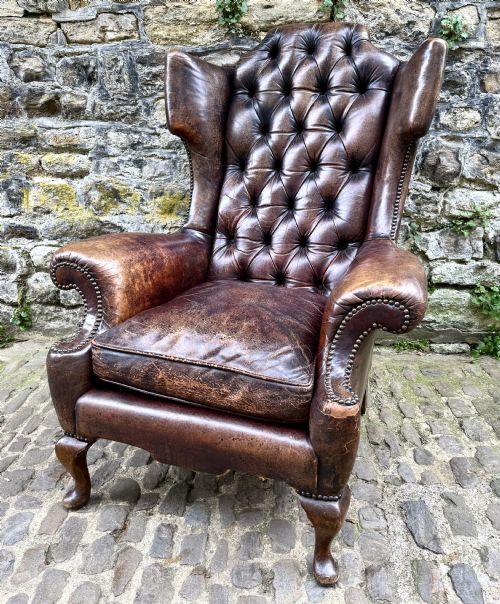


Chesterfield Wing Chair
A chesterfield wing chair delivers deep seating comfort and traditional presence, combining high protective sides with buttoned leather upholstery.
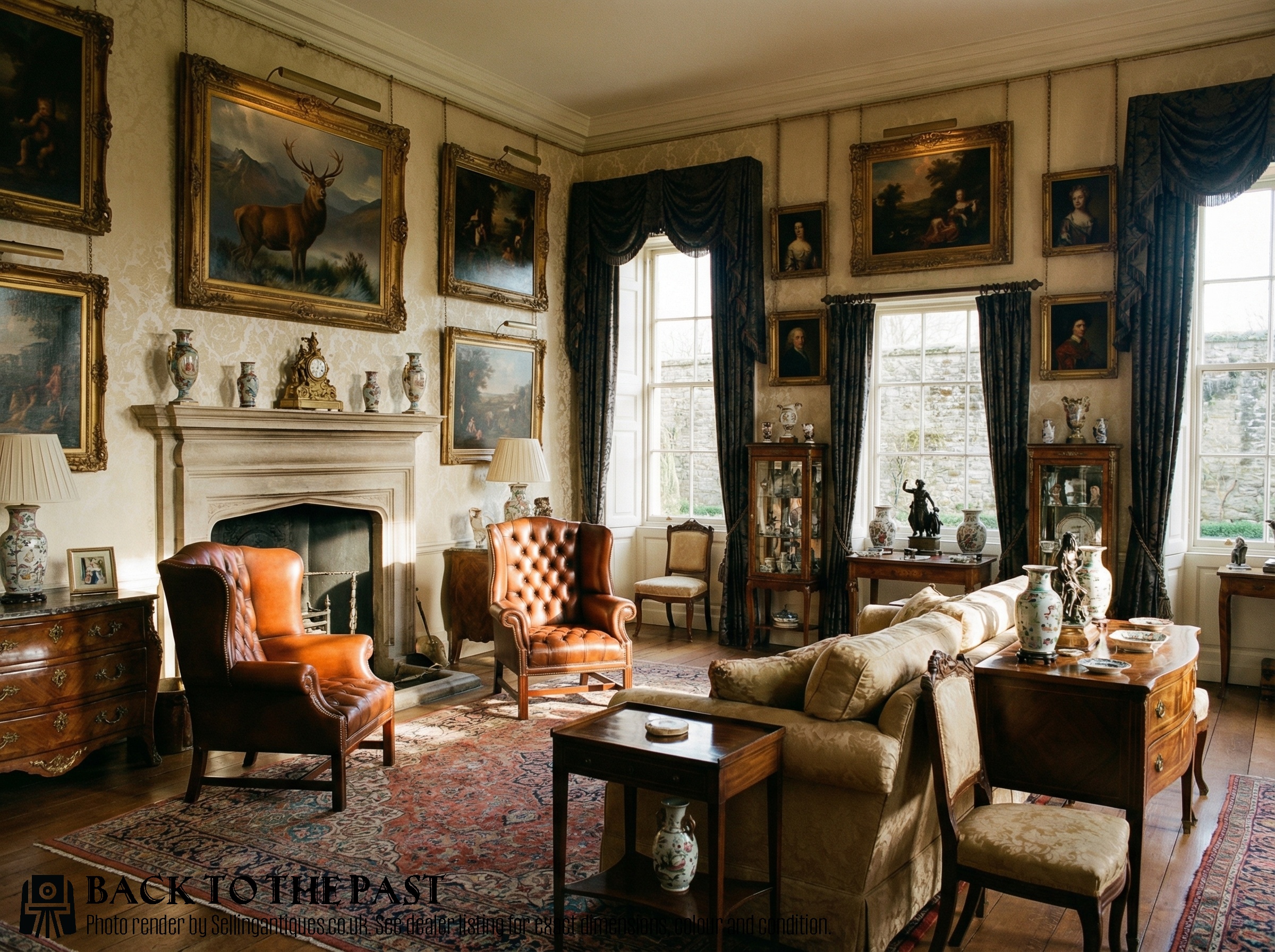
Chesterfield Wing Chair
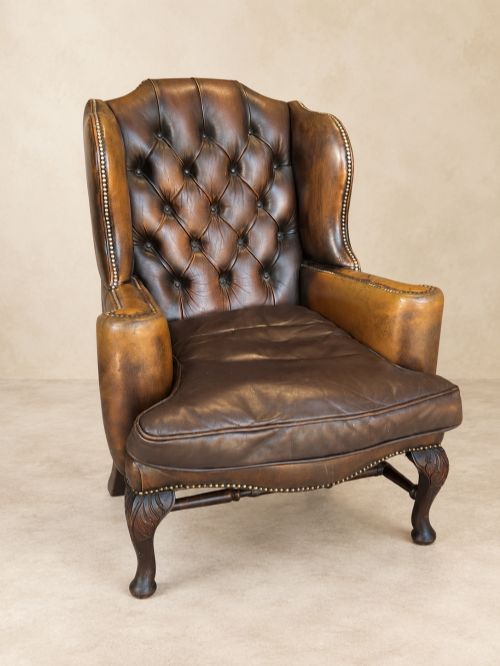
A chesterfield wing chair combines the high side panels designed to block draughts with the deep buttoned upholstery characteristic of the classic chesterfield form. These armchairs appear in periods ranging from the eighteenth century to the twentieth century, including Victorian, Edwardian, and Georgian revival examples.
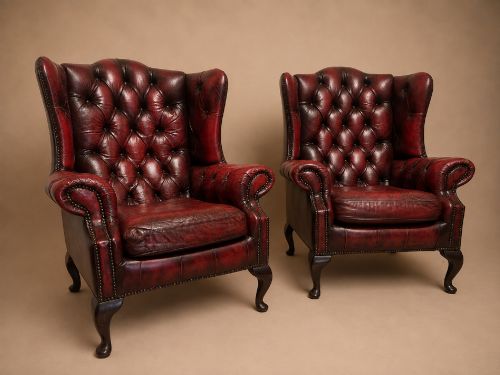
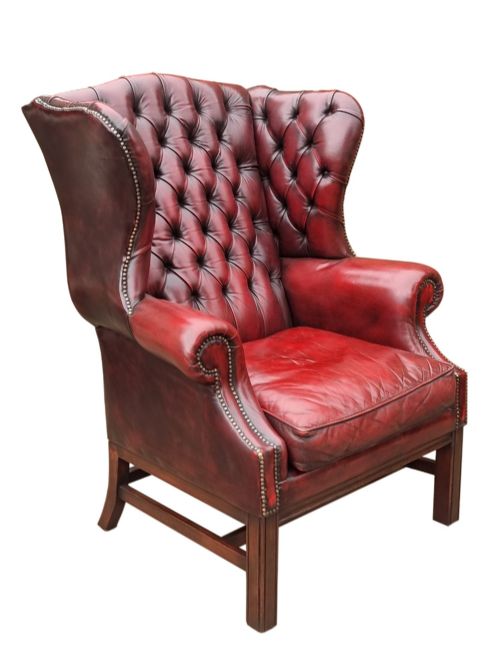
The most common variations seen on this page utilise leather upholstery in shades of brown, tan, oxblood, and green. Formats include single armchairs, pairs, and examples accompanied by footstools or porters chair designs.
Materials and construction
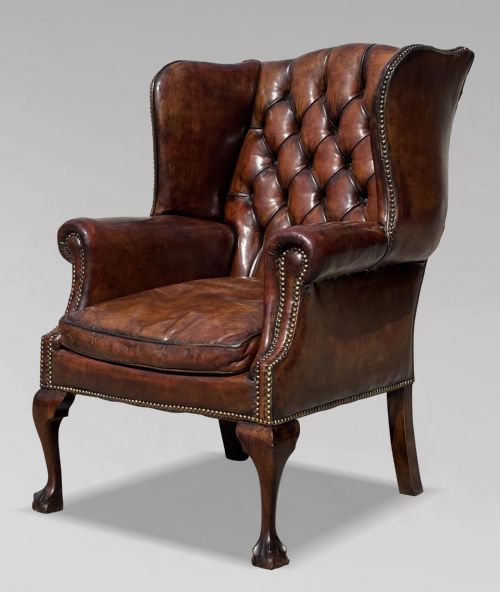
Frames are constructed from hardwood, mahogany, timber, and oak to provide a robust structural skeleton for the upholstered body. Brass upholstery tacks frequently secure the edges of the leather hiding.
Upholstery relies on full button down leather or button wing backs, often hand dyed to achieve varied patination across the hide. Carved wooden elements appear on specific Victorian and Georgian pieces.
Listings span the eighteenth, nineteenth, and twentieth centuries, featuring wood frames of mahogany and oak upholstered in leather.
Factors determining quality
The depth and uniformity of the buttoning across the back and wings dictate the refinement of the piece. Hand dyed hides showing rich variation differ significantly from uniform modern treatments.
Frame substance and the presence of period details, such as lion carved wooden components or precise George III style proportions, separate standard examples from finer specimens.
The Chesterfield Wing Chair Glossary
- Wingback
- An armchair design featuring projecting side panels attached to the arms or back to deflect draughts. These panels are also known as cheeks.
- Buttoning
- A method of upholstering where deep depressions are formed by pulling cord or thread through the padding and securing it with buttons. This creates the characteristic diamond pattern seen on chesterfields.
- Porters chair
- A heavily enclosed armchair originally designed for hall porters to keep warm from drafts in large houses. They often feature a domed hood above the wingback structure.
- Hides
- Animal skins used for leather upholstery on traditional seating. The quality of the hide affects the ageing process and tactile surface.
- Patina
- The surface sheen and softening developed by leather and wood through age and use. It indicates the history of the material.
Chesterfield Wing Chair: Frequently Asked Questions
What is a chesterfield wing chair?
A chesterfield wing chair is a deep seated upholstered armchair featuring high protective side panels and buttoned leather work. The design merges the draught-excluding wings of traditional fireside chairs with the deep tufted padding of a classic chesterfield.
These armchairs span multiple eras, appearing in Georgian, Victorian, and Edwardian iterations as well as later revival styles. They function primarily as substantial living room or library seating.
How do I spot an 18th century wing chair?
Eighteenth century examples display period specific woodwork, traditional joinery methods, and proportions distinct from later nineteenth century or revival pieces. Examining the timber frame beneath and the style of the legs offers clear chronological indicators.
Revival pieces from the Georgian style period imitate these earlier silhouettes but utilise nineteenth or twentieth century manufacturing techniques. Comparing the hardware and internal materials helps clarify the true age.
Are all chesterfield wing chairs leather?
The majority of listings for this chair type utilise leather upholstery, frequently in brown, tan, oxblood, or green hides. These surfaces are often hand dyed and finished with brass tacks.
While leather dominates the historical record for this specific search phrase, the defining feature remains the winged and buttoned form rather than the covering material alone.
How do I care for antique leather?
Antique leather benefits from regular dusting with a soft cloth and occasional treatment with appropriate leather balms to prevent drying. Avoiding direct sunlight and intense heat sources preserves the natural hide and prevents cracking.
Maintaining stable room humidity protects both the leather surface and the underlying hardwood frame. Gentle handling ensures the original patina remains undisturbed.