
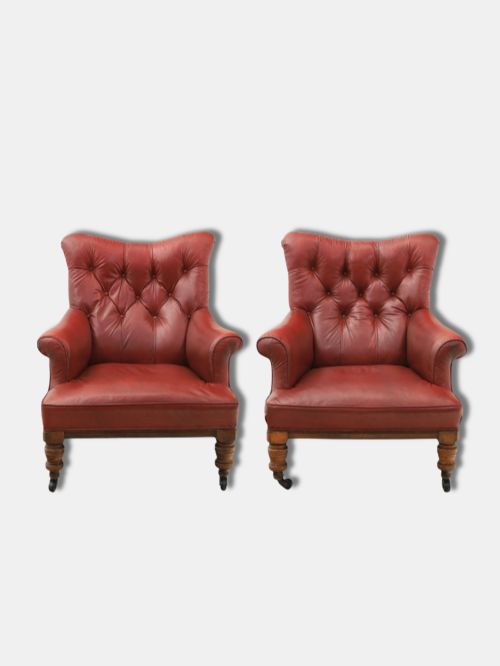
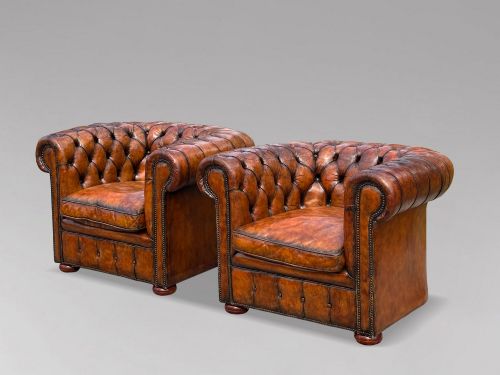
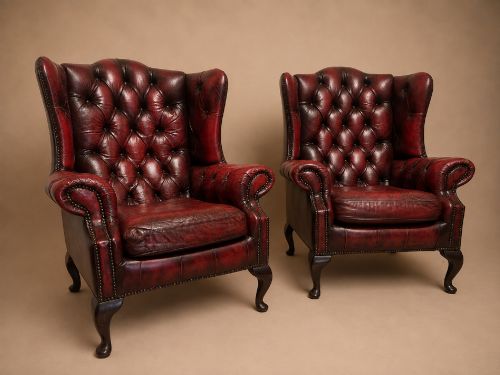
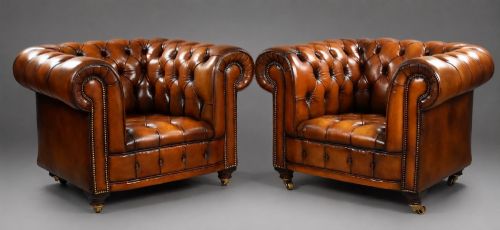


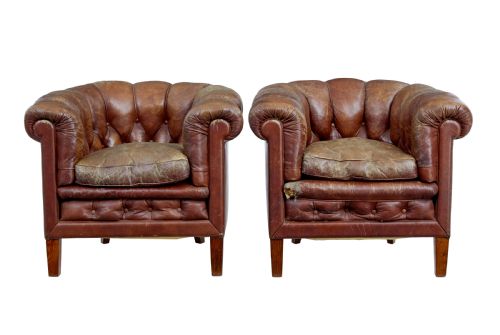


Pair Chesterfield Armchairs
Pair chesterfield armchairs bring deep buttoning and generous proportions into a room, offering enduring comfort and strong character.
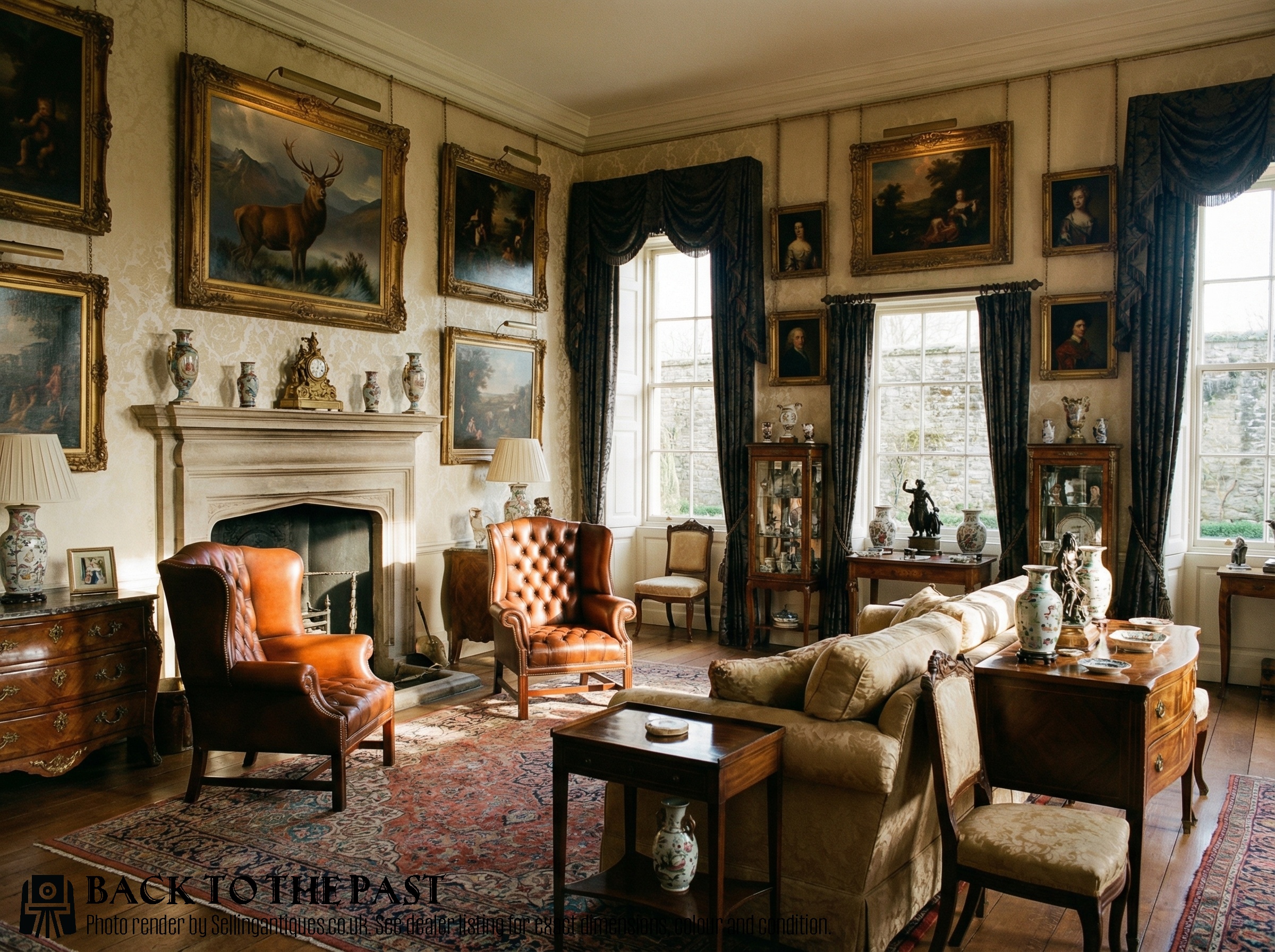
Pair Chesterfield Armchairs
These pairs of armchairs arrive from various eras, including the nineteenth century, Victorian period, and twentieth century up to the 1940s. Buyers frequently encounter traditional leather upholstery alongside alternatives such as rexine, supported by frames constructed from hardwood, timber, mahogany, and English oak.
The styles span traditional British and Georgian style designs, incorporating wing chairs, club armchairs, and show framed library seating. Certain examples include carved wooden details like lion motifs or originate from workshops associated with Robert Mouseman Thompson.
Swedish origins appear in past records alongside standard English examples, showing a breadth of geographic provenance. Forms range from standard low-backed lounge chairs to high-backed wingbacks paired with footstools.
How they were made
Frames rely on solid timber foundations using hardwood, mahogany, and English oak to support heavy daily use. Upholsterers secure the hides and alternative fabrics like rexine with brass detailing.
Traditional construction involves deep buttoning techniques across the backrests and arms, creating the characteristic tufted surface. Wood carving appears on specific frames, adding decorative form to the structural mahogany and oak.
Materials recorded across the inventory include leather, rexine, brass, mahogany, English oak, and hardwood timber.
What varies in quality
The depth of the woodwork and the crispness of carved elements distinguish standard production from exceptional pieces. Heavier frames utilising solid mahogany or English oak demonstrate superior structural ambition.
The treatment of the leather upholstery ranges from standard factory finishes to hand-dyed surfaces showing varied patination. Original frames with intact show wood and distinct period styling command greater interest from collectors.
Robert Mouseman Thompson
The Pair Chesterfield Armchairs Glossary
- Rexine
- A brand of leathercloth fabric manufactured as an artificial leather alternative. It appears on early twentieth-century seating.
- Show frame
- A wooden structural frame left partially visible around the upholstered body. It highlights the underlying timber.
- Wingback
- An armchair style featuring protective side panels attached to the arms and back. This design blocks draughts in older rooms.
- Lion carved
- Furniture ornamentation featuring carved leonine heads or paws upon the wooden framework. It signals decorative ambition.
- Tub armchair
- Seating constructed with a rounded, curved backrest flowing directly into the arms. The enclosed shape offers compact support.
Pair Chesterfield Armchairs: Frequently Asked Questions
Are these chairs comfortable for daily sitting?
The deep buttoned backs and generous padding provide substantial support for regular use in a study or sitting room. Their solid timber frames ensure structural stability over decades of daily occupation.
Buyers often select them as primary seating options due to the resilient internal construction seen across Victorian and twentieth-century examples.
How do I identify a Victorian pair?
Victorian examples frequently display rich brown leather upholstery combined with show frames or carved wooden details like lion motifs. The timber foundations rely heavily on mahogany and heavier hardwoods typical of the nineteenth century.
Examining the underside and the fastening methods reveals the period construction techniques used by makers before the Edwardian era.
What is the difference between rexine and leather?
Leather derives from animal hide, developing a natural patina and soft texture through years of handling and use. Rexine is an artificial fabric substitute introduced as a durable, wipeable alternative on twentieth-century seating.
Listings specify the material clearly, allowing buyers to distinguish between genuine hide and manufactured cloth finishes.
Do these chairs require special maintenance?
Leather surfaces benefit from regular conditioning treatments to prevent the hide from drying out or cracking over time. Wooden frames and brass elements require only occasional dusting and gentle cleaning to preserve their finish.
Keeping the chairs away from direct heat sources protects both the internal padding and the external upholstery from premature wear.