



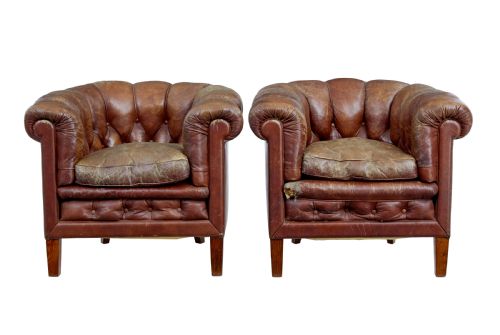
Vintage Chesterfield Pair
A vintage chesterfield pair brings grounded British character and deep-buttoned comfort into a room with substantial presence.
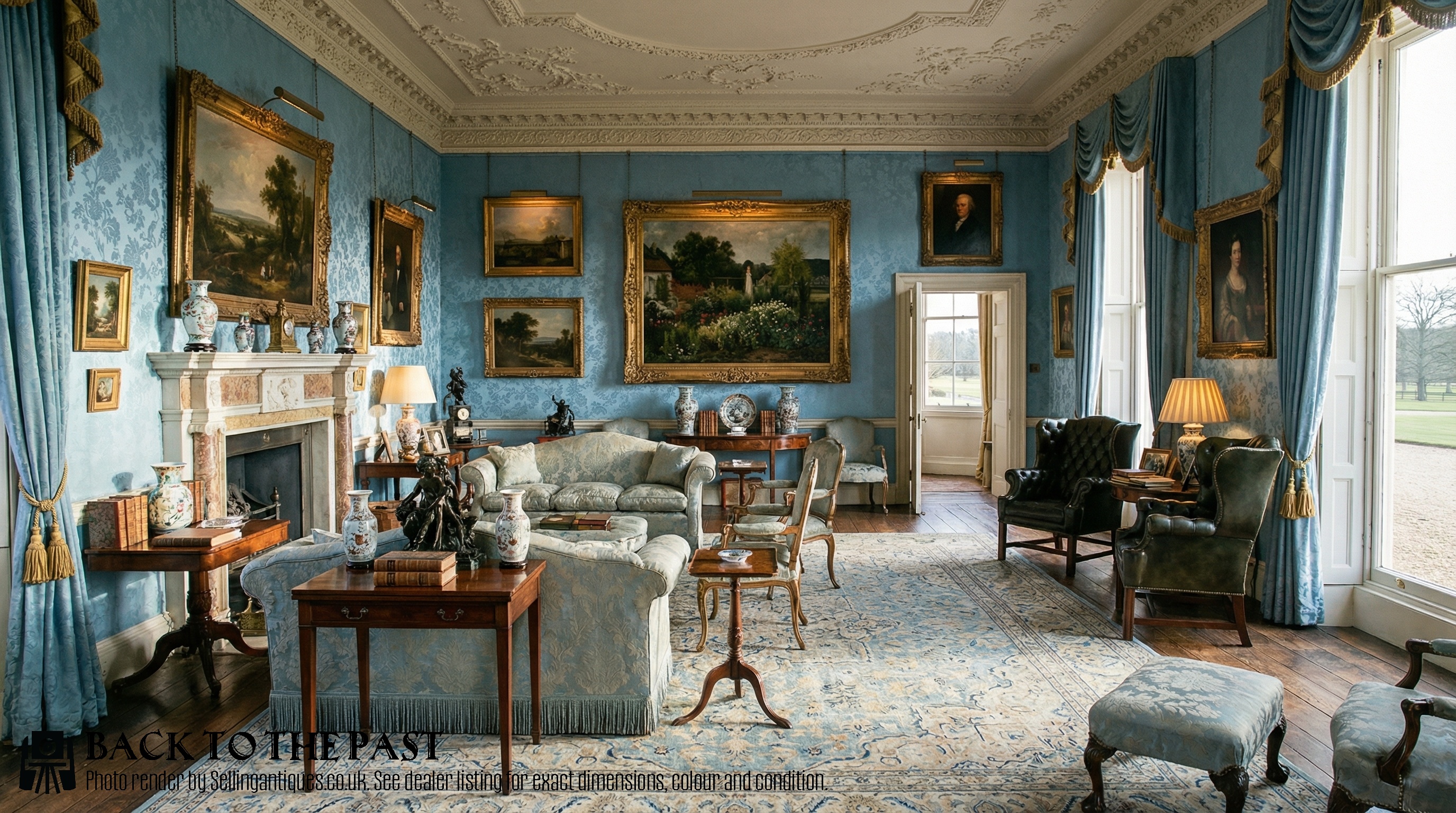
Vintage Chesterfield Pair
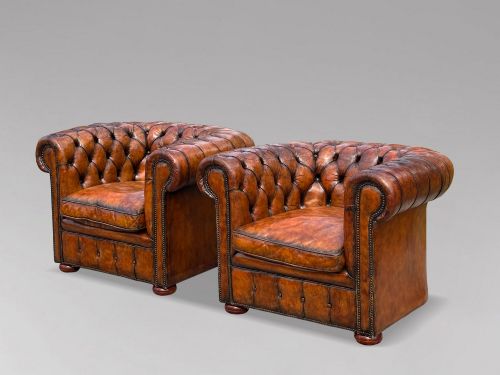
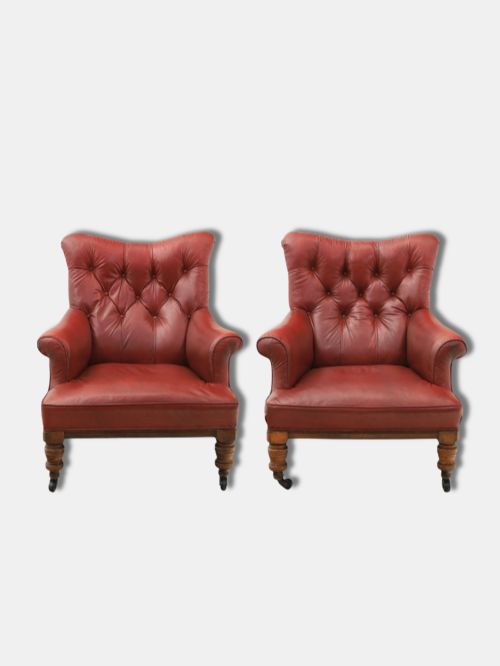
A vintage chesterfield pair consists of matching deep-buttoned armchairs or sofas originating predominantly from the Victorian, Edwardian, and early twentieth century periods. Buyers search this phrase to furnish a library, study, or drawing room with coordinated seating that carries historical weight.
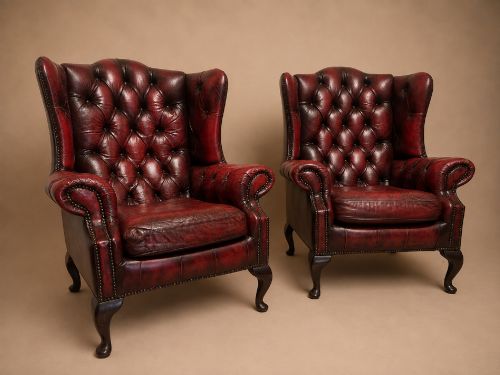
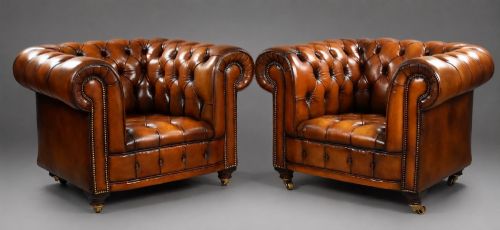
The versions most commonly met on this page span the 19th century up to the 1940s, appearing in rich shades of brown or oxblood leather and rexine. These seating pairings include traditional club armchairs, wingbacks, tub chairs, and occasional library or lounge forms.
Makers and styles stretch from Georgian style gentleman's wing backs to Arts and Crafts influences and specific workshops. The overarching form remains rooted in traditional British seating architecture, prized for its generous proportions and rolled arms.
Materials and construction
Construction relies heavily on sturdy internal frames built from hardwood, timber, English oak, and mahogany. These robust wooden carcases support the heavy upholstery and enduring daily use.
Upholstery materials range from traditional hand-dyed leather to durable rexine, complemented by brass detailing on tack work. Supplementary elements such as carved wooden lion details appear on select Victorian frames.
Vintage Chesterfield Pair Retail Price Guide 2026
Typical asking prices for vintage chesterfield pair among the pieces listed under this phrase on Sellingantiques today, from the lower quarter to the upper quarter. They describe what is for sale here now, not the wider market.
Listings feature periods spanning from the Victorian era through the 1940s, utilising leather, mahogany, brass, and English oak.
Quality variations in seating
The distinction between tiers rests upon the integrity of the frame construction and the depth of the upholstery work. Superior pieces exhibit tight, precise buttoning and substantial timber skeletons that bear weight without sagging.
Surface finish and material choice also define the grade, with hand-dyed leathers and aged hardwoods sitting above utilitarian alternatives. Maker attribution, such as documented workshop output, elevates a pair within the broader range.
Howard and Sons·Robert Mouseman Thompson
The Vintage Chesterfield Pair Glossary
- Chesterfield
- A traditional style of upholstered British seating characterised by deep buttoning, rolled arms, and a back height equal to the arms. It remains a cornerstone of classic interior furnishing.
- Rexine
- A brand of artificial leather fabric utilised as an alternative to genuine hide during the early twentieth century. It offers durability and a distinct tactile quality.
- Wingback
- An armchair featuring protective side panels attached to the arm rests designed to shield the sitter from draughts. This form frequently appears in gentleman's library settings.
- Tub armchair
- A seating form with a rounded, curved back that wraps continuously into low arms. This configuration provides a compact yet comfortable sit.
- Oxblood
- A deep reddish-brown leather colour frequently associated with traditional club and library seating. It develops a rich patina over decades of use.
Vintage Chesterfield Pair: Frequently Asked Questions
Are chesterfield pairs comfortable?
These chairs are built with deep seats and supportive backs designed for long periods of reading or conversation.
The historical padding uses traditional springing methods that offer a firm yet yielding sit.
How do I clean antique leather?
Maintenance requires gentle dusting and the application of specialised leather feeds to keep the hide supple.
Avoid modern chemical solvents which can strip the original hand-dyed finish and dry out the material.
How do I date a chesterfield pair?
Dating relies on examining the framing timbers, under-webbing, and the type of leather or fixings used.
Victorian and Edwardian examples often feature hand-turned wooden feet and distinct tack patterns compared to later 1940s pieces.
Will a pair fit in a modern room?
The substantial proportions require adequate floor space so the pieces do not overwhelm surrounding furniture.
Their classic profile pairs well with both contemporary minimalist interiors and traditional historic spaces.