




Chesterfield Leather Ottoman
A Chesterfield leather ottoman offers deep-buttoned comfort and timeless utility, bringing sturdy nineteenth-century proportions and rich hide into a modern room.
Chesterfield Leather Ottoman
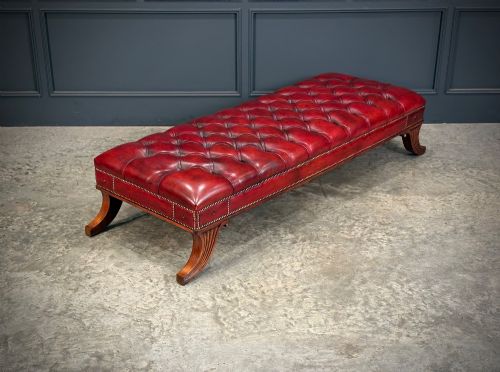
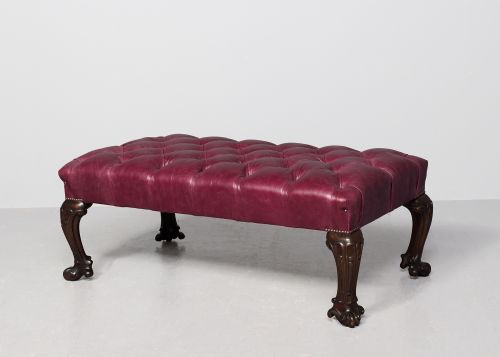
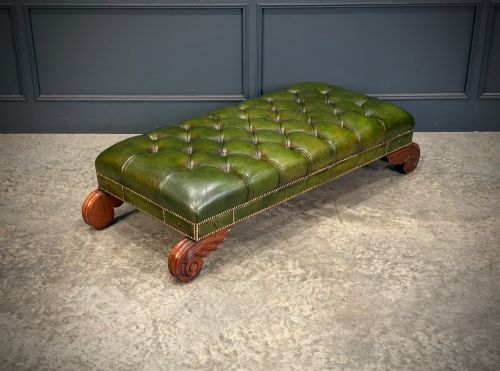
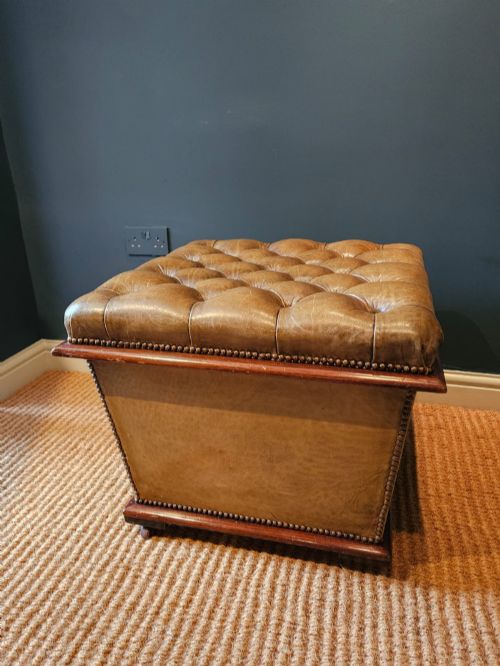
When you search for a chesterfield leather ottoman, you are looking at substantial upholstered seating designed for the nineteenth-century interior, spanning periods from the Regency era through to the early twentieth century. These pieces function equally well as footstools or coffee tables, bringing low, grounded seating to a room.
You are most likely to meet Victorian and nineteenth-century examples on this page, often framed in mahogany, walnut, or oak. The forms range from large centre stools to library window seats and footstools, defined by generous proportions and deep buttoning.
How they were made
Makers built the frames of these ottomans using hardwoods such as mahogany, walnut, oak, and general hardwood, providing a sturdy architectural skeleton to support heavy use. The exposed timber frames often display traditional joinery and rich grain.
Upholstery relies upon hand-dyed red or green hide, secured with deep buttoning and finished with brass detailing. The leather is stretched firmly over dense stuffing, creating the characteristic tufted surface.
Chesterfield Leather Ottoman Retail Price Guide 2026
Typical asking prices for chesterfield leather ottoman among the pieces listed under this phrase on Sellingantiques today, from the lower quarter to the upper quarter. They describe what is for sale here now, not the wider market.
The listings span the Regency period through to the 1920s, utilising materials such as mahogany, walnut, oak, brass, and hand-dyed leather.
What varies in quality
The distinction between a standard footstool and a finer library or country house piece lies in the timber selection and the depth of the frame. Richer walnut and mahogany frames with balanced proportions indicate higher craftsmanship than simpler utility pieces.
The hand-dyed leather surface and the precision of the buttoning dictate visual weight and tactile appeal. Rich patination on the hide and careful hand-finishing separate the most accomplished examples from plain production.
The Chesterfield Leather Ottoman Glossary
- Buttoned
- Upholstery pulled into deep indentations using twine and secured with buttons. This technique creates a firm, tufted surface characteristic of nineteenth-century seating.
- Hide
- Animal skin prepared for upholstery. In these pieces, hand-dyed red or green hide provides a durable, patinated outer surface.
- Centre stool
- A large, freestanding stool designed to sit in the middle of a room or library. These pieces often double as low tables.
- Regency
- An English design period spanning the early nineteenth century. Pieces from this era display classical restraint and refined proportions.
Chesterfield Leather Ottoman: Frequently Asked Questions
What is a chesterfield leather ottoman?
A chesterfield leather ottoman is a low, upholstered seat featuring deep buttoning and a leather covering, originating primarily in the nineteenth century. These sturdy pieces served various domestic functions from footrests to impromptu tables.
They combine robust hardwood frames in mahogany, walnut, or oak with hand-dyed hides in shades like red and green. Their generous proportions make them versatile additions to traditional interiors.
How were these ottomans used originally?
In nineteenth-century homes, these large stools served as footrests before armchairs or as stationary seating in libraries and bay windows. Their solid construction allowed them to withstand heavy daily use.
Over time, their sturdy height and flat, buttoned surfaces also made them practical for holding books or serving as low centre tables in larger reception rooms.
How do I care for antique leather?
Antique leather requires gentle cleaning with soft cloths and specialised balms to preserve the original hand-dyed finish and prevent the hide from drying out. Avoid harsh chemical cleaners that strip patination.
Keep the ottoman away from direct heat sources and strong sunlight, which can fade the red or green tones and crack the nineteenth-century leather over time.
How can I tell a Victorian ottoman from a Regency one?
Regency pieces reflect the classical influences of the early nineteenth century with restrained lines and specific timber framing. Victorian examples often display heavier proportions and more elaborate walnut or mahogany frames.
Examining the construction methods, wood types, and wear patterns helps distinguish between the distinct decades of the nineteenth century represented in the listings.