

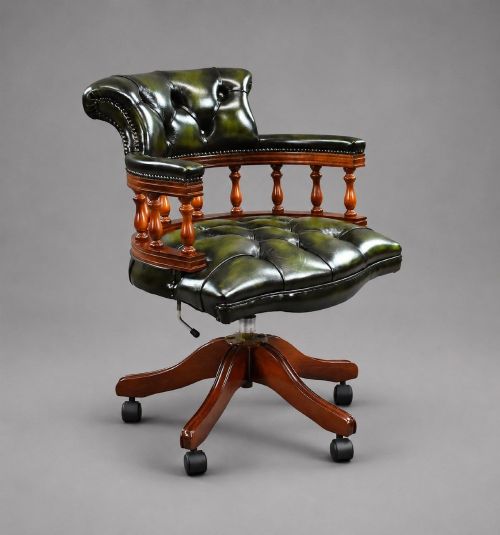


Chesterfield Leather Desk Chair
These chesterfield leather desk chair pieces offer deep buttoned comfort and rich hide upholstery, bringing traditional working style to a study.
Chesterfield Leather Desk Chair
When you search for a chesterfield leather desk chair, you encounter sturdy seating designed for libraries, offices and studies across several centuries. The selection on this page spans the Georgian, Regency, William IV and Victorian eras, alongside pieces dated to nineteen twenty and nineteen thirty.
The predominant forms are library armchairs, desk armchairs, dining chairs and captain chairs upholstered in leather. Many examples feature buttoned upholstery and robust frames built for daily use at a writing table.
Origins range from nineteenth century workshops to earlier Georgian periods, showing how these seats evolved from simple writing aids into substantial upholstered armchairs. A buyer finds both swivel mechanisms on later office versions and fixed frames on older library chairs.
How they were made
The makers built these chairs using solid timbers such as mahogany, oak, pollard oak and general hardwood to ensure structural strength. Wood frames provide the rigid skeleton required to support heavy padding and intensive daily sitting.
Upholsterers stretched leather across deep cushioning and secured it with individual brass nails or studs around the borders. This hide covering was frequently buttoned to create the characteristic dimpled pattern seen on traditional library seating.
Metal components like steel and brass appear in swivel mechanisms, castors, reclining actions and decorative studwork. These hardware elements combine with timber and leather to produce durable furniture intended for heavy study use.
Chesterfield Leather Desk Chair Retail Price Guide 2026
Typical asking prices for chesterfield leather desk chair among the pieces listed under this phrase on Sellingantiques today, from the lower quarter to the upper quarter. They describe what is for sale here now, not the wider market.
Materials recorded across these chairs include mahogany, oak, pollard oak, brass, steel and leather.
What varies in quality
The grade of timber and the quality of the hide determine the upper tier of these chairs, distinguishing finely figured mahogany or pollard oak from plain hardwood. Finer examples retain deep patination on the leather alongside tight, well executed buttoning.
Frame integrity and historical joinery separate standard production from exceptional cabinet work. Chairs retaining original brass hardware, stable swivel actions and sound internal webbing command greater appreciation among collectors.
The Chesterfield Leather Desk Chair Glossary
- Buttoned
- Upholstery secured with deep indentations held by buttons, creating a cushioned diamond pattern. This technique provides both visual depth and structural support to the hide.
- Pollard Oak
- Timber taken from trees that were pollarded, yielding a distinctive mottled grain pattern. It appears on finer Regency dining and library chairs.
- Captain Chair
- A low backed wooden or upholstered armchair traditionally used at a desk. These pieces often feature a curved top rail supported by vertical spindles.
- Library Chair
- A comfortable armchair designed for reading rooms and studies, typically featuring padded arms and deep seating. Many historical examples incorporate leather upholstery.
Chesterfield Leather Desk Chair: Frequently Asked Questions
What is a chesterfield leather desk chair?
A chesterfield leather desk chair is a traditional upholstered seat featuring buttoned hide and a supportive wooden frame designed for working at a table.
These pieces combine the deep comfort of a library armchair with the upright posture needed for reading and writing.
Were these chairs used only in offices?
Historical examples served primarily in private libraries, studies and writing rooms rather than modern corporate offices. Wealthy homeowners used them for reading, correspondence and estate management.
Over time, the designs adapted into dedicated office seating with the addition of swivel bases and castors.
How do I care for antique leather?
Maintaining antique hide involves keeping it away from direct sunlight and heat sources that cause drying and cracking. Regular dusting and occasional specialist leather conditioning help preserve the supple texture and rich colour.
Avoid harsh chemical cleaners which can strip the historical patination from the surface.
What is the difference between a library chair and a desk chair?
Library chairs generally prioritise relaxed reading comfort with broader arms and deeper padding. Desk chairs focus on upright support and often incorporate swivel mechanisms or height adjustments for writing tasks.
Many historical pieces blur these distinctions by combining armchair comfort with desk functionality.