

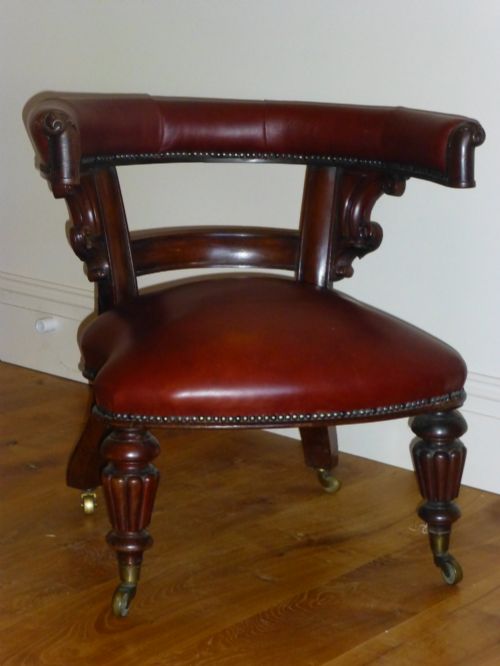


Nineteenth Century Office Chair
A nineteenth century office chair brings solid Victorian character and practical design to a modern study.
Nineteenth Century Office Chair
A nineteenth century office chair is a sturdy seat built for working at a desk during the Victorian era. These pieces appear in forms such as captain's chairs, desk armchairs, and revolving desk chairs.
Most examples found here date from the 1860s to the 1890s. They combine functional seating with the robust craftsmanship typical of nineteenth century workshops.
The buyer meets traditional seating designed for prolonged desk use, often featuring timber frames and supportive armrests. These items reflect the workspace requirements of their original Victorian owners.
How they were made
Makers constructed nineteenth century office chairs using solid hardwoods such as oak, walnut, elm, yew, and mahogany. These timbers provided the structural strength needed for daily office use.
Workshops added brass hardware and upholstered seats in leather or textile to improve comfort. Traditional joinery methods ensured the frames remained rigid over decades of movement and weight.
Nineteenth Century Office Chair Retail Price Guide 2026
Typical asking prices for nineteenth century office chair among the pieces listed under this phrase on Sellingantiques today, from the lower quarter to the upper quarter. They describe what is for sale here now, not the wider market.
Listings feature Victorian pieces from the 1860s to the 1890s, constructed in oak, walnut, elm, and mahogany.
What varies in quality
Quality in a nineteenth century office chair depends upon the selection of timber and the complexity of the frame construction. Chairs combining multiple woods, such as yew and elm, show thoughtful material pairing.
The integration of working mechanisms, swivel actions, and upholstery finishing distinguishes standard workshop output from exceptional pieces. Finer examples retain their original leather surfaces and robust structural integrity.
Boston Chair Company·Holland & Son's
The Nineteenth Century Office Chair Glossary
- Captain's chair
- A sturdy wooden armchair with a rounded back rail supported by spindles, often used at a desk. This form provides solid back support during long hours of work.
- Revolving desk chair
- A seat fitted with a mechanical pivot that allows the user to turn. These chairs appear in late nineteenth century forms designed for office utility.
- Tub chair
- An armchair with a continuous curved back and sides forming a single enclosed shape. This style offers an enveloping seat for a library or study.
- Windsor chair
- A chair built with a solid wooden seat into which the legs and back spindles are wedged directly. This construction method yields a durable and practical piece of seating.
Nineteenth Century Office Chair: Frequently Asked Questions
How do I use a nineteenth century office chair today?
These chairs fit well at modern wooden desks in studies or home offices. Their traditional designs provide practical seating while adding historic character to a room.
Ensure the height matches your desk surface before daily use. Adding a small cushion can improve comfort if you sit for many hours.
Are these chairs comfortable for daily work?
Victorian office chairs were built for utility and provide solid lumbar support through their curved wooden backs. Upholstered and leather versions offer extra padding.
Because they lack modern ergonomic adjustments, testing the seat height and depth beforehand is helpful for long periods of sitting.
How do I date a nineteenth century office chair?
Dating relies on stylistic clues, construction methods, and recorded periods such as the 1860s or 1870s. Revolving mechanisms and specific timber choices often point to the later decades of the century.
Examining the underside and joinery reveals hand-tool marks that distinguish Victorian production from later reproductions.
What woods were used for these chairs?
Makers utilised a variety of native and imported hardwoods including oak, walnut, mahogany, elm, ash, and yew. Elm often appears in the seats for its resistance to splitting.
Different woods were sometimes combined in a single chair, such as a yew frame with an elm seat, depending on the maker's workshop.