

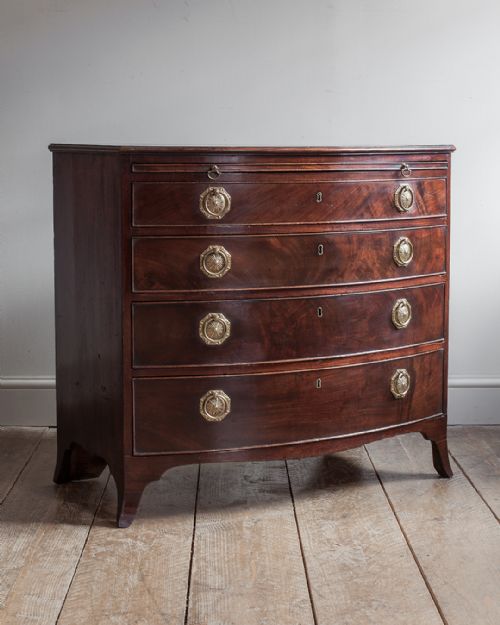
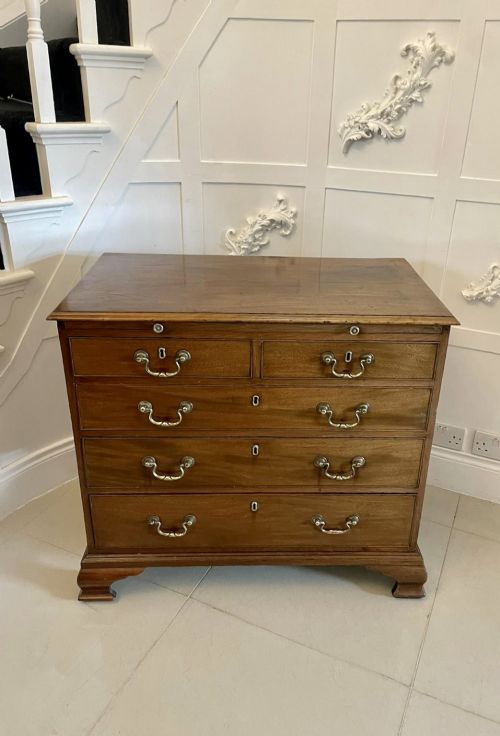
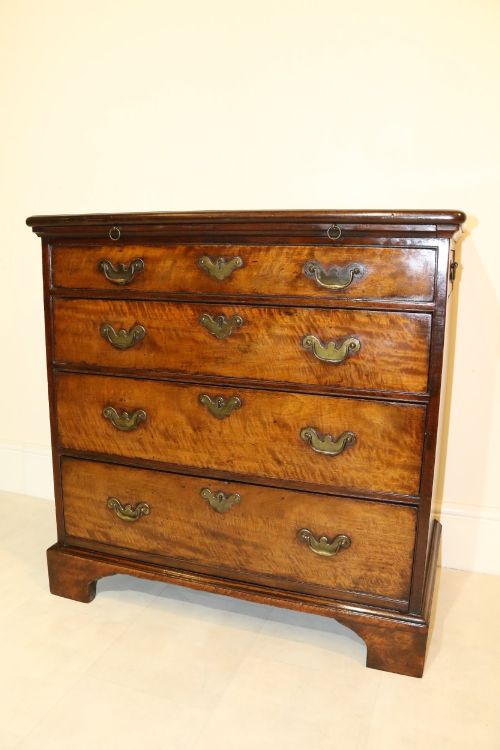
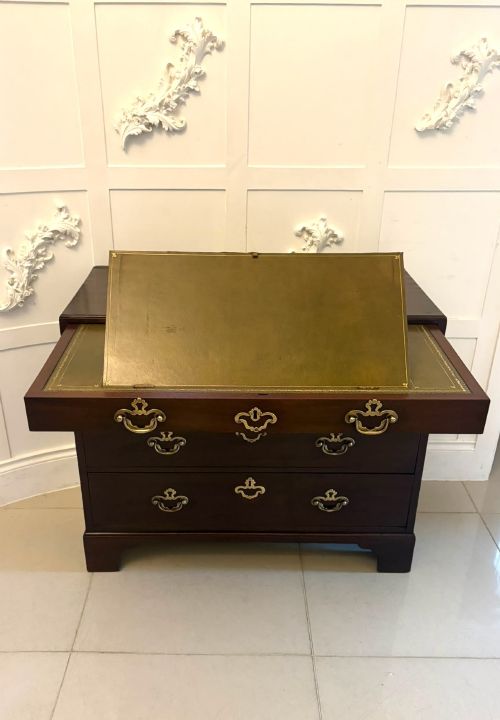
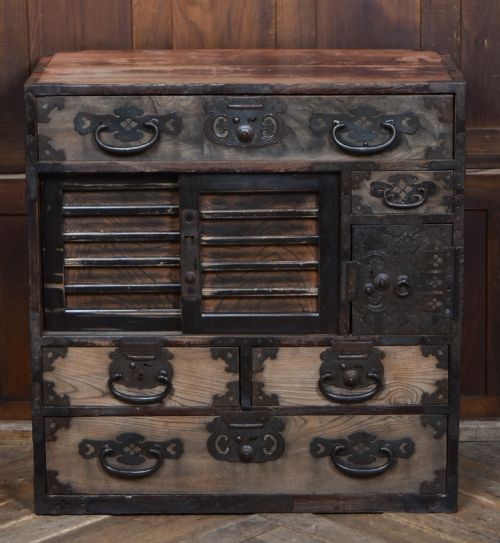
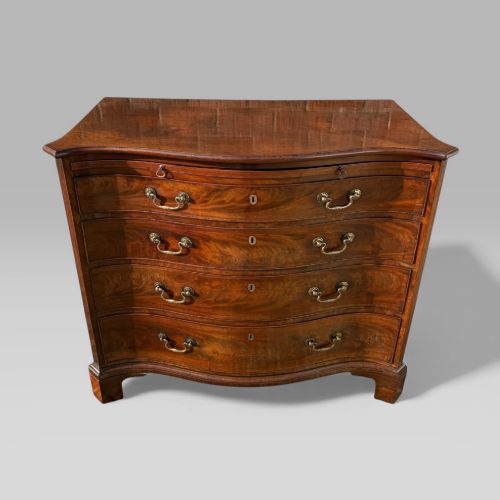
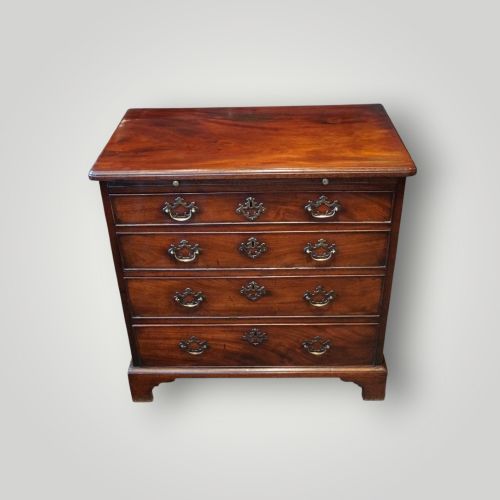
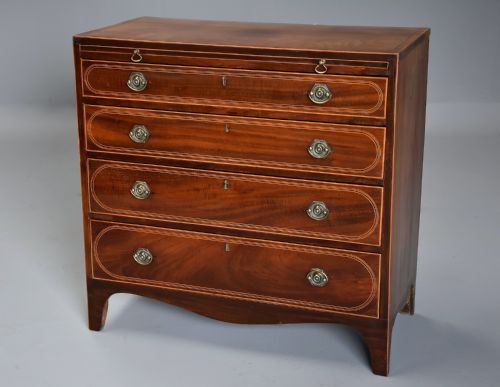
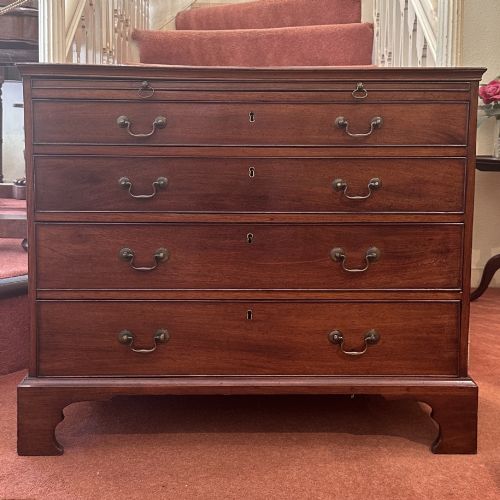
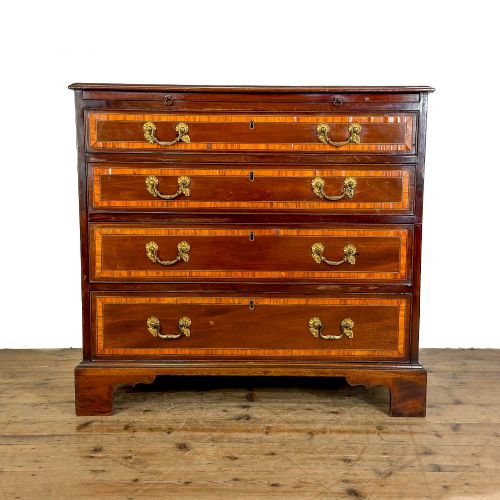

Chest of Drawers Slide
A chest of drawers slide offers a clever pull-out surface tucked into case furniture, bringing compact writing space to period rooms.
Chest of Drawers Slide
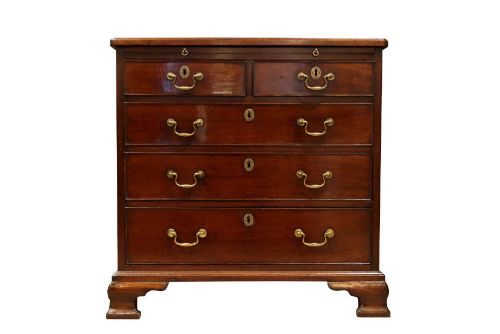
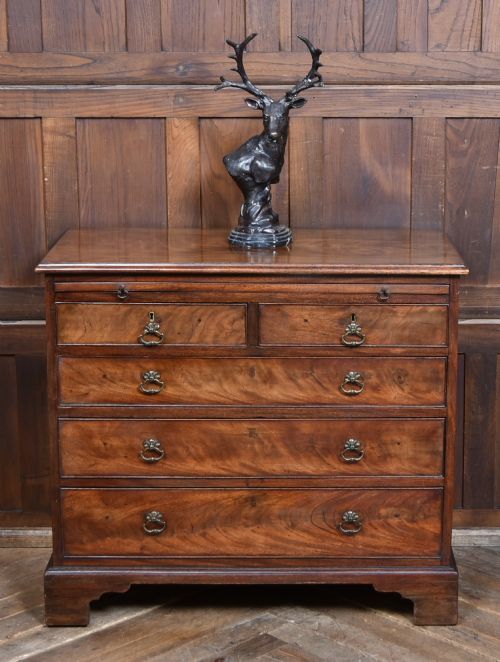
A chest of drawers slide provides a retractable wooden or panelled surface integrated into the upper framework of a case piece, historically serving as a compact writing desk or a place to brush clothes. When searching this phrase, a buyer encounters traditional case furniture designed with this hidden pull-out shelf.
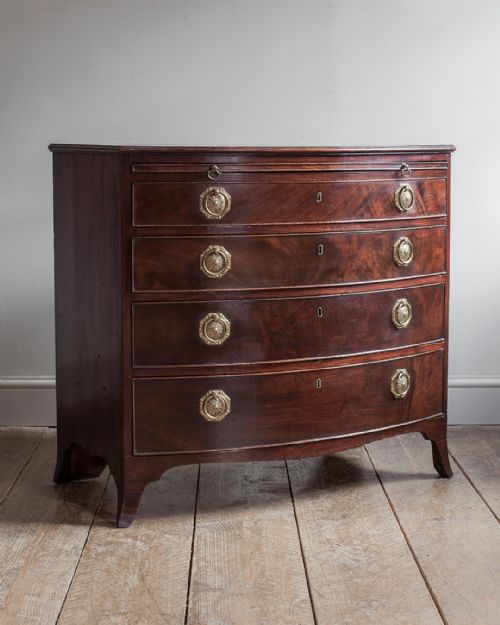
The most common examples on this page date from the Georgian and Edwardian periods, frequently executed in mahogany or walnut. These pieces range from formal bachelor chests to serpentine and bowfront storage units equipped with internal slides.
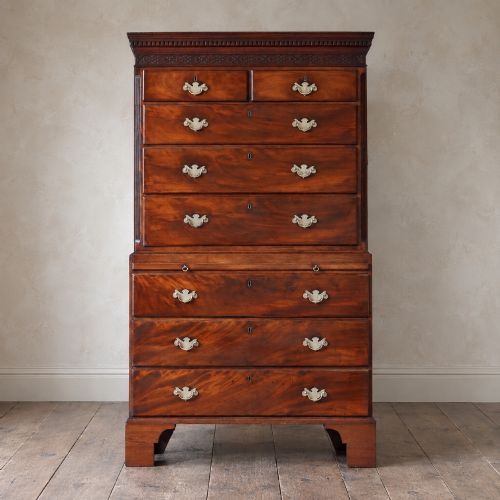
Formats vary from standard upright chests to chest on chest constructions and specialised small writing cabinets. Each version retains the sliding mechanism immediately beneath the top moulding or above the uppermost drawer.
Quality variations
Differentiation across the range depends on the crispness of the timber grain, such as figured mahogany or burr walnut matching across the drawer fronts and the pull-out slide. Superior examples display careful timber selection where the pattern flows naturally from the top surface down the facade.
Construction precision dictates overall standard, particularly the smooth operation of the slide within its housing channels and the tightness of the dovetail joints on the drawers. Higher grade pieces maintain structural integrity without excessive timber shrinkage or loose framing.
Listings feature mahogany, walnut, burr walnut, oak, and pine constructions spanning the Georgian, Victorian, and Edwardian eras.
Druce & Co
The Chest of Drawers Slide Glossary
- Brushing slide
- A pull-out wooden shelf positioned above the top drawers, historically used for grooming clothes or writing correspondence. It retracts flush into the cabinet frame when not in use.
- Bachelor's chest
- A compact chest of drawers featuring a pull-out writing or brushing slide, popular during the eighteenth century for small chambers. These pieces combine general storage with a dedicated writing surface.
- Serpentine chest
- A storage cabinet featuring a gently undulating front facade with convex and concave curves. This complex shaping requires specialised carpentry, particularly around the integrated slide.
- Dovetail
- A traditional interlocking joint used to secure drawer corners together. Fine examples show tight, narrow pins that indicate skilled hand craftsmanship.
- Burr walnut
- Timber harvested from walnut tree growths that produces intricate, swirling grain patterns. It was frequently utilised on high-status cabinet veneers.
Chest of Drawers Slide: Frequently Asked Questions
What is a chest of drawers slide used for?
The integrated pull-out surface served multiple functions in period interiors, acting primarily as a temporary writing desk or a brushing shelf for garments before they were worn.
In smaller chambers where a full-sized table proved impractical, this hidden board provided an immediate flat workspace that vanished completely when pushed back into the cabinet.
How do I identify a Georgian chest with a slide?
Examination of the upper moulding usually reveals a narrow horizontal shadow line or a discreet pair of wooden pulls just beneath the top surface. Pulling this section forward exposes the internal board.
Georgian examples typically exhibit hand-cut dovetails, dense mahogany or walnut timbers, and proportions built specifically for domestic chambers rather than grand reception rooms.
Are these slides strong enough for daily use?
Original internal runners and support rails were engineered to bear the weight of writing materials, books, or folded garments. Gentle handling ensures the historical timber and runners remain stable.
Avoid placing excessive downward pressure on the outer edge of the extended board, as the historical housing frame relies on balanced weight distribution across the internal tracks.
How do walnut and mahogany pieces differ?
Walnut pieces tend to date from earlier periods or later revivals, displaying rich brown tones and swirling grain figures such as burr walnut. Mahogany items often present a denser, darker reddish-brown colour.
Both timbers provide the structural durability needed for moving components like drawers and sliding shelves, though walnut veneers require careful placement away from direct heat sources.