


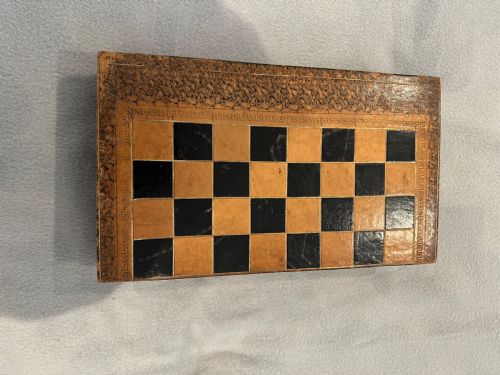


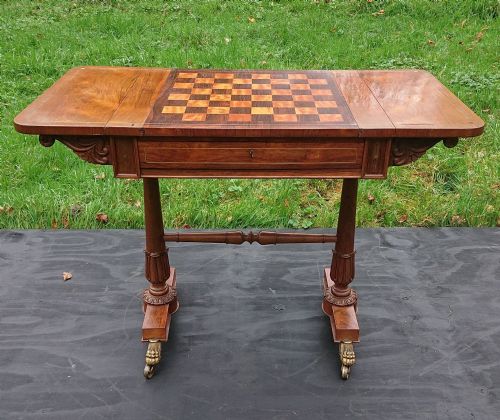


Chess Backgammon Table
A chess backgammon table brings dual-purpose amusement into a room, offering both strategy boards and a handsome piece of period furniture.
Chess Backgammon Table
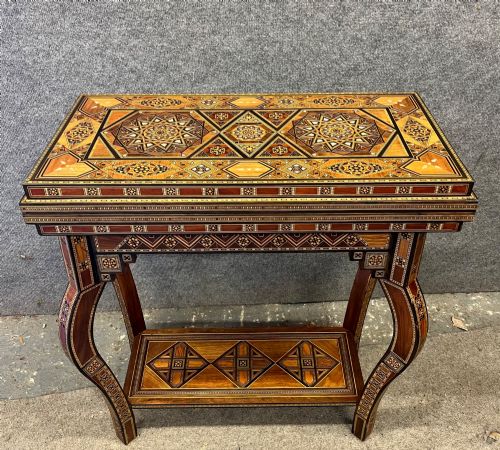
A chess backgammon table is a multi-functional piece designed for household entertainment, frequently combining gaming surfaces with card play, sewing facilities, or foldover tops. These items emerge from the Regency and Victorian periods, alongside Levantine and Syrian Ottoman workshops.
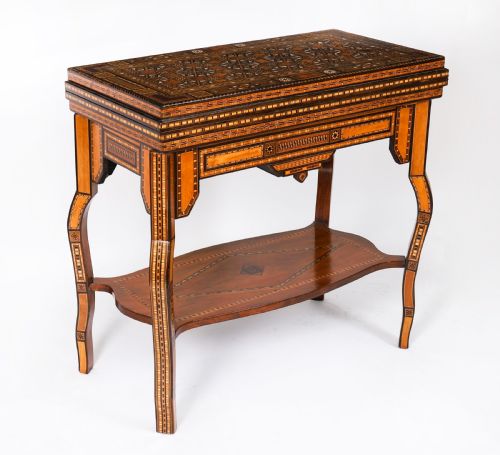
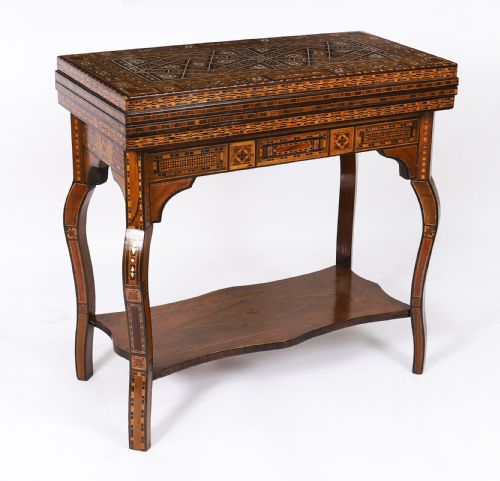
Burr walnut and rosewood form the primary domestic British expressions, often featuring floral marquetry inlay or specialised compartments for sewing and cribbage. Alternatively, Middle Eastern examples utilise intricate wood inlay incorporating bone and mother-of-pearl.
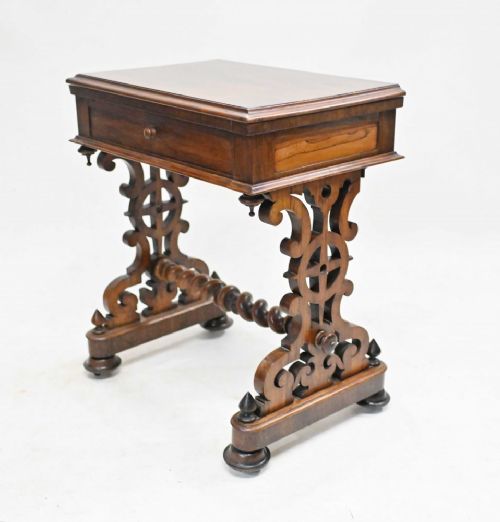
The most common variant encountered is the Victorian burr walnut games table, which incorporates a rotating or foldover top revealing inlaid chess and backgammon boards alongside a work bag beneath.
How they were made
Cabinetmakers construct these tables using solid timbers and decorative veneers such as burr walnut and rosewood, applying marquetry inlay to create the ornamental surface details. Wood inlay, brass fittings, bone, and mother-of-pearl provide contrasting accents on Levantine and Syrian Ottoman pieces.
Interiors often combine structural framing with fitted drawers or hanging silk work bags for sewing utensils, while swivelling or foldover mechanisms conceal the dual-purpose gaming boards.
Chess Backgammon Table Retail Price Guide 2026
Typical asking prices for chess backgammon table among the pieces listed under this phrase on Sellingantiques today, from the lower quarter to the upper quarter. They describe what is for sale here now, not the wider market.
Some tables double as faux books bound in leather, neatly tricking visitors into thinking you read more than you play.
What varies in quality
Quality rests in the choice of timber and the precision of the marquetry inlay, where richly figured burr walnut and intricate geometric patterns distinguish finer workshops from standard production. The complexity of the mechanism also dictates grade, separating simple folding boards from sophisticated split swivelling tops that integrate multiple pastimes.
The material composition of the board inlays creates a further distinction, as pieces incorporating detailed bone and mother-of-pearl demand greater artisanal skill than plain wood banding.
Gillows
The Chess Backgammon Table Glossary
- Marquetry inlay
- Decorative patterns formed by fitting small pieces of veneer into a prepared background surface. This technique creates floral or geometric ornamentation across the table tops.
- Burr walnut
- Timber harvested from walnut tree growths, producing swirling and mottled grain patterns. It serves as a prized veneer on Victorian furniture.
- Levantine
- Pertaining to the eastern Mediterranean region, describing tables decorated with intricate multi-material inlays. These pieces display distinct regional craftsmanship.
- Swivelling top
- A table surface that pivots to reveal concealed compartments or secondary boards underneath. This mechanism allows a single piece to serve multiple functions.
- Cribbage
- A card game whose scoring track is frequently inlaid alongside chess and backgammon boards. Tables often include this third gaming option.
Chess Backgammon Table: Frequently Asked Questions
How do I use a chess backgammon table?
These tables function as standard display or work surfaces until their tops are folded, flipped, or removed to expose the integrated gaming boards.
Interior compartments or drawers store the necessary pieces, allowing the furniture to transition quickly between leisure and practical daily use.
Where were Syrian Ottoman games tables made?
Syrian Ottoman examples originate from Damascus and surrounding Levantine centres, where craftsmen specialised in intricate geometric marquetry.
These pieces typically incorporate contrasting materials like bone and mother-of-pearl into complex wood inlay patterns.
What is a games and sewing table?
A games and sewing table combines a dual-purpose gaming surface with an integrated fabric work bag suspended underneath for needlework.
This hybrid form became particularly popular during the Victorian era for domestic sitting rooms and parlours.
How do I distinguish Regency from Victorian examples?
Regency tables often feature rosewood construction with cleaner classical lines and removable boards, dating from the early nineteenth century.
Victorian pieces frequently utilise burr walnut with heavier floral marquetry inlay, rotating mechanisms, and attached sewing bags.