

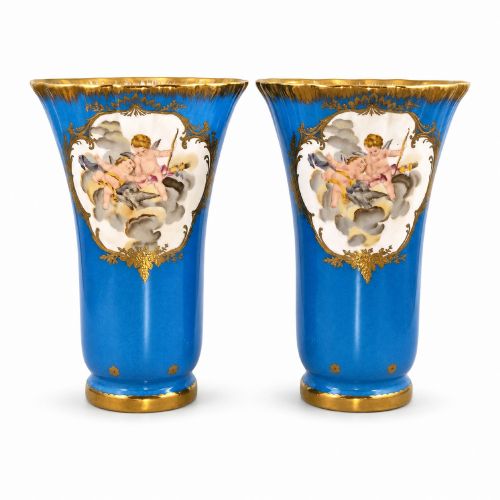


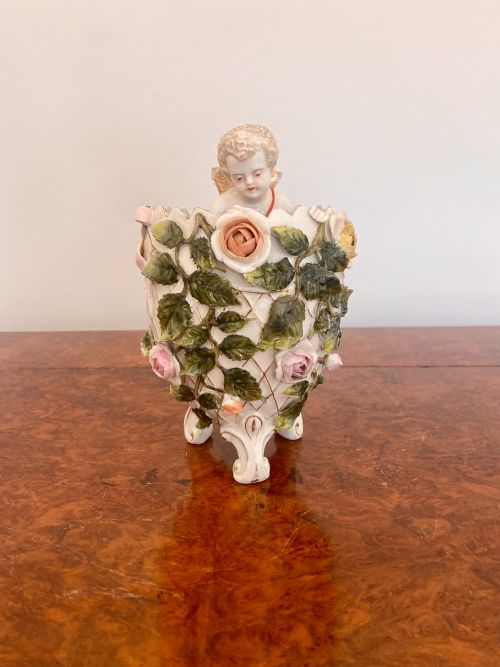

Cherub Porcelain Urn
A cherub porcelain urn brings classical mythology and sculptural ornament together, offering a decorative centrepiece rooted in nineteenth-century revival aesthetics.
Cherub Porcelain Urn
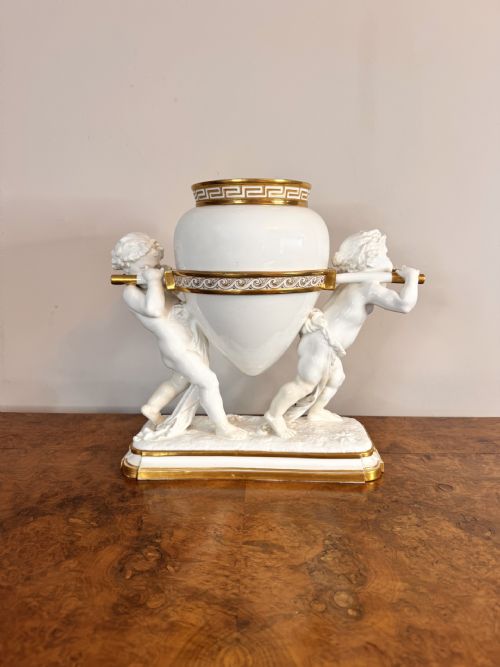
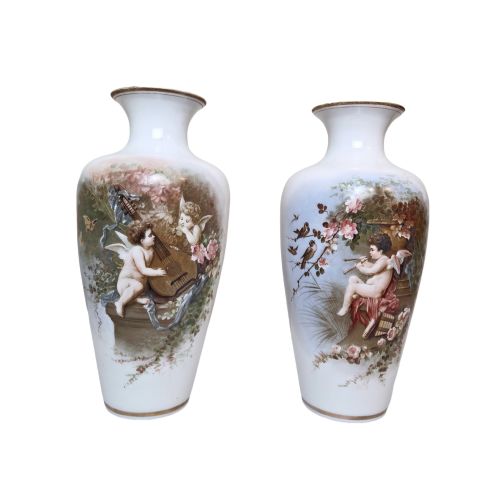
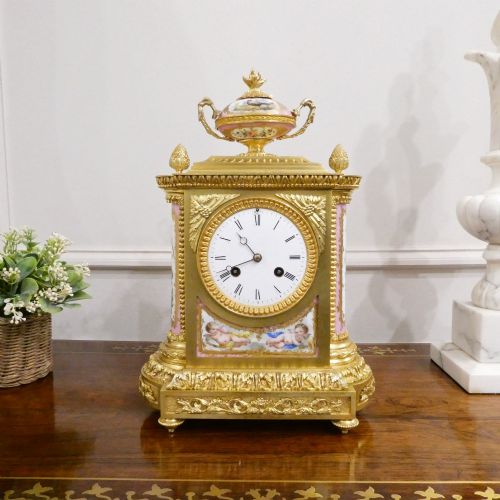
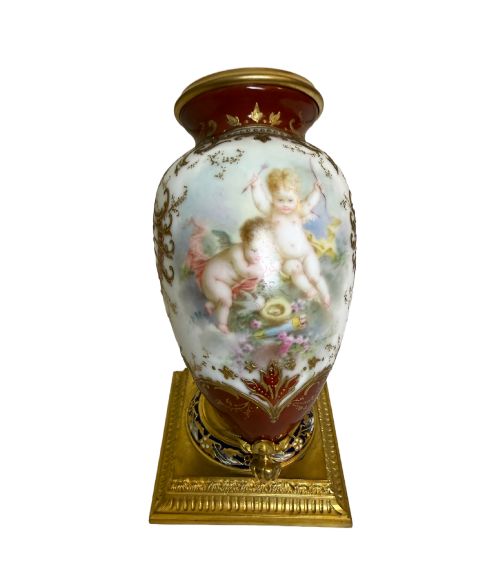
When searching for a cherub porcelain urn, collectors encounter nineteenth-century decorative pieces spanning the 1860s to the 1910s, with French and Victorian origins predominating. These objects take the form of lidded vases, garnitures, mantel clocks, and centrepieces that incorporate painted or modelled figures of putti.
The aesthetic draws heavily on Rococo Revival, Louis XVI styles, and Victorian Neoclassical tastes. Pieces range from Continental porcelain vessels mounted in ormolu to larger Minton and Sèvres-style works created for domestic display.
How they were made
The manufacture of these pieces relies on the combination of fired ceramic bodies with gilt bronze, ormolu, and occasionally glass or onyx mounts. Makers utilised intricate enamel painting, pate-sur-pate techniques, and gilt highlights to finish the porcelain surfaces.
Metalwork mounts were cast, chased, and gilded, then fitted securely to the ceramic vessels to create robust structures like mantel clock sets and lidded vases.
Cherub Porcelain Urn Retail Price Guide 2026
Typical asking prices for cherub porcelain urn among the pieces listed under this phrase on Sellingantiques today, from the lower quarter to the upper quarter. They describe what is for sale here now, not the wider market.
Every cherub is permanently frozen mid-mischief in the garden, refusing to tidy up the mantelpiece.
What varies in quality
Quality rests in the crispness of the modelling in both the porcelain figures and the surrounding ormolu mounts, where finely chased details distinguish superior items. The depth and precision of hand-painted enamel work and gilding also mark the distinction between standard production and exceptional studio pieces.
The integration between the ceramic body and the metal mounts indicates the standard of manufacture. Well-executed pieces show harmonious proportions and secure assembly across complex multi-part forms.
Jean-Baptiste Delettrez·Minton·Samson Paris·Dresden
The Cherub Porcelain Urn Glossary
- Ormolu
- Gilded bronze used widely for mounts and decorative trim on nineteenth-century porcelain. The technique involves applying a fine layer of gold to a bronze base.
- Pate-sur-pate
- A ceramic decorating method where successive layers of liquid clay are built up to create a low-relief cameo effect on the porcelain body.
- Bleu Celeste
- A bright turquoise blue ground colour famously utilised at the Sèvres porcelain factory. It became highly influential in later French and continental revivals.
- Garniture
- A set of matching decorative vessels, typically comprising a central clock or vase flanked by two matching companions for mantel display.
- Putti
- Winged infant figures, often referred to as cherubs, frequently depicted in European painting and sculptural ornamentation throughout the nineteenth century.
Cherub Porcelain Urn: Frequently Asked Questions
How do I identify a Sèvres style urn?
Look for characteristic turquoise or bleu celeste ground colours combined with finely painted pastoral panels and gilt bronze mounts. Many pieces follow eighteenth-century French prototypes rather than bearing genuine factory marks.
Examine the quality of the enamel work and the weight of the ormolu mounts, as nineteenth-century revival pieces display distinct manufacturing techniques.
Where should I display a porcelain urn?
These decorative pieces suit stable surfaces such as mantelpieces, sideboards, or dedicated display tables away from direct foot traffic. Their weight and integrated metal mounts require secure placement.
Keep them out of direct sunlight to protect hand-painted enamel colours and gilt finishes from fading over time.
How do I clean an antique porcelain urn?
Dust the surface gently with a soft, dry brush or a microfiber cloth to remove everyday particles without disturbing delicate ormolu mounts or painted details. Avoid liquid cleaners or abrasive materials.
Professional conservation advice should be sought if deeper cleaning is required, particularly where gilt bronze or fragile ceramic appendages are loose.
Are these urns functional or purely decorative?
Nineteenth-century pieces were designed primarily as decorative objects for interior display, though some take the form of potpourri containers or clock garnitures. They serve to punctuate room schemes with classical sculpture and colour.
Their robust construction of porcelain and bronze means they have survived primarily as ornaments rather than utilitarian vessels.