


Cherub Ormolu Timepiece
A cherub ormolu timepiece brings together gilt bronze figures and precise clockwork from the nineteenth century.
Cherub Ormolu Timepiece
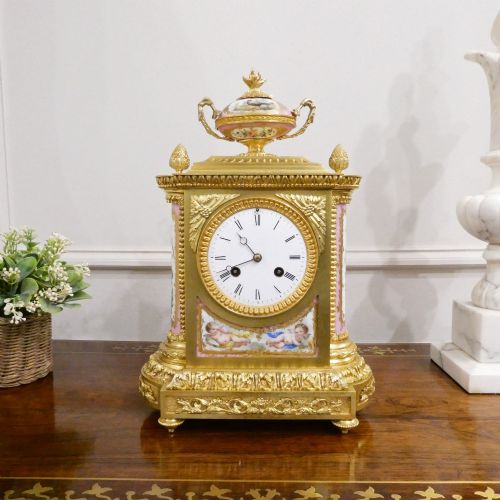
A cherub ormolu timepiece is a decorative clock featuring cast metal figures of winged infants alongside gilded bronze mounts. The selection on this page centres on nineteenth-century French and English mantel and table clocks, spanning periods from Regency to Victorian.
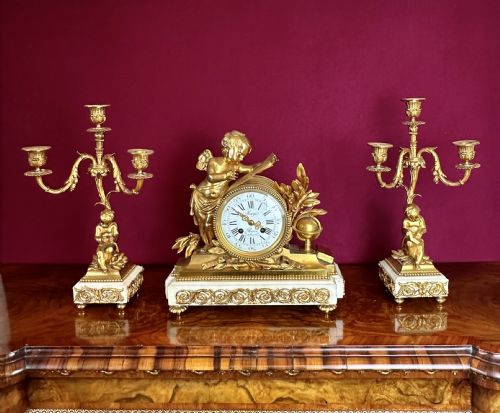
Buyers will find mantel clocks, table clocks, and clock garnitures executed in styles ranging from French Rococo Revival and Louis XVI to Empire and Neoclassical. Figures of cherubs and putti frequently appear draped across marble plinths, seated beside dials, or reaching into trees.
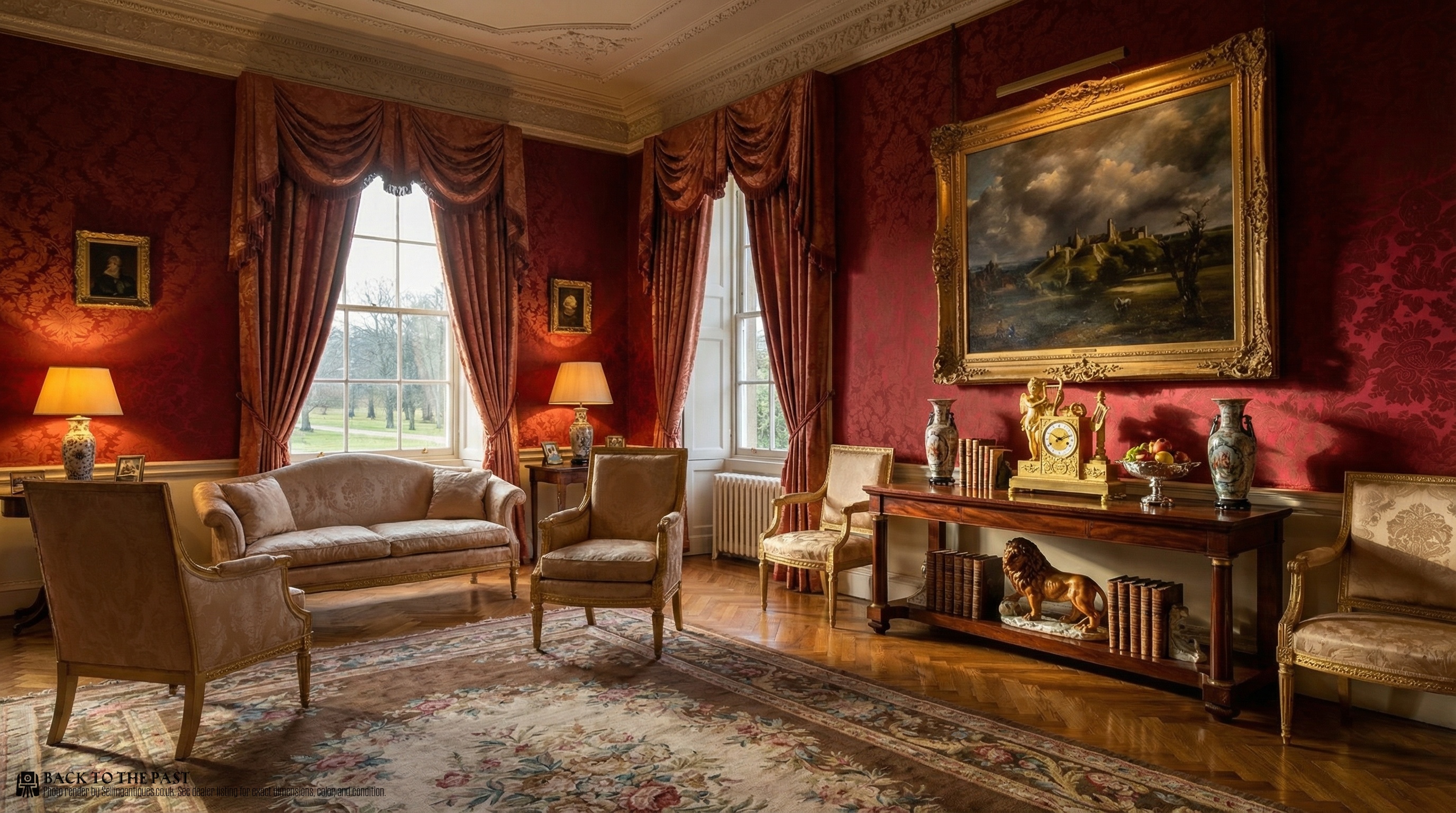
Most examples originate from French workshops and Parisian makers, though English makers also contributed fusee movements housed in gilt ormolu cases. These objects functioned primarily as domestic status pieces for mantelpieces and reception rooms.
How they were made
The primary material is ormolu, also known as gilt bronze, formed by applying a gold amalgam to cast bronze and firing it to drive off the mercury. This technique produces a durable, luminous surface that required skilled mercury gilding.
Cases combine ormolu with patinated bronze, white or pink marble bases, and inset porcelain plaques painted with figures or floral motifs, often following Sevres styles. Enamel dials carry the numerals, while mechanical movements inside regulate the eight-day striking or fusee mechanisms.
One persistent cherub is caught in the act of reaching directly for birds resting in a tree.
What varies in quality
The sharpness and depth of the bronze casting define the visual standard, where finely chased details in the cherub's hair and wings distinguish superior pieces from softer, mass-produced castings. The quality of the fire-gilding also dictates longevity, showing a rich, warm lustre rather than a flat, brassy finish.
Movement maker marks and the integration of auxiliary materials like Sevres-style porcelain and variegated marble elevate an example. Clocks with signed movements from established makers demonstrate a higher grade of mechanical precision and case assembly.
Jean-Baptiste Delettrez·Le Roy, Paris·Leon Message·Jollet et Cie·Samuel Marti·Le Roy and Fils·John Bennett Cheapside London·Henry Berkeley Square London·Baetens London·Japy Freres
The Cherub Ormolu Timepiece Glossary
- Ormolu
- A technique of applying finely ground gold mercury amalgam to bronze, creating a durable golden finish. It was widely used on nineteenth-century French clock cases.
- Fusee
- A conical pulley used in clock movements to maintain an even pull as the mainspring unwinds. This mechanism improves timekeeping accuracy.
- Garniture
- A set comprising a central clock and matching side ornaments, such as vases or candelabra, designed to sit together on a mantelpiece.
- Champleve
- An enamelling technique where troughs are dug into the metal surface and filled with vitreous enamel before firing. It appears frequently on nineteenth-century clock dials and bezels.
- Putto
- A plump, naked winged infant depicted in art and ornamentation, commonly referred to as a cherub on these clock cases.
Cherub Ormolu Timepiece: Frequently Asked Questions
What is a cherub ormolu timepiece?
A cherub ormolu timepiece is a nineteenth-century clock featuring a gilded bronze case adorned with figures of putti or cherubs. These decorative objects combine mechanical clockwork with sculptural metalwork.
They were designed for display on mantelpieces and tables in grand nineteenth-century interiors. Most surviving examples hail from French workshops or London makers.
How do I wind the clock?
Most of these clocks use a key inserted into holes on the dial to wind the mainspring barrels. Eight-day movements require winding approximately once a week.
Care should be taken not to overwind the spring. Consulting a professional clockmaker for initial setup ensures the movement runs safely.
How do I date a French ormolu clock?
Dating relies on stylistic clues such as the revival period, cast signatures, and dial construction. Nineteenth-century pieces often feature maker stamps on the backplate of the movement.
Materials like pink marble, Sevres-style porcelain panels, and patinated bronze further anchor the piece within the Victorian or Regency eras.
Where should I place a marble and ormolu clock?
These clocks require a stable, level surface such as a mantelpiece, sideboard, or sturdy table. Because marble and ormolu cases carry considerable weight, the support must be secure.
Direct sunlight and damp environments should be avoided to protect the fire-gilt surface and the internal steel and brass components.