


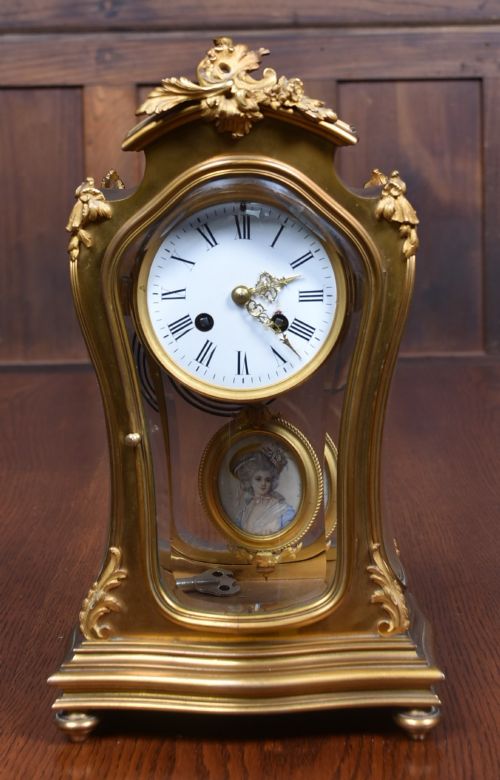


Decorative Mantel Timepiece
A decorative mantel timepiece brings working mechanical timekeeping into domestic interiors through sculpted bronze, polished brass and glazed panels.
Decorative Mantel Timepiece
A decorative mantel timepiece sits upon a shelf, surface or mantelpiece to tell the hour while serving as an interior ornament. You will encounter many French examples alongside Victorian British pieces when exploring this page.
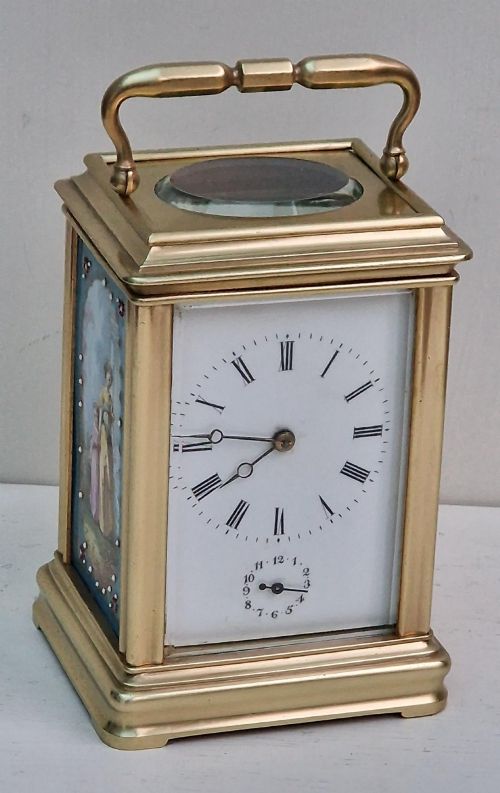
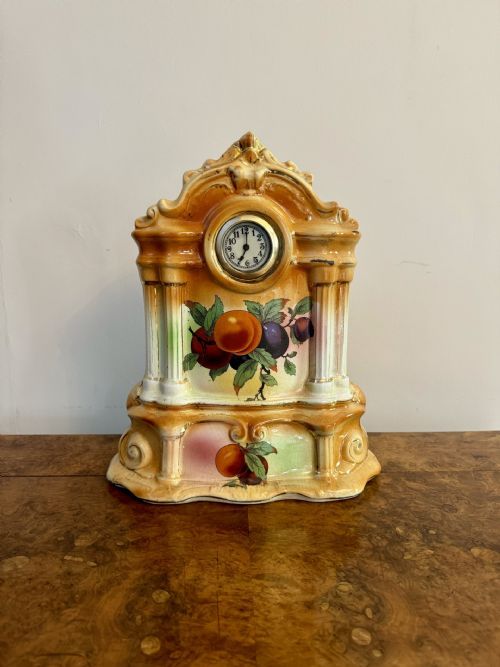
The selections span various forms including traditional carriage clocks, four glass cases, crystal regulators and sculptural figural mantel clocks. Materials range from solid marble and ebonised wood to cast ormolu and porcelain.
Most pieces date from the nineteenth century, though the selection reaches back to the eighteenth century and forward into the twentieth century. Makers such as Henri Jacot, Rodier, Le Roy and Tiffany appear among these historical timekeepers.
How they were made
Craftsmen built these clocks using durable metals like brass, bronze and gilded ormolu for the structural cases and decorative mounts. Enamel featured heavily on painted dials and decorative panels, whilst clear glass protected delicate movements in crystal regulators and carriage clocks.
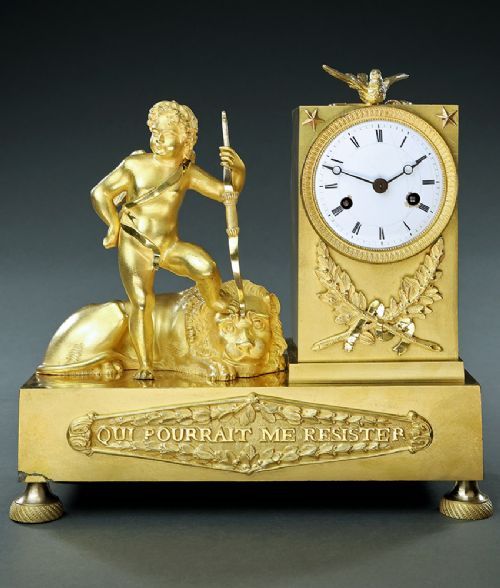
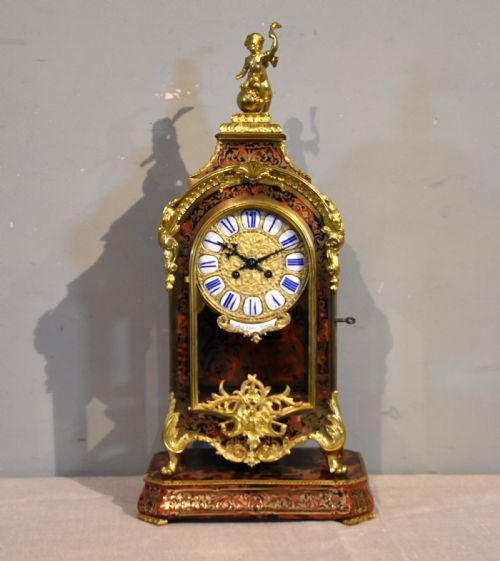
Cabinetmakers shaped timber cases from ebonised wood and hand-carved oak, often incorporating intricate brass inlays such as Boulle work. Foundries cast figural elements depicting putti, animals and classical motifs separately before chasing and fire-gilding the finished surfaces.
Materials recorded across the archive include hand-painted enamel, carved marble, ebonised wood, gilt bronze and ormolu.
What varies in quality
The refinement of the casting and chiselling on bronze and ormolu mounts separates standard production from exceptional work. Crisp detail in figural subjects, such as cherubs, foliage and animal motifs, indicates superior craftsmanship.
The integration of signed movements, hand-painted enamel dials and miniature artworks elevates a piece. The weight and finish of the materials, from heavy marble bases to bevelled glass panels, determine the overall substance of the clock.
Henri Jacot·Le Roy·John Bennett Cheapside London·Hessen Paris·Tiffany
The Decorative Mantel Timepiece Glossary
- Ormolu
- Gilded bronze produced by applying a mercury and gold amalgam to cast bronze. This technique creates a rich, durable golden finish found on many nineteenth-century French cases.
- Carriage clock
- A portable spring-driven timepiece originally designed for travel. These brass-framed clocks typically feature glass panels and a folding handle on top.
- Crystal regulator
- A mantel clock housed in a brass frame with four bevelled glass panels. This design allows the pendulum and movement to remain visible from all angles.
- Fusee
- A conical pulley used in mechanical clocks to maintain even driving force as the mainspring unwinds. It ensures consistent timekeeping accuracy across the power reserve.
Decorative Mantel Timepiece: Frequently Asked Questions
How do I wind a mantel clock?
Most mechanical timepieces require a key inserted into the dial to tension the mainspring barrels. Turn the key gently until you feel resistance, taking care not to overwind the mechanism.
Consult the specific movement type before adjusting the hands or strike train. Many antique clocks require the minute hand to be moved only in a clockwise direction to protect the gear train.
Where should I place a glass clock?
Position your timepiece on a stable, level surface away from direct sunlight and draughts. Heavy marble, slate or wooden mantelpieces provide ideal support and prevent vibrations that can disrupt the pendulum.
Avoid high-humidity environments like kitchens or damp rooms where brass components and steel springs might oxidise. Ensure the surrounding furniture cannot be easily knocked if the clock lacks an enclosed case.
How do I identify a carriage clock?
Look for a rectangular brass or gilt metal case fitted with glass panels on all sides and a carrying handle on top. These pieces were originally built for officers and travellers during the nineteenth century.
Examine the escapement visible through the top glass panel or dial. Many quality examples also include repeating mechanisms that chime the hours and quarters on demand.
What is a crystal regulator?
A crystal regulator is a distinct type of nineteenth-century mantel clock featuring heavy bevelled glass on four sides. This construction showcases the entire movement, mercury thermometer pendulums and porcelain dials.
These clocks rely on precision spring-driven or deadbeat escapement movements housed within polished brass frames. Their transparent architecture allowed morning light to illuminate the inner workings from multiple angles.