


Gold Empire Mantel Clock
A gold empire mantel clock brings neoclassical weight and chased ormolu to a room, anchoring a mantelpiece with allegorical bronze figures and architectural marble bases.
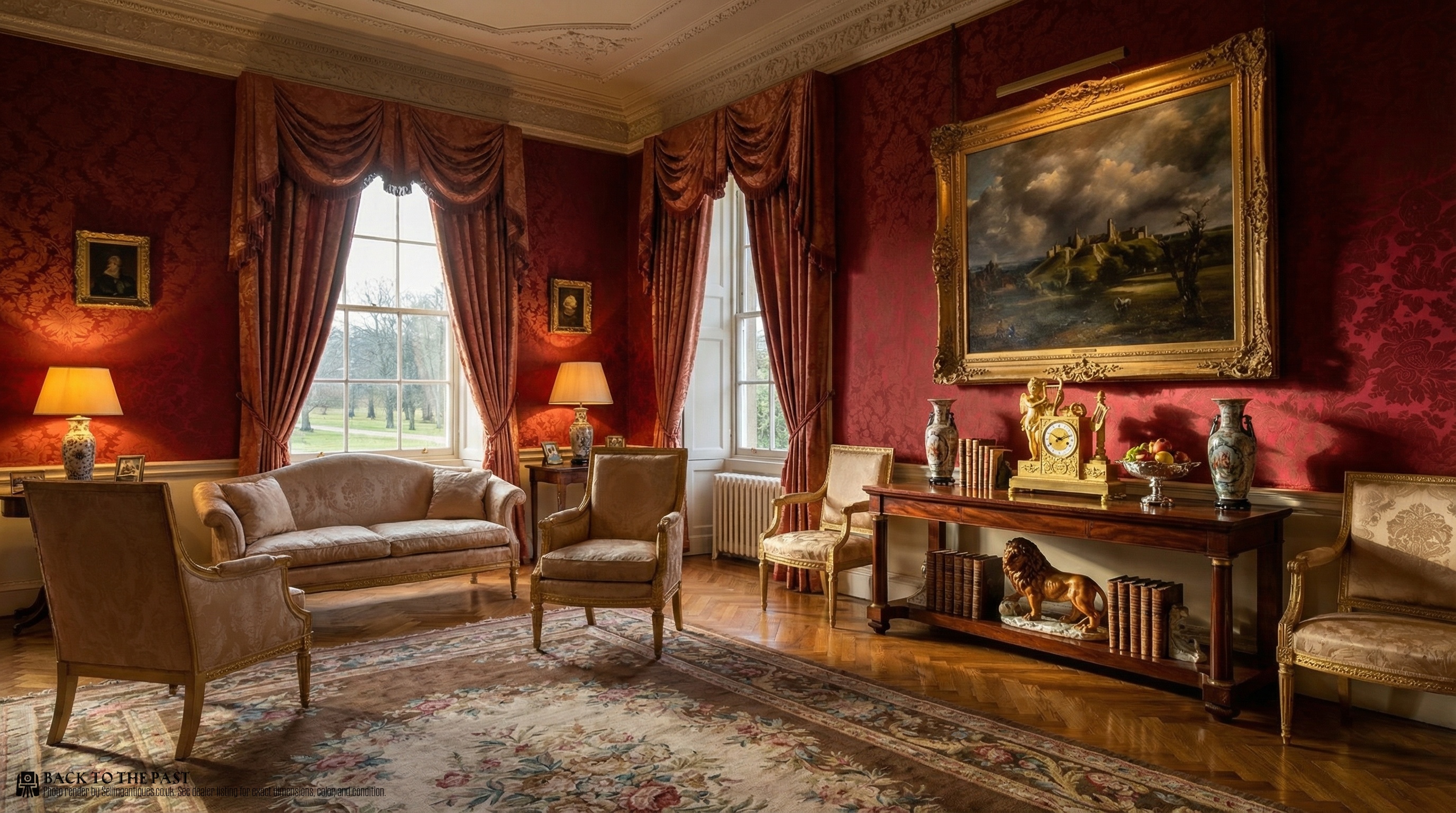
Gold Empire Mantel Clock
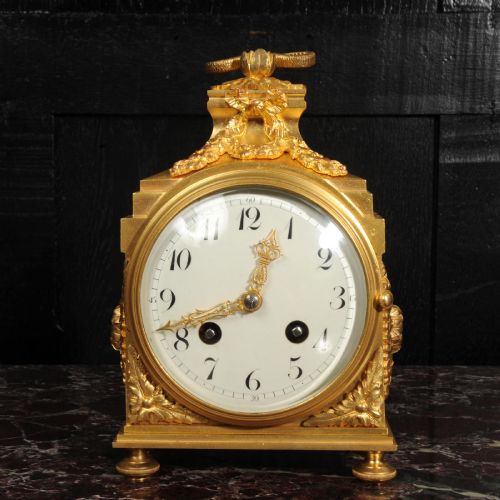
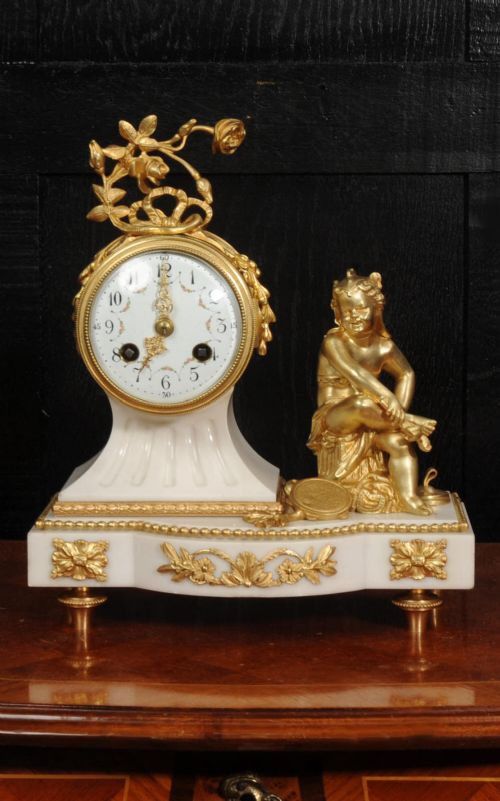
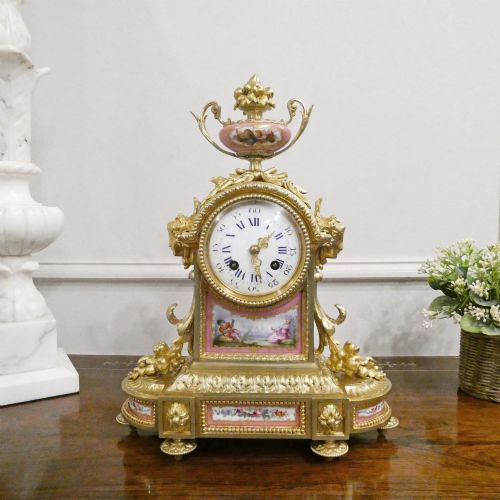
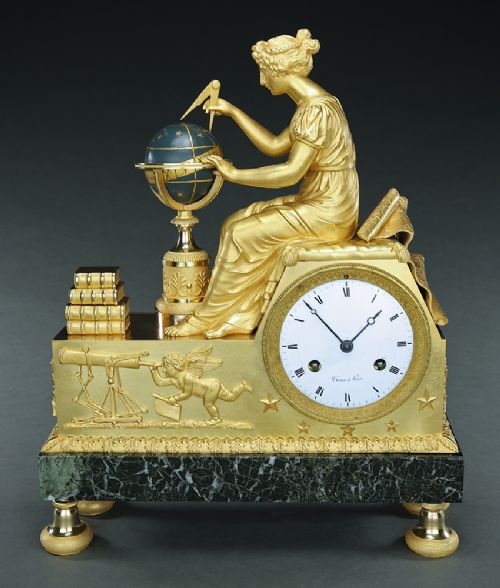
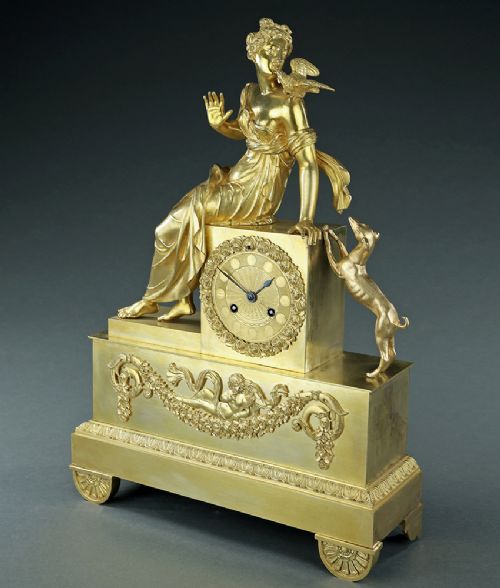
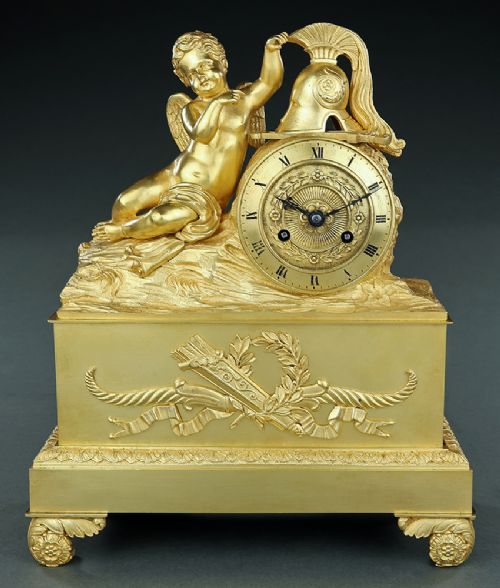
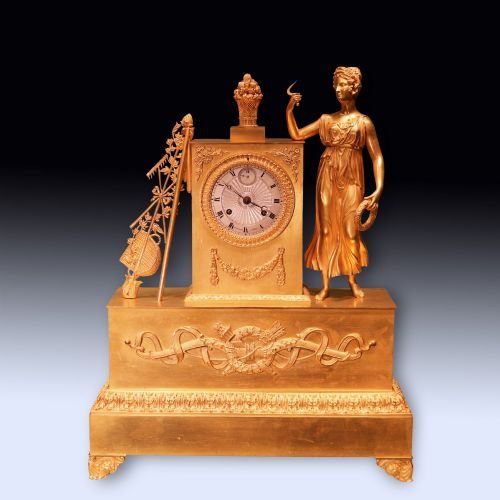
When you search for a gold empire mantel clock, you encounter heavy nineteenth-century French timepieces cast in bronze and detailed with mercury gilding. These works frequently incorporate mythological themes, military triumphs, or celestial allegories into their sculptural cases.
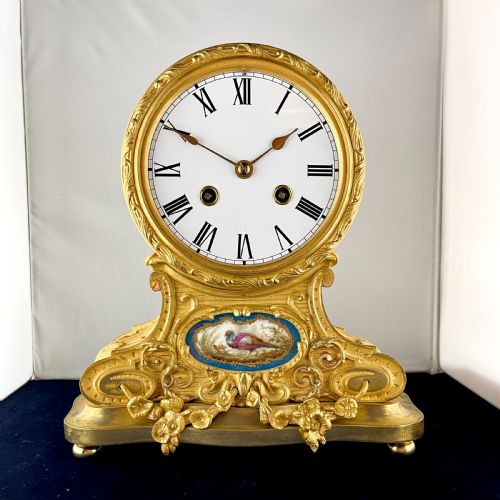
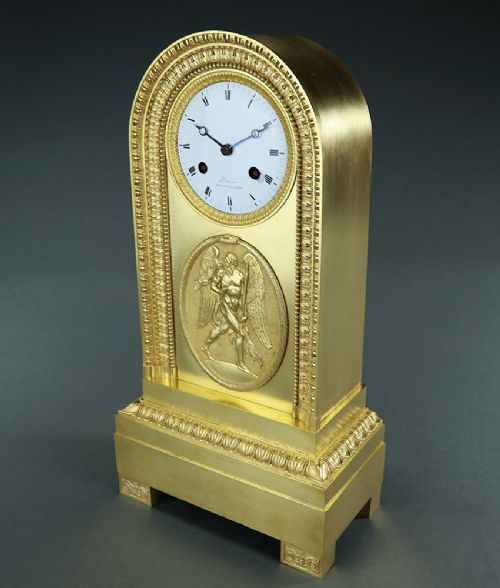
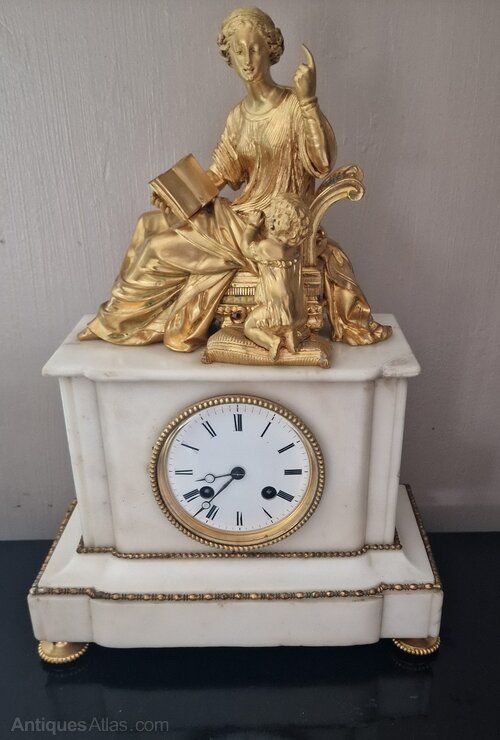
The most common examples on this page date from the nineteenth century, spanning periods from the Regency and Charles X eras through to the later Victorian decades. They take the form of architectural porticos, drumheads, or figurative pedestals supporting circular enamel dial faces.
Many items appear paired with matching side pieces as clock garnitures, creating a symmetrical arrangement for a salon or drawing-room chimneypiece.
Materials and Construction
The primary structural shell relies on cast bronze, brass, or white marble, shaped into classical columns, plinths, and figural mounts. Artisans then applied a layer of gold ormolu, using mercury gilding techniques to impart a rich metallic lustre.
Contrasting details often involve patinated bronze for figural drapery or foliage, set against the bright surface of the gilded mounts. Dials are constructed from white enamel or porcelain, marked with delicate numerals and fitted behind protective convex glass.
Movements inside these cases utilise brass plates, steel arbors, and occasionally fusee mechanisms or pendulum controls signed by prominent horologists.
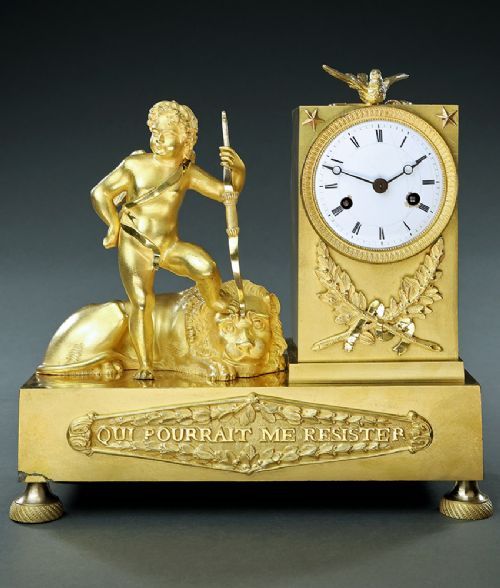
Several clocks depict heroic animals, including domestic felines and lions gazing steadfastly past classical clock faces.
Distinctions in Execution
The standard of a gold empire mantel clock rests upon the crispness of the bronze chasing and the depth of the ormolu finish. Superior examples display sharply defined facial expressions, intricate drapery folds, and deeply textured acanthus leaves rather than soft, smoothed casting edges.
The mechanical sophistication of the interior movement further separates standard production from masterwork output. Signed clockmakers and complex astronomical or striking complications elevate the integrity of the piece.
Japy Freres·Samuel Marti·Charpentier Paris·Pons de Paul·Breguet
The Gold Empire Mantel Clock Glossary
- Ormolu
- Finely chopped leaf gold amalgamated with mercury and applied to a bronze base through heat diffusion. This historical process yields a durable, glowing golden surface.
- Portico clock
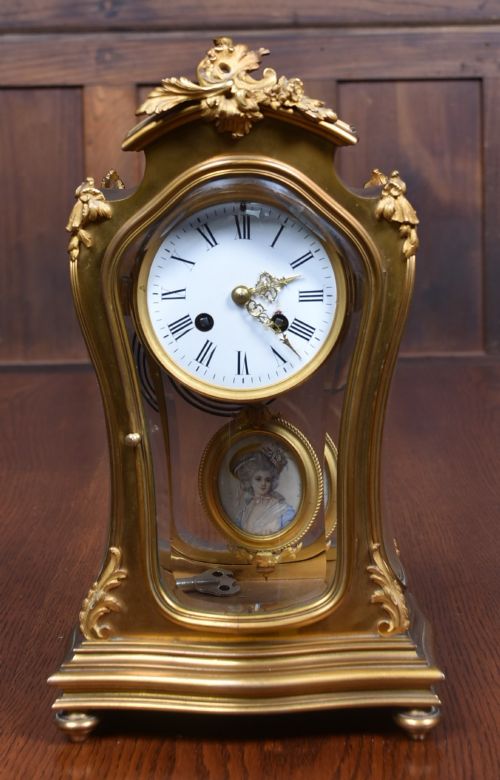
- An architectural style of timepiece supported by four or more columns arranged around a central pendulum housing. It frequently incorporates cut crystal elements and visible oscillating bobs.
- Garniture
- A set comprising a central clock flanked by matching decorative objects such as urns or candelabra. These sets were designed for symmetrical display on fireplace mantels.
- Fusee
- A conical pulley used in clock movements to maintain an even pull on the gear train as the mainspring unwinds. This mechanism improves the timekeeping accuracy of the clock.
- Pendule d'Officier
- A portable military or campaign clock encased in metal with a carrying handle on top. They are compact versions designed for travel during the nineteenth century.
Gold Empire Mantel Clock: Frequently Asked Questions
How do I wind the movement?
Wind the clock using the designated key inserted into the winding holes on the enamel dial. Turn gently until resistance is felt, avoiding over-winding to protect the internal mainspring.
Ensure you match the correct square of the key to the arbors for striking and time trains. Take care not to force the gears if the clock resists.
What is an ormolu finish?
Ormolu refers to a gilded bronze technique where a mercury-gold amalgam is fired onto the cast metal surface. This creates a deep, warm metallic skin that resists tarnishing over decades.
Unlike modern electroplating, historical ormolu possesses a distinct micro-texture visible under magnification. It requires gentle dusting rather than abrasive polishing to preserve the remaining gold layer.
How were portico clocks constructed?
Portico clocks utilise an architectural frame with vertical marble or ormolu columns supporting an upper entablature. The pendulum swings visibly within the open central space between the pillars.
This design draws inspiration from classical building facades of antiquity. The optical transparency gives the heavy bronze structure a lighter, balanced appearance on a shelf.
Where should I place my clock?
Position the piece on a stable, level surface such as a wooden mantelpiece or a secure console table. A flat foundation ensures the pendulum swings evenly without catching on the case interior.
Keep the clock away from direct sunlight and damp chimney flues to protect the delicate enamel dials and the mercury-gilt finish. Consistent indoor temperatures help maintain the stability of the wood and metal components.