
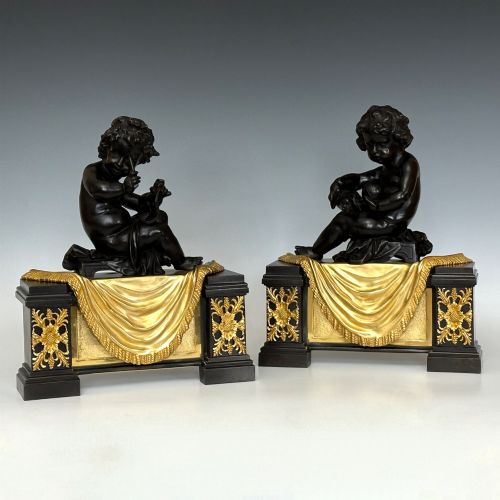


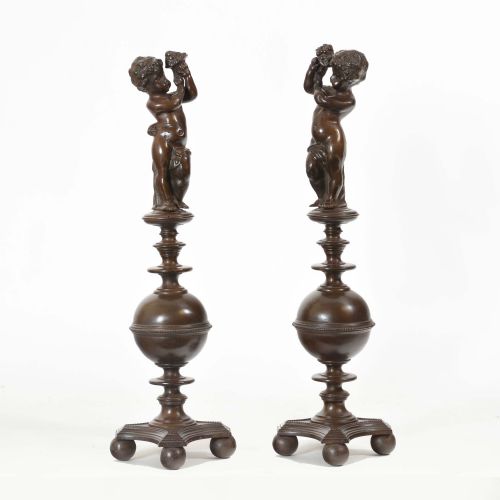


Cherub Fire Dogs
Cherub fire dogs bring sculptural grace and warmth to a hearth, combining sturdy iron and bronze with expressive classical figures.
Cherub Fire Dogs
When you search for cherub fire dogs, you are looking at ornamental hearth furniture designed to support logs above the hearth floor while framing the fire with figurative sculpture. These pieces belong primarily to the nineteenth century, drawing heavily on French Rococo, Louis XIV, Louis XV, and Renaissance revival styles.
How they were made
Maker-craftsmen built these heavy accessories using durable metals like cast iron for the functional billet bars, paired with decorative mounts in bronze, brass, and ormolu. Artisans employed detailed metal casting techniques to shape the figural cherub motifs.
Surfaces received elaborate treatments, including fire gilding to create rich ormolu, hand chasing to sharpen sculptural details, and dark patination to create contrast against the gilt highlights.
These industrious cherubs spend their days holding up logs instead of chasing arrows.
What varies in quality
Another measure of quality involves the combination of materials, such as the use of true ormolu alongside patinated bronze rather than simpler painted finishes. Heavier gauge metalwork and secure, original joints also elevate the standing of a pair.
The Cherub Fire Dogs Glossary
- Chenet
- A French term for an andiron or fire dog used to support logs in an open fireplace. They often feature decorative frontispieces like cherubs.
- Ormolu
- Finely ground high-carat gold mercury-gilded to a bronze object. This technique imparts a rich, durable golden finish.
- Andiron
- A horizontal metal support raised on legs, used in pairs to hold firewood. They protect the hearth floor and improve airflow.
- Patinated Bronze
- Bronze that has been chemically treated to alter its surface colour. This process creates deep brown or dark tones that highlight gilded mounts.
- Billet Bar
- The heavy iron horizontal bar extending back from the decorative front. It bears the weight of the burning logs.
Cherub Fire Dogs: Frequently Asked Questions
What is the difference between andirons and chenets?
Andirons and chenets serve the exact same foundational purpose within an open fireplace. The distinction is largely linguistic, with chenet being the traditional French term for the decorative hearth furniture.
Both types feature a vertical decorative front and a horizontal bar to hold logs. You will find both terms used interchangeably across nineteenth-century continental designs.
How were cherub fire dogs used?
These decorative accessories stood at the front of an open hearth to keep firewood elevated off the floor. Raising the logs allowed air to circulate underneath, helping the fire burn more efficiently and evenly.
Beyond their practical function, the ornate cherub fronts served as permanent interior sculpture when the hearth was unlit during warmer months.
How do I date a pair of fire dogs?
Dating relies on examining the casting quality, the metallurgical composition, and the stylistic revival period. Nineteenth-century pieces frequently emulate earlier Louis XIV, Louis XV, or Renaissance aesthetics.
Inspect the fasteners, the weight of the cast iron, and the quality of the ormolu or patination to determine if a pair belongs to the nineteenth century.
Are these pieces safe to use in a working fireplace?
Most antique fire dogs are constructed from robust materials like cast iron and bronze designed to withstand high heat. However, modern users often reserve finer ormolu and gilded pieces for decorative display.
If you intend to burn wood, ensure the billet bars are structurally sound and capable of supporting the thermal load without damaging the decorative frontispiece.