
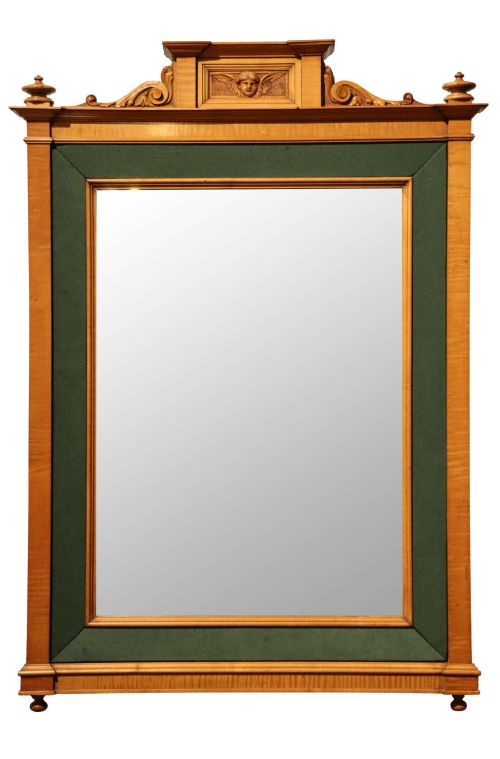
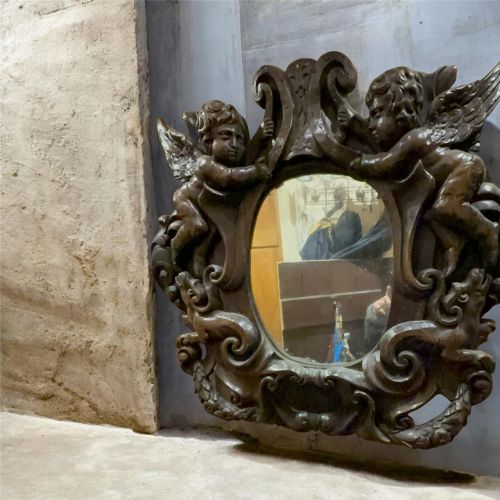


Cherub Carved Wall Mirror
A cherub carved wall mirror brings classical theatre into a room through winged figures perched above glass.
Cherub Carved Wall Mirror
A cherub carved wall mirror centres on carved wooden or gesso putti and cherubs, often crowning the crest or flanking the frame. These pieces appear across the eighteenth, nineteenth, and early twentieth centuries in various regional tastes.
The most common forms on this page include large gilt overmantle mirrors, French carved wood and gesso arched top panels, and smaller Italian or English wall mirrors. Styles range from Rococo Revival and Louis XVI to Baroque and Edwardian interpretations.
Buyers seek these mirrors for their sculptural presence and historical character, using them above mantelpieces or in hallways to reflect light while adding figural ornament.
How they were made
Carvers shaped frames from woods such as oak, walnut, fruitwood, and satinwood, building up relief details for figures and scrollwork. Giltwood examples utilised layers of gesso applied over carved timber before receiving gold leaf or parcel gilding.
Makers finished many surfaces with paint, silvering, or original distressed gold leaf to achieve decorative depth. Glass plates were then fitted into the rabbet, often featuring bevelled edges in later nineteenth-century iterations.
Listings feature mirrors spanning the eighteenth, nineteenth, and early twentieth centuries, constructed from giltwood, oak, walnut, and gesso.
What varies in quality
Quality rests in the depth and articulation of the carved cherubs and framing ornament, where fluent hand-carving separates masterwork from rigid mass production. Crisp detail in the gesso work and the preservation of original gilding or paint layers dictate the visual impact.
The integration of the mirror plate with the frame also marks the standard of the piece, alongside the architectural scale and proportion of the pediment or cresting.
Sir Willian Trotter
The Cherub Carved Wall Mirror Glossary
- Putto
- A plump, naked child figure, commonly winged, frequently depicted in classical art and architectural ornament. These sculptural figures form the primary motif of cherub carved wall mirrors.
- Gesso
- A plaster mixture applied to wood frames to create a smooth surface for gilding or painting. It allows carvers to model fine relief details before applying gold leaf.
- Giltwood
- Timber coated with gold leaf or powder over a prepared base. This finish catches candlelight and natural illumination in period interiors.
- Overmantle mirror
- A large horizontal mirror designed to hang specifically above a fireplace mantel. They often feature prominent crests and architectural framing.
- Parcel gilt
- A decorative treatment where only specific parts of an object are gilded while the rest remains painted or exposed wood. This technique highlights particular carved elements like cherubs and scrolling foliage.
Cherub Carved Wall Mirror: Frequently Asked Questions
Where should I hang a cherub carved wall mirror?
These mirrors work effectively above a fireplace mantel or as a focal point in a hallway or lounge where their sculptural crests can be fully appreciated.
Ensure the wall structure can support the weight of heavy wood and gesso frames, particularly for larger overmantle examples.
How do I identify the period of a carved mirror?
Examine the wood species, the composition of the gesso, and the style of the carving, such as Rococo asymmetry or Louis XVI neoclassical symmetry.
Nineteenth-century interpretations often revive earlier eighteenth-century motifs, so hardware and the condition of the glass plate provide further clues.
What is the difference between a putto and a cherub?
In art history, a putto is a non-religious chubby infant motif derived from classical mythology, while a cherub possesses celestial status.
Victorian and French nineteenth-century listings often use both terms interchangeably to describe the winged figures on mirror crests.
How should I clean and care for a giltwood mirror?
Dust the carved wooden frame gently with a dry, soft brush to protect delicate gesso and gold leaf surfaces from abrasion.
Keep the glass clean using a cloth slightly dampened with water, avoiding harsh chemical sprays that might damage the surrounding antique finish.