
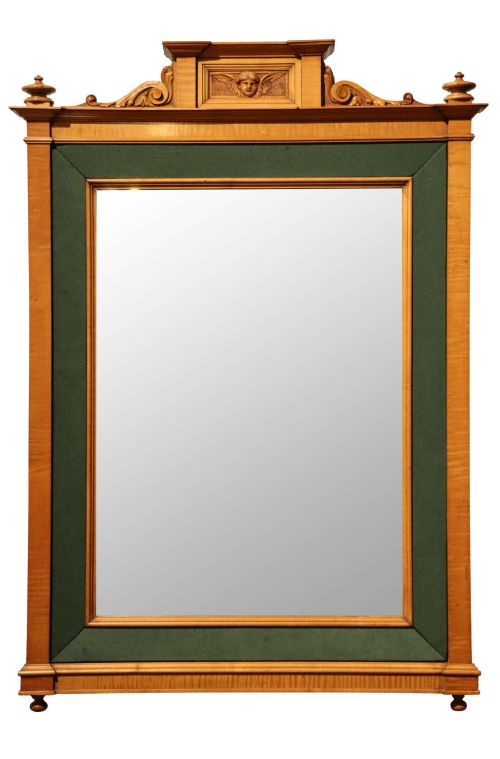


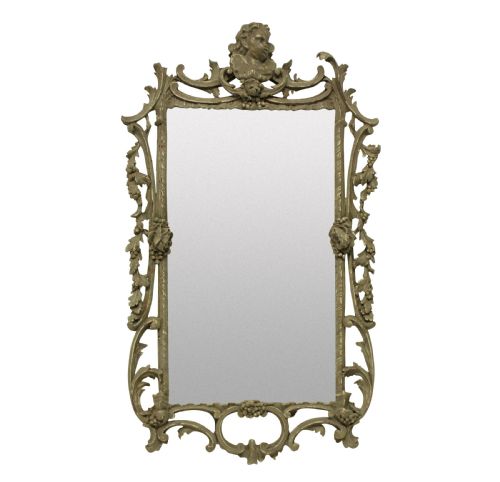
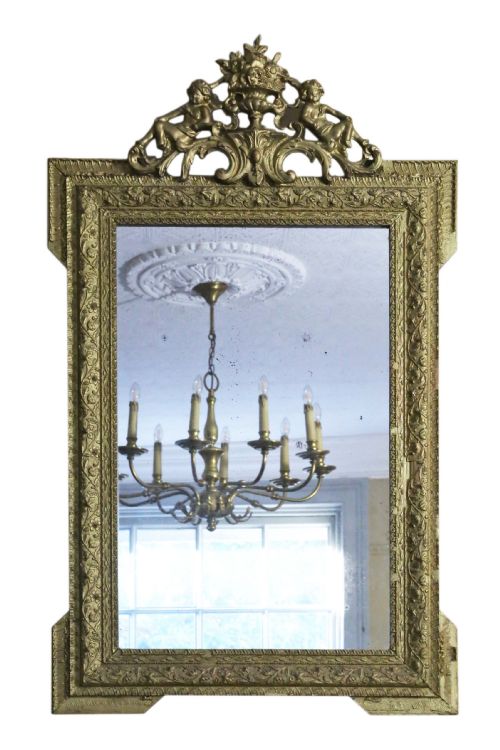


Carved Cherub Crest Mirror
These carved cherub crest mirror pieces bring sculptural charm and antique character to a room, offering the ornate detail collectors prize in period wall furnishings.
Carved Cherub Crest Mirror
A carved cherub crest mirror centres on decorative figural cresting, often featuring putti or winged figures perched above the glass plate. These wall mirrors and overmantel mirrors emerge in forms influenced by French Rococo Revival, Louis XVI, Carolean, and Baroque styles.
The pieces appearing on this page span the nineteenth century through the early twentieth century, including Edwardian satinwood variations and Victorian overmantel designs. Buyers frequently encounter giltwood and gesso constructions alongside timber frames decorated with painted or silvered surfaces.
Forms range from large architectural overmantel mirrors to smaller wall-hanging formats framed in oak or satinwood with fabric accents. Each example demonstrates the historical revival movements that defined British and continental interior decoration across multiple decades.
Materials and construction methods
Craftsmen built these frames using timber foundations such as oak and satinwood, applying layers of gesso and composition material to model intricate surface decoration. Artisans then carved fine details into the wood or moulded relief ornamentation before applying gold leaf, paint, or silvering.
Mirrors utilise glass plates set within arched or rectangular frames, sometimes incorporating fabric backing panels or specialised distressing. The combination of carved wood, applied gesso, and metallic leaf creates the reflective depth characteristic of period overmantels and wall mirrors.
Listings feature periods spanning from the nineteenth century into the twentieth century, including Edwardian and Victorian examples.
Distinctions in craftsmanship
Quality rests in the depth and sharpness of the carved or moulded cresting, where crisp details on the cherub or putto distinguish superior work from softer castings. The handling of the gesso and the precision of the joinery determine the structural integrity of the frame over time.
The application of the original gilt, paint, or silver surface heavily influences the character of the piece, with well-preserved patination carrying greater decorative presence. Material choices, from figured satinwood to heavy oak, also reflect the ambition of the original maker.
The Carved Cherub Crest Mirror Glossary
- Putto
- A plump, winged child figure frequently depicted in classical art and architectural decoration. These figures form the distinctive cresting found on many antique mirrors.
- Gesso
- A plaster-like mixture applied to wood frames to create a smooth surface for gilding or painting. Artisans mould or carve fine decorative relief directly into this layer.
- Giltwood
- Timber coated with gold leaf or metallic powder to simulate solid gold objects. This finish provides the bright, reflective quality seen on nineteenth-century frames.
- Overmantel mirror
- A large wall glass designed specifically to hang above a fireplace mantelpiece. These pieces often feature architectural proportions and elaborate cresting.
- Carolean Revival
- A nineteenth-century design style emulating the ornate, richly carved furnishings of the late seventeenth-century reign of Charles II. It typically incorporates robust scrolling foliage and deep relief work.
Carved Cherub Crest Mirror: Frequently Asked Questions
Where should I hang a carved cherub crest mirror?
These mirrors work well above living room mantelpieces or as focal points on principal interior walls where their detailed cresting can be fully appreciated.
Ensure the wall structure and fixings can support the substantial weight of a timber and gesso frame before installation.
How do I clean an antique gilt mirror?
Dust the carved crest and frame gently with a soft, dry brush to avoid disturbing fragile gesso or leafing.
Clean the glass plate using a minimal amount of glass cleaner applied to a cloth rather than sprayed directly onto the mirror surface.
What is the difference between a wall mirror and an overmantel mirror?
Wall mirrors are generally proportioned for hanging on standard room walls to reflect light and enhance smaller spaces.
Overmantel mirrors are larger, wider formats specifically built to sit horizontally above a fireplace hearth as architectural room centerpieces.
How can I tell the period of a mirror frame?
Examine the construction methods, backboards, and mounting hardware for signs of period manufacturing techniques and materials.
Stylistic cues, such as Edwardian satinwood use or Victorian gesso composition, also help narrow down the date of creation.