

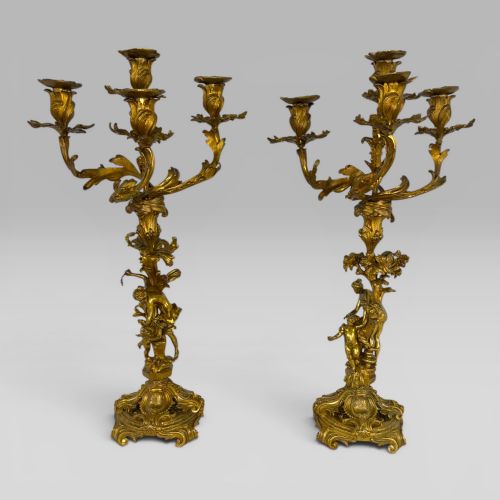


Cherub Bronze Candleholders
Cherub bronze candleholders combine neoclassical grace with sculptural charm, offering interiors a warm, figurative illumination rooted in nineteenth-century French metalwork.
Cherub Bronze Candleholders
When you search for cherub bronze candleholders, you encounter nineteenth-century objects that combine cast metal figures with functional illumination. These pieces take the form of candlesticks, single candleholders, and multi-arm candelabra spanning two to five lights.
The versions most likely to appear on this page are French pairs dating from the Victorian era, particularly the 1860s through the 1890s. They frequently pair cast metal figures with stone bases such as marble or porphyry.
Makers and designers of the period drew heavily on earlier historical design languages. French Empire, Louis XVI Style, and French Rococo aesthetics dominate the offerings, bringing classical mythology and playful putti into nineteenth-century domestic spaces.
How they were made
The creation of these pieces relied on bronze casting techniques combined with specialist surface finishing. Founders utilised patinated bronze, gilt bronze, ormolu, and silvered bronze to create tonal contrast against the dark or gleaming metal.
Many examples incorporate carved or turned stone elements as structural supports. Marble and porphyry marble bases anchor the heavier metal branches and figures, adding weight and mineral colour to the composition.
Cherubs occasionally manage to look simultaneously pious and mischievous while hauling heavy brass branches.
What varies in quality
The distinction between ordinary and superior pieces rests on the crispness of the metal chasing and the depth of the casting. Better workshops employed skilled chasers to refine hair, wings, and facial expressions after the metal left the sand or lost-wax mould.
Material selection also dictates quality, particularly the integration of gilt ormolu alongside patinated surfaces and the choice of heavy, richly veined marble or porphyry bases. Signed works or those attributed to known sculptors like Claude Clodion represent the upper tier of execution.
Claude Clodion
The Cherub Bronze Candleholders Glossary
- Ormolu
- A technique of applying finely ground high-carat gold to a bronze object using a mercury amalgam. This gilding method produces a deep, lasting lustre characteristic of fine French decorative arts.
- Putto
- A plump, naked male child figure frequently depicted in classical art and architectural decoration. In nineteenth-century metalwork, these figures often support candle branches or recline upon marble bases.
- Candelabra
- A branched candlestick holding multiple tapers or candles from a single central stem. These objects often feature removable branches to convert multi-light fixtures into single candlesticks.
- Porphyry
- An igneous rock with large crystals embedded in a fine-grained groundmass, typically deep purple or red. It was prized in antiquity and utilised in nineteenth-century bases for its striking colour and hardness.
- Patinated bronze
- Bronze that has been chemically treated or allowed to age naturally to produce a specific surface colour. This treatment protects the metal while offering dark brown, green, or black tones.
Cherub Bronze Candleholders: Frequently Asked Questions
How do I clean bronze candleholders?
Dust gently with a soft dry cloth to protect the surface finish.
Avoid chemical polishes that can strip patination or damage original gilding.
Were these made as pairs?
Many nineteenth-century examples were produced as symmetrical pairs for mantelpieces or sideboards.
Single holders also appear, though paired sets remain more common in surviving inventory.
How do I date these pieces?
Dating relies on stylistic clues like Louis XVI revival motifs, casting methods, and material combinations.
Base stones such as marble and specific patination styles help narrow the period of manufacture.
Can I use real candles in them?
Standard taper candles fit most historical sockets designed for nineteenth-century lighting.
Use drip protectors or secure the base carefully to prevent hot wax from contacting the metal or stone.