


Pair Marble Bronze Candelabra
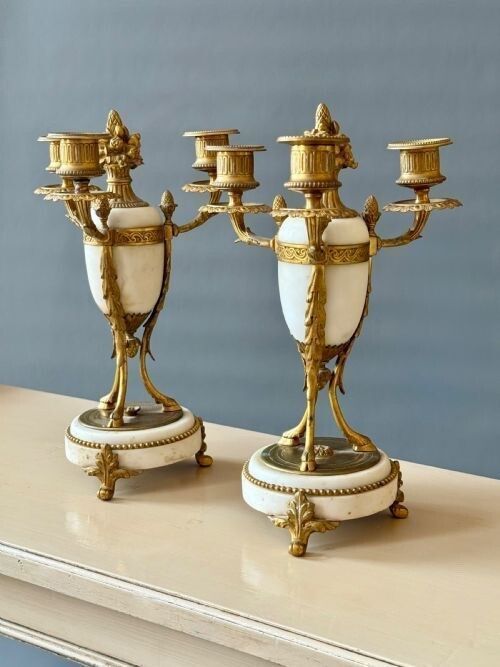
These heavy, sculptural pair marble bronze candelabra combine cast metal figures with stone plinths to hold multiple candles.
Pair Marble Bronze Candelabra
When you search for pair marble bronze candelabra, you find lighting pieces that combine cast metal components with stone bases. The most common examples on this page are French works from the nineteenth century, often produced in styles that recall earlier royal courts.
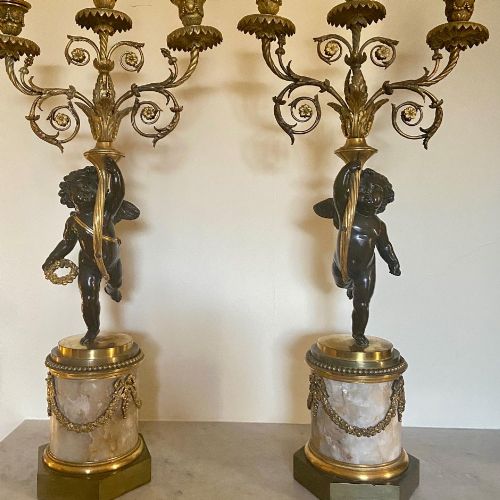
Many of these pieces take the form of cherubs, putti, or maidens supporting multi-arm candle holders above circular or square plinths. The combination serves both a functional lighting purpose and an architectural role on a mantelpiece or sideboard.
The materials and motifs connect directly to neoclassical and revival aesthetics of the eighteen-fifties through the end of the Victorian era. Buyers encounter everything from simple two-arm configurations to large five-light arrangements featuring classical figures.
Materials and construction
The metal components rely on bronze, brass, or cast alloys finished with patination, gilding, or ormolu techniques. Foundry work allows for intricate detailing on figures such as cherubs, draped maidens, and acanthus scroll arms.
The stone elements utilise various forms of marble, including white varieties, dark patinated types, or coloured stones like sienna and porphyry, turned and polished to form solid bases. Fluorspar also appears in selected examples for distinct mineral colouring.
Makers assembled these multi-part objects using threaded rods, pins, and screws to secure the metal casting to the heavy stone foot. This construction ensures stability when the arms hold lit candles or heavy sconces.
Countless small bronze cherubs spend their days holding heavy candle arms without ever dropping them.
Assessing quality in the metal and stone
The selection and turning of the marble base reveal much about the original maker's intentions. Solid, dense stone with rich natural veining and precise corner turning indicates a higher grade of production than composite or poorly finished substitutes.
Proportion between the heavy stone base and the upper candle arms determines the visual balance of the piece. Superior examples maintain a harmonious weight distribution that prevents the design from feeling top-heavy.
Francois Redmond·Claude Clodion·Thomas Hope
The Pair Marble Bronze Candelabra Glossary
- Ormolu
- Gilt bronze produced by applying a mercury and gold amalgam to a bronze base and firing it. This historic technique creates a durable, warm golden finish seen on many French revival pieces.
- Patinated bronze
- Metal treated with chemical solutions to produce a deep brown, black, or greenish surface colour. It provides contrast against polished stone and gilt highlights.
- Putti
- Depictions of plump, winged male infants, often appearing as cherubs in classical art. They frequently support the candle branches in nineteenth-century designs.
- Garniture
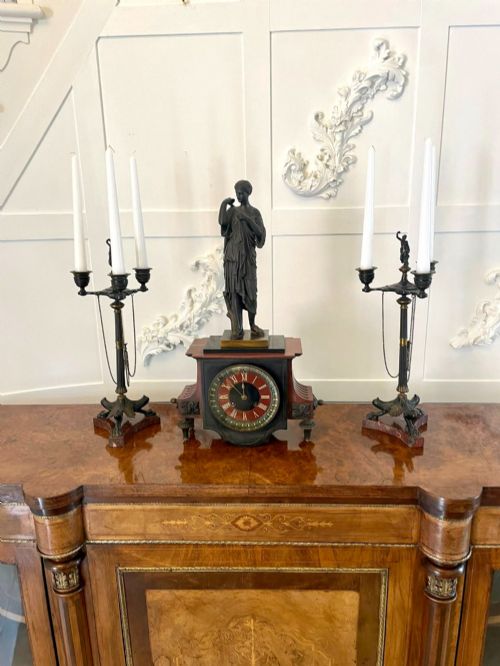
- A matching set of decorative objects for a mantelpiece, typically consisting of a central clock flanked by a pair of candelabra or vases.
- Porphyry
- An igneous rock with large crystals embedded in a fine-grained groundmass, prized for its deep reddish-purple colour and historical association with imperial monuments.
Pair Marble Bronze Candelabra: Frequently Asked Questions
How do I clean bronze and marble candelabra?
Dust the metal and stone surfaces regularly with a soft, dry cloth to prevent grime accumulation. Avoid harsh chemical cleaners or abrasive polishes that can strip the original patination or damage the stone polish.
Take care around gilt or ormolu areas, as aggressive rubbing wears away the thin gold layer. If moisture is necessary, use a damp cloth followed immediately by thorough drying.
Were these candelabra converted to table lamps?
Many surviving examples retain their original candle-holding configuration for taper or pillar candles. However, some pieces underwent conversion to electricity during the twentieth century to suit modern domestic lighting needs.
Buyers should examine the sconces and central stems closely for wiring holes or threaded fittings. Unaltered pieces preserve their historical form as lighting for candles.
How do I distinguish Louis XVI style from French Empire?
Louis XVI style pieces lean towards delicate neoclassical symmetry, featuring ribbon twists, urns, and slender fluted columns. The figures often display playful or pastoral mythological themes.
French Empire designs project a heavier, more austere military and imperial gravity, drawing directly on Roman and ancient Greek motifs. The bronze patination tends to be dark, paired with striking gilt contrasts and solemn architectural lines.
What is a clock garniture set?
A clock garniture is a matched mantel set comprising a central clock accompanied by two side pieces, such as candelabra or vases. These suites were designed to sit together on a fireplace mantel or sideboard to create a unified decorative scheme.
The materials and decorative motifs match across all items in the set, sharing the same bronze casting style and marble base design.