




Cherrywood Provincial Sideboard
A cherrywood provincial sideboard offers warm timber tones and honest regional storage, making it a robust centrepiece for a dining room or hall.
Cherrywood Provincial Sideboard
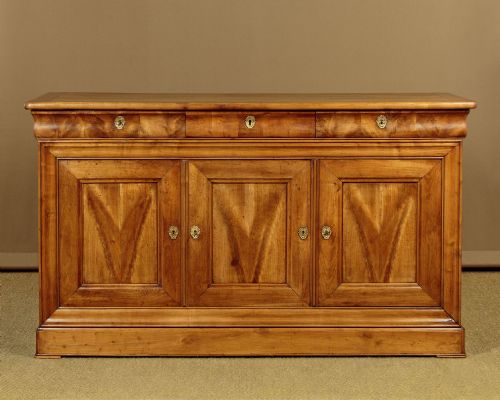
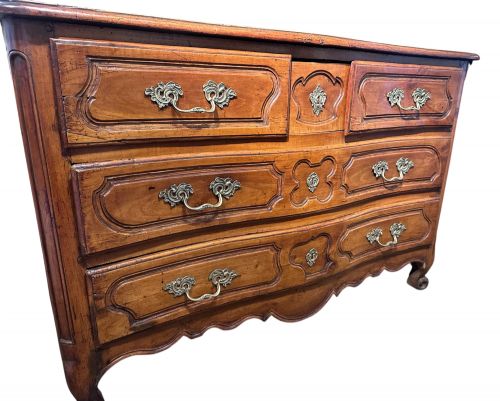
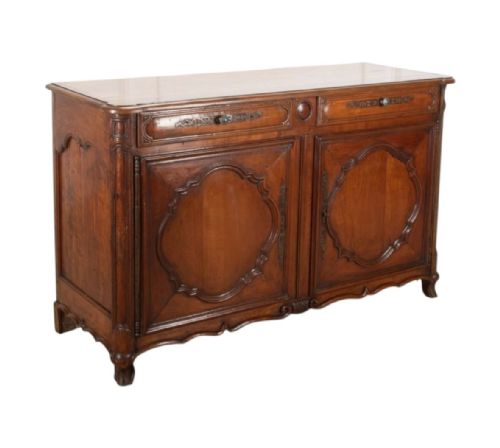
A cherrywood provincial sideboard encompasses regional French furniture forms built from dense local fruitwood, most frequently seen as commodes, enfilades, buffets, and dresser bases from the eighteenth and nineteenth centuries. These pieces reflect the practical needs of country households, combining deep cupboards and multiple drawers with generous top surfaces suited for serving.
The versions most commonly met on this page include eighteenth-century commodes alongside longer enfilades and buffet bases dating through the nineteenth century. Buyers encounter both restrained Directoire examples and earlier provincial shapes that showcase the natural grain of solid cherry.
How they were made
The primary material is solid cherrywood, occasionally paired with burr ash for striking contrast on drawer fronts or panels, reflecting regional timber choices. Workshops utilised traditional joinery alongside sturdy planks of fruitwood, creating robust carcases designed to withstand daily domestic use.
Metal hardware such as brass handles and iron fittings added functional contrast to the warm timber surfaces. Cabinetmakers shaped the cherry boards by hand, leaving a tactile finish that deepens in colour over decades.
Cherrywood Provincial Sideboard Retail Price Guide 2026
Typical asking prices for cherrywood provincial sideboard among the pieces listed under this phrase on Sellingantiques today, from the lower quarter to the upper quarter. They describe what is for sale here now, not the wider market.
Listings span the eighteenth and nineteenth centuries, featuring solid cherrywood alongside brass, iron, and burr ash elements.
What varies in quality
The distinction between standard examples and finer pieces lies in the choice of timber and the handling of the regional styling. Sideboards featuring select solid cherry boards with rich figuring or contrasting burr ash elements stand apart from simpler utility builds.
Proportion and the integrity of the original hardware dictate the visual strength of a piece. Well-preserved provincial proportions combined with crisp edge moulding represent the higher tier of regional country craftsmanship.
The Cherrywood Provincial Sideboard Glossary
- Enfilade
- A long sideboard or buffet featuring a series of doors along the front, traditionally used in European dining rooms for serving food and storing linen.
- Commode
- A low chest of drawers or cabinet with doors, originating in France and frequently utilised in provincial settings for storage.
- Directoire
- A neoclassical style bridging Louis XVI and the Empire periods, characterised by restrained geometric lines and minimal ornamentation.
- Dresser base
- The lower section of a kitchen or dining dresser, consisting of cupboards and drawers beneath a flat top without upper shelving.
Cherrywood Provincial Sideboard: Frequently Asked Questions
What is a provincial sideboard?
A provincial sideboard is a practical storage piece made outside major metropolitan centres, typically using local timbers like cherry rather than imported mahogany.
These pieces served rural households for storing provisions and linens while doubling as serving surfaces during meals.
How do I clean cherrywood?
Cherrywood benefits from gentle dusting with a soft cloth and occasional treatment with traditional beeswax to nourish the timber grain.
Avoid modern chemical polishes that can build up a residue and dull the natural warmth of the fruitwood.
Where were these sideboards made?
The pieces listed originate primarily from regional French workshops where local cabinetmakers utilised native fruitwoods available in the countryside.
Each region developed slight variations in moulding and drawer configuration that reflect local workshop traditions.
How do I date a sideboard?
Dating relies on examining the construction methods, such as hand-cut joinery, iron or brass hardware styles, and the overall profile of the carcase.
Earlier pieces from the eighteenth century often display simpler provincial lines, while nineteenth-century examples incorporate structured Directoire or classical proportions.