

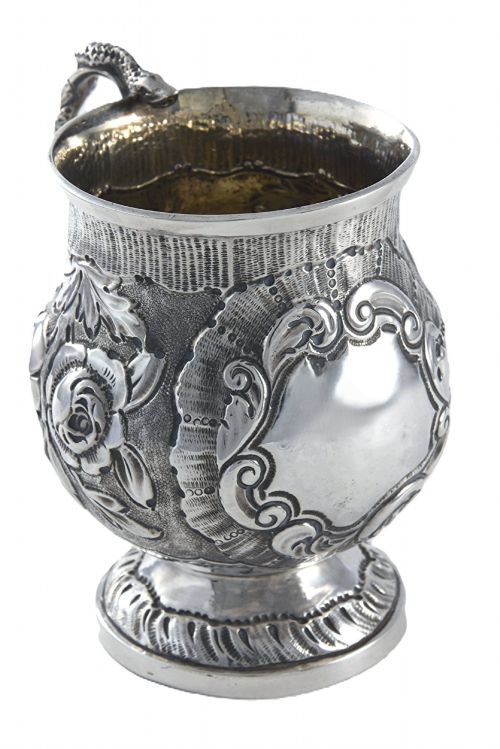


Chased Sterling Silver Mug
A chased sterling silver mug brings weight and craft to the table, holding centuries of silversmithing in the palm of your hand.
Chased Sterling Silver Mug
When you search for a chased sterling silver mug, you are looking at drinking vessels and small tankards shaped from precious metal. These items span periods from the eighteenth century through the Victorian and Edwardian eras, extending into later twentieth-century production.
The most common forms you will meet on this page are christening mugs and smaller tankards intended for daily use or presentation. Originating from workshops across Britain, including Newcastle and Chester, these pieces reflect domestic traditions of marking childhood milestones and hospitality.
How they were made
Silversmiths formed these vessels from sterling silver, occasionally applying silver-gilt finishes to the interior surfaces. Metalsmiths raised or spun the bodies before hammering and soldering handles securely to the side.
Makers decorated the exterior using chasing and embossing techniques, pushing and punching the silver from front and back to create raised floral, scroll, or figural motifs.
Mugs and tankards on this page originate from British assay offices including Chester and Newcastle.
What varies in quality
The standard of a chased sterling silver mug rests on the crispness of the hammered detail and the depth of the metal. Finer examples display high-relief ornament that remains sharp and well-defined across the entire surface.
Proportion and structural balance also distinguish finer specimens from simpler pieces. A well-constructed handle and a heavy gauge of silver provide a satisfying heft and enduring stability.
The Chased Sterling Silver Mug Glossary
- Sterling silver
- A silver alloy containing 92.5 percent pure silver by mass, with the remainder consisting of other metals like copper to add strength. This standard has served as the baseline for British plate and tableware for centuries.
- Chasing
- A metalsmithing technique where the artisan pushes and displaces metal from the front using hammers and punches to form raised designs. It differs from engraving, which cuts metal away.
- Embossing
- A method of shaping metal from the reverse side to create outward projections and bold decorative relief. This process works closely alongside chasing to build complex surface patterns.
- Silver-gilt
- Sterling silver that has been coated with a thin layer of gold on its surface, often applied to the interior of mugs and tankards to protect the metal from acidic drinks.
- Hallmark
- An official stamp applied by an assay office to guarantee the purity of the precious metal. These marks often include symbols for the maker, the town, and the year of testing.
Chased Sterling Silver Mug: Frequently Asked Questions
What is a chased sterling silver mug?
A chased sterling silver mug is a drinking vessel fashioned from standard British silver and decorated with hammered surface relief. These objects range from small christening cups to larger tankards.
Craftsmen used punches and hammers to press intricate patterns into the metal walls, creating tactile designs that catch the light. They have served as gifts, presentation pieces, and household table items for generations.
How were silver christening mugs used?
Silver christening mugs were traditionally given as gifts to infants to mark their baptism or naming ceremony. Families often kept them as treasured keepsakes rather than putting them to everyday use.
Over time, many of these mugs accumulated engraved initials, dates, or family names. They represent a long-standing British custom of bestowing durable silver wealth upon the youngest family members.
How do I clean an antique silver mug?
Cleaning antique silver requires a gentle touch to preserve the original surface and any delicate chased detail. Using a soft cloth and a specialised silver cream helps remove tarnish without stripping the metal.
Harsh abrasive dips and rough scrubbing brushes should be avoided entirely, as they wear away the crisp edges of the chased decoration. Regular, light polishing keeps the silver bright safely.
How can I tell the period of a silver mug?
The period of a silver mug is primarily identified by reading the hallmarks stamped into the metal. These tiny symbols reveal the assay office and the exact year the piece was tested.
Stylistic clues such as the shape of the handle, the form of the rim, and the style of the chasing also point toward specific eras like the Georgian or Victorian periods.