
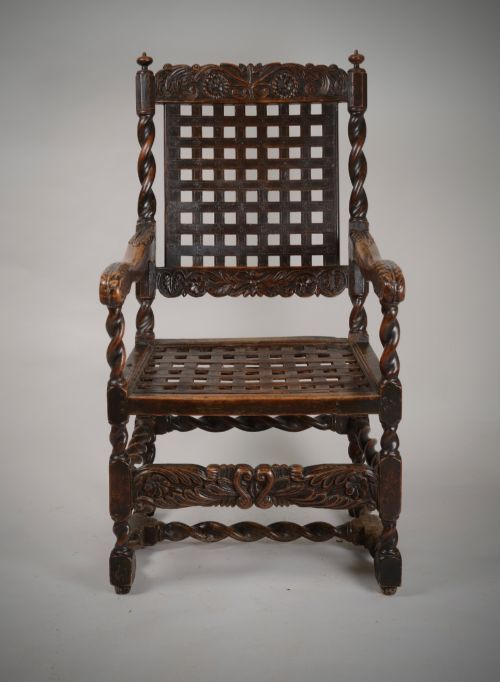
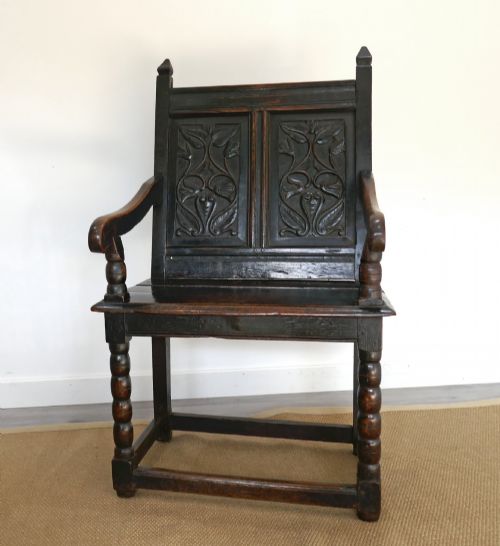
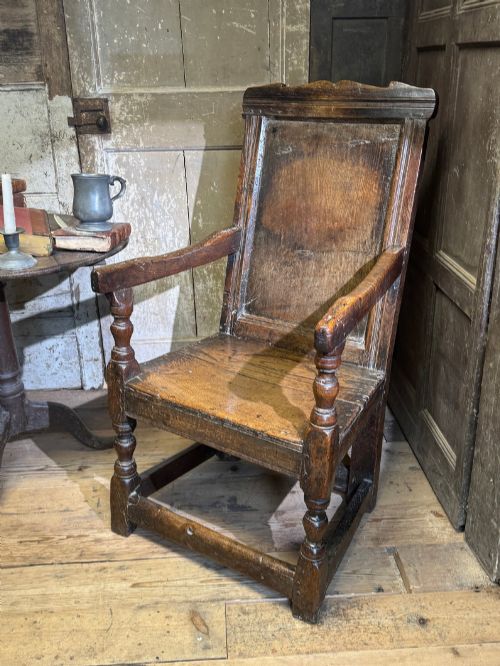


Charles II Open Armchair
A charles ii open armchair brings seventeenth-century craftsmanship straight into a modern interior through honest timber and traditional joinery.
Charles II Open Armchair
A charles ii open armchair represents solid seventeenth-century seating, commonly encountered in sturdy oak or walnut forms across regional English and Welsh workshops. Buyers searching this phrase will find authentic examples spanning the seventeenth century and around seventeen hundred, including substantial wainscot chairs and master's armchairs from places like Lancashire, Cheshire, and the West Country.
The regional variety ranges from high-back walnut designs to heavy boarded wainscot timber constructions. These pieces were built for durability and status, utilising robust woods that have aged with deep historic character.
How they were made
These armchairs were constructed using durable timbers such as oak, walnut, and laburnum, often shaped and joined by hand with traditional framing techniques. Selected examples incorporate cane seating or velvet upholstery to soften the rigid wooden frames.
Woodworkers relied on simple hand tools and pegged joints to build these substantial chairs, ensuring the heavy frames could withstand daily use over centuries.
Current listings feature seventeenth-century and seventeen-hundred period pieces constructed from oak, walnut, laburnum, cane, and velvet.
What varies in quality
Quality in a seventeenth-century armchair is determined by the depth of the timber's natural colour and the crispness of the original regional shaping. Examples retaining rich surface patination and robust, uncompromised structural frames stand apart from heavily restored alternatives.
The integration of materials like cane or velvet alongside dense oak or walnut influences the overall refinement of the piece. Superior craftsmanship shows in the balanced proportions of the arms and the integrity of the original joinery.
The Charles II Open Armchair Glossary
- Wainscot chair
- A heavy wooden armchair constructed primarily from oak with a solid panelled back, common in seventeenth-century domestic interiors.
- Cane
- Woven rattan material used for chair seats and backs, appearing in seventeenth-century seating to provide a lighter alternative to solid wood.
- Patina
- The surface sheen and colour developed by wood over centuries of handling, exposure, and polishing.
- Joint
- The point where separate pieces of timber meet and are fixed together, often pegged with wood in early furniture.
Charles II Open Armchair: Frequently Asked Questions
What is a wainscot armchair?
A wainscot armchair is a heavy wooden seat featuring a solid panelled back and sturdy arms, built predominantly from oak during the seventeenth century.
These pieces were typically reserved for the head of the household or important rooms due to their substantial construction and material cost.
How do I care for historic oak chairs?
Historic oak chairs require a stable indoor environment away from direct heat sources and sudden humidity changes to prevent the timber from splitting.
Applying a traditional beeswax polish helps nourish the surface and maintain the natural lustre of the aged wood.
Where were these armchairs made?
These armchairs originated in various English and Welsh regions, with specific regional variations recorded in workshops across Lancashire, Cheshire, and the West Country.
Local timber availability heavily influenced whether a maker used oak, walnut, or laburnum for the frame.
How can I identify seventeenth-century furniture?
Identification relies on examining the construction methods, tool marks, timber shrinkage, and the characteristic patination built up over hundreds of years.
Original pegged joints and regional design traits help distinguish pieces made in the seventeen-hundreds from later reproductions.