




Charles I Oak Armchair
A charles i oak armchair stands as a sturdy monument of seventeenth-century domestic life, built to anchor the hall or parlour.
Charles I Oak Armchair
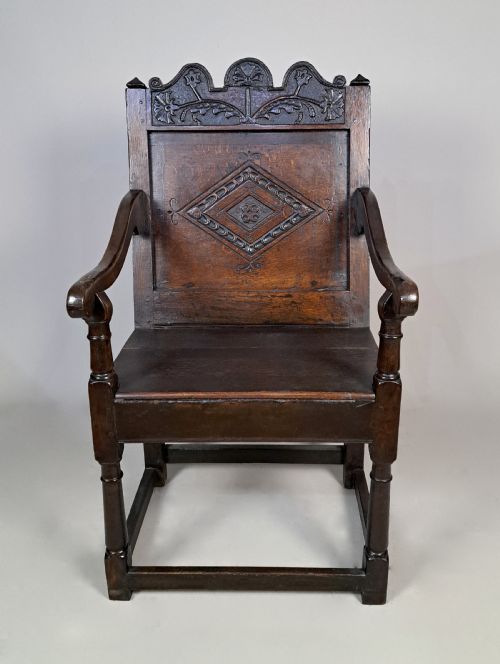
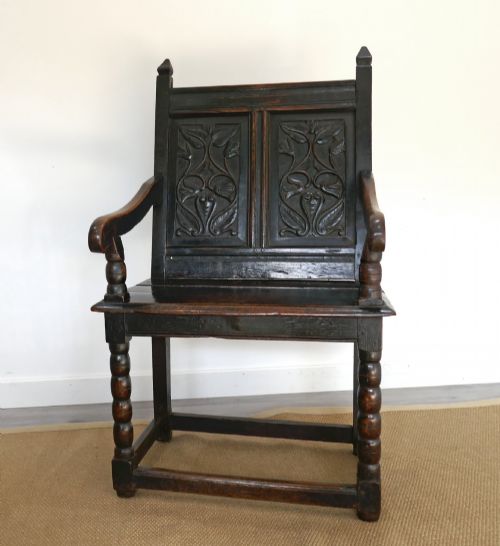
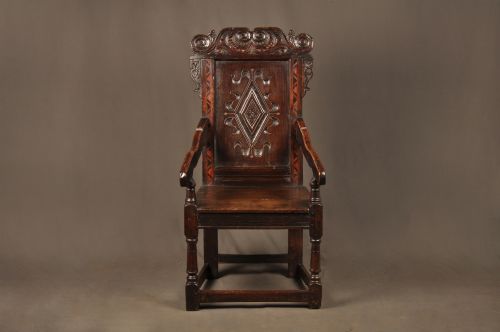
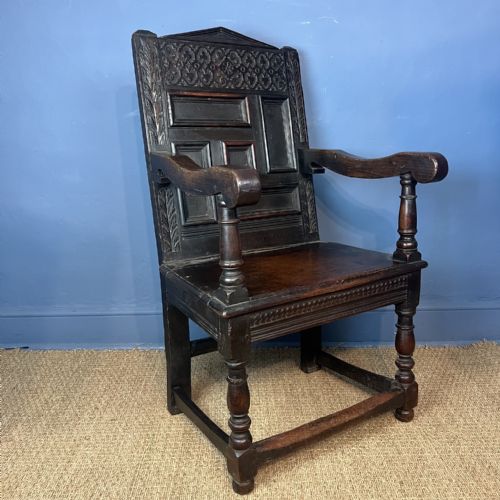
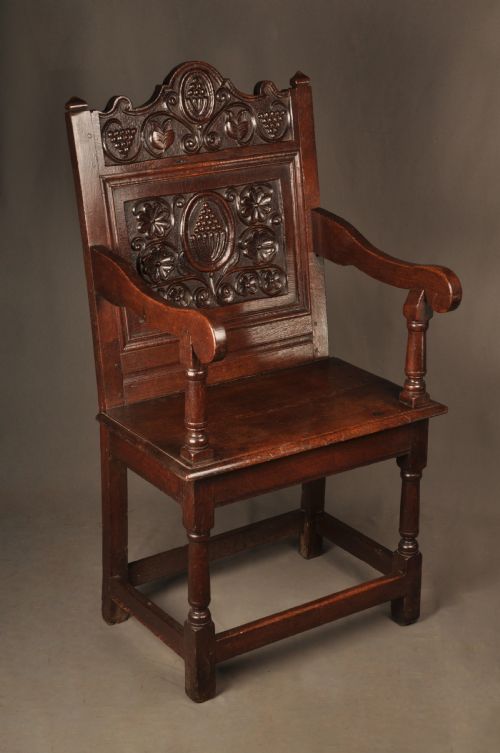
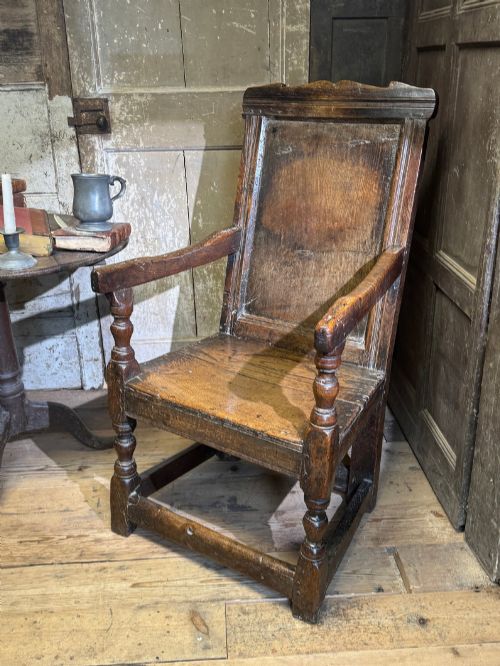
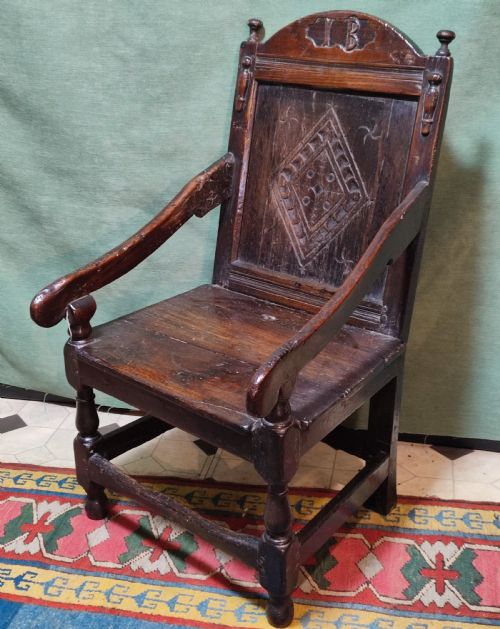
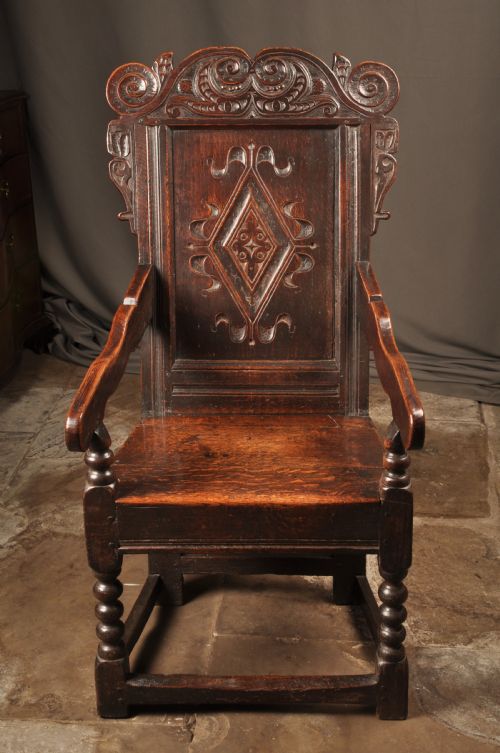
A charles i oak armchair typically takes the form of a wainscot chair, constructed from heavy timber with a solid panelled back and broad armrests. These seats date predominantly from the seventeenth century, though the selection includes later Victorian revivals and pieces stretching into the nineteen-hundreds styled after earlier reigns.
Regional variations emerge across the listings, originating from Yorkshire, Lancashire, Cheshire, the West Country, and Wales. Makers often incorporated local woods such as yew alongside the primary oak frame, creating distinct domestic seating variants.
How they were made
Makers built these chairs using solid oak timbers joined together with traditional pegged joints rather than modern metal fastenings. Panels were set into grooved frames to allow for the natural expansion and contraction of the timber over centuries.
Carving and turning formed the primary decorative techniques, utilising gouges and chisels to adorn the crest rails and back panels. Surfaces were frequently left untreated by modern varnishes, developing a deep natural colour and patina through age and use.
Listings demonstrate a strong regional distribution for seventeenth-century oak furniture, with workshops in Wales, Yorkshire, and the West Country producing distinct structural variants.
What varies in quality
The standard of a charles i oak armchair rests on the crispness of its original carved decoration and the integrity of its timber construction. Heavy replacement of structural members diminishes the historical coherence of the piece, whereas undisturbed surfaces retain their authentic character.
Proportion and scale also separate standard regional pieces from exceptional examples, such as master chairs or smaller child variants. The depth of the colour in the oak and the retention of original pegging indicate superior craftsmanship from the workshop.
Charles Bevan·James Lamb·Charles Rennie Mackintosh
The Charles I Oak Armchair Glossary
- Wainscot chair
- A heavy wooden armchair characterised by a panelled wooden back and solid seat. This form dominated seventeenth-century domestic seating before upholstered chairs became common.
- Peg joined
- A method of construction where wooden dowels secure the mortise and tenon joints together. This technique avoided the use of iron nails which could rust and damage the surrounding timber.
- Crest rail
- The uppermost horizontal member of a chair back, frequently shaped or carved with ornamentation. On these pieces, it often displays regional design motifs typical of the seventeenth century.
- Bergere
- An enclosed armchair with stuffed or panelled sides, seen in later nineteenth-century interpretations within the archive. The style references earlier French forms adapted by Victorian makers.
- Patina
- The surface sheen and colour developed by aged wood through handling, polishing, and exposure to light over generations. A desirable patina signals genuine antiquity.
Charles I Oak Armchair: Frequently Asked Questions
How do I identify a seventeenth century oak armchair?
Look for heavy timber construction utilising pegged joinery and solid panelled backs rather than glued joints. Regional characteristics often appear in the carved motifs on the crest rail and the choice of secondary woods.
Examine the colour and texture of the wood for deep natural patination acquired through prolonged use. Most authentic examples show signs of age in the wear patterns around the arms and footrests.
Where were these chairs originally placed in a home?
These heavy chairs typically served as principal seats of authority for the head of the household in the hall or parlour. Their substantial weight meant they remained stationary rather than moving freely about the room.
Smaller variants, including child or ladies' versions, provided similar designated seating for other members of the household. They stood against panelled walls or beside large hearths.
Are Victorian revival chairs considered authentic antiques?
Victorian Gothic Revival pieces possess their own historical value dating to the nineteenth century, even though they replicate seventeenth-century styles. Makers like Charles Bevan reinterpreted earlier forms using contemporary manufacturing methods.
Collectors distinguish between original period pieces and later revivals by examining tool marks, timber shrinkage, and construction details. Both categories hold distinct places in the history of furniture design.
How should I care for an antique oak armchair?
Keep the chair away from direct heat sources and rapid temperature fluctuations to prevent the oak timber from splitting. Maintain stable indoor humidity levels to preserve the structural integrity of the pegged joints.
Apply a traditional beeswax polish sparingly to nourish the wood and maintain its natural colour without creating artificial shine. Avoid modern liquid cleaners that can strip the historic surface finish.