
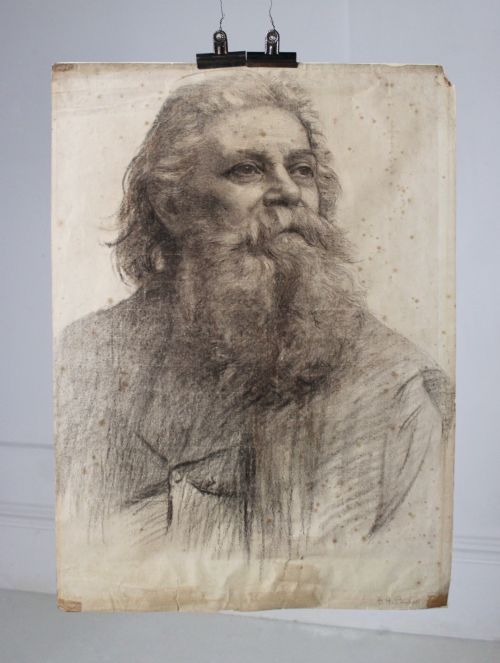
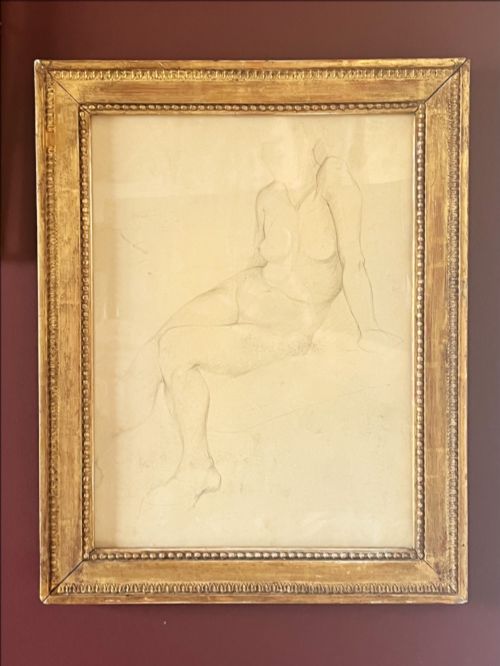
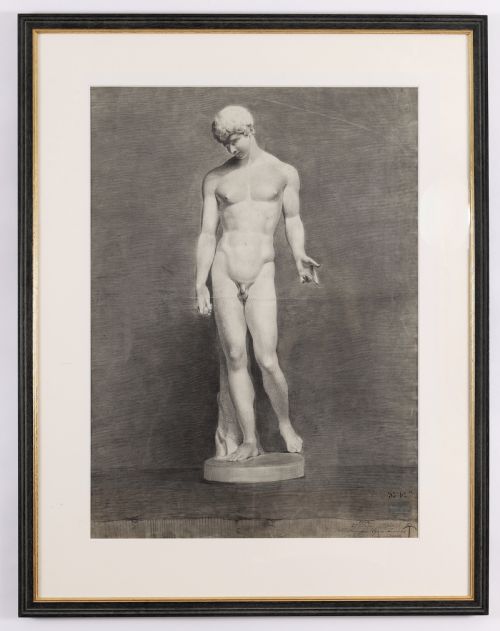
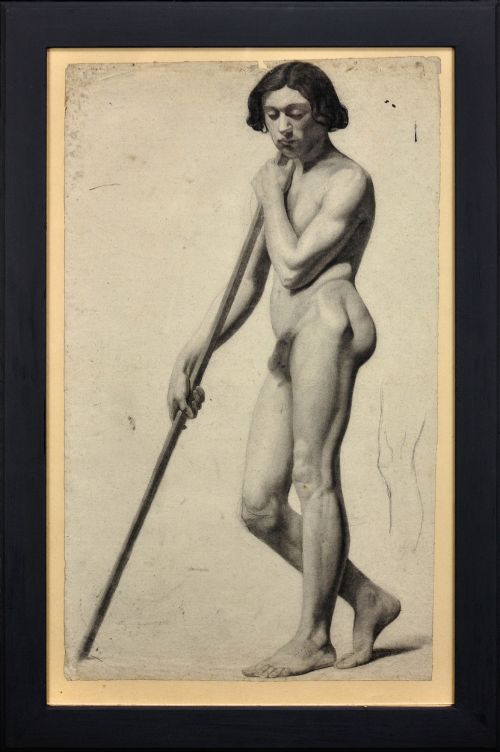


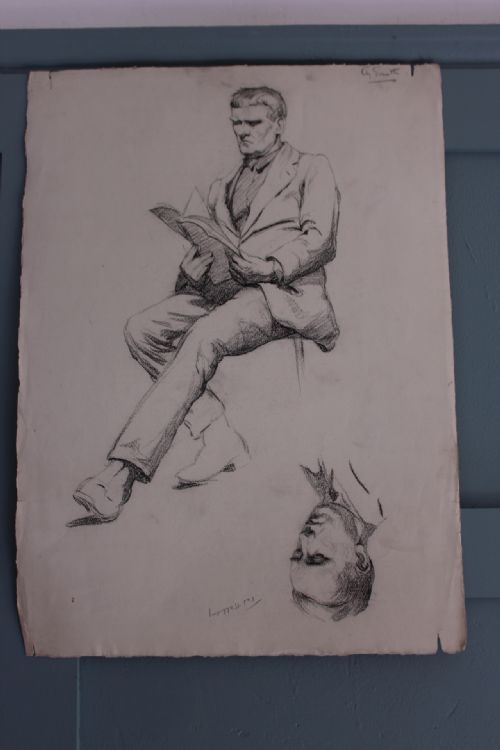

Charcoal Life Study Drawing
These charcoal life study drawing examples capture the human form through direct observation, offering collectors immediate insight into academic draughtsmanship and studio practice.
Charcoal Life Study Drawing
A charcoal life study drawing records the human form drawn directly from a live model within an academic or studio setting. When you search for this phrase, you encounter works spanning the nineteenth century through to the mid-twentieth century.
The selections on this page most frequently present male and female nudes executed in charcoal, chalk, or graphite on paper. These sheets range from careful neoclassical renderings to modernist expressions originating in British and European studios.
Framed artwork dominates the offerings, often presented behind glass in wood or gilt wood frames that protect the delicate mediums. Collectors find both finished gallery pieces and direct studio exercises bearing the marks of rigorous artistic training.
Materials and execution
Artists relied primarily on compressed or willow charcoal, chalk, and graphite applied to various grades of paper, including toned paper surfaces that allowed for rapid highlights. These materials permitted both deep, velvety shadows and sharp linear contours necessary for anatomical accuracy.
Works were produced in formal art schools or private ateliers, where draughtsmen trained under strict academic realism before branching into modernist styles. Finished pieces were typically mounted behind glass within wooden frames to preserve the fragile charcoal dust from smudging.
Several artists clearly left their studio doors open to history, capturing subjects ranging from classical statues to named contemporaries.
Markers of distinction
Quality rests upon the draughtsman's command of human anatomy, proportion, and tonal depth, distinguishing rigorous academic observation from casual sketching. Superior sheets demonstrate confident handling of light and shadow to create three-dimensional volume on a flat surface.
The preservation of the paper and the integrity of the friable medium dictate the enduring value of the piece. Clean paper without excessive foxing, paired with period-appropriate framing, marks the more desirable examples in this field.
Henry Arthur Roberts·Winifred Eugene Ballard·Frank Dobson·J Jean Betourne
The Charcoal Life Study Drawing Glossary
- Academic Realism
- A style of painting and drawing produced under the influence of European academies of art. It emphasises strict adherence to classical standards and precise anatomical study.
- Life Study
- A drawing or painting executed directly from a live nude or clothed model. This exercise forms the foundation of traditional artistic training.
- Toned Paper
- Paper that possesses a natural colour or tint rather than pure white. Artists use this to build up highlights with white chalk alongside dark charcoal shadows.
- Graphite
- A crystalline form of carbon used as a drawing medium. It produces fine, silvery-grey lines distinct from the dense black tones of charcoal.
Charcoal Life Study Drawing: Frequently Asked Questions
What is a charcoal life study drawing?
A charcoal life study drawing is an original artwork created by an artist observing a live model, usually within an educational or studio context.
These pieces record the human anatomy through tonal shading and line, serving as both finished works and foundational training exercises.
How old are these drawings typically?
The pieces span from the early nineteenth century through to the mid-twentieth century, encompassing periods such as the Edwardian era and the 1930s.
Dates are often indicated by signatures, dated inscriptions on the paper, or the style of the period framing.
How should I display charcoal art?
Charcoal drawings require protective framing behind glass to prevent the delicate medium from smudging or absorbing airborne moisture.
Keep them away from direct sunlight to protect the paper support and the tonal values of the charcoal and chalk.
What is academic realism?
Academic realism refers to the artistic style taught in official European academies during the nineteenth and early twentieth centuries.
Drawings in this style place heavy emphasis on precise proportion, careful shading, and a thorough understanding of human anatomy.