







Original Charcoal Life Drawing
Original charcoal life drawing works capture human form directly from the model, offering buyers immediate intimacy with the artist's hand.
Original Charcoal Life Drawing
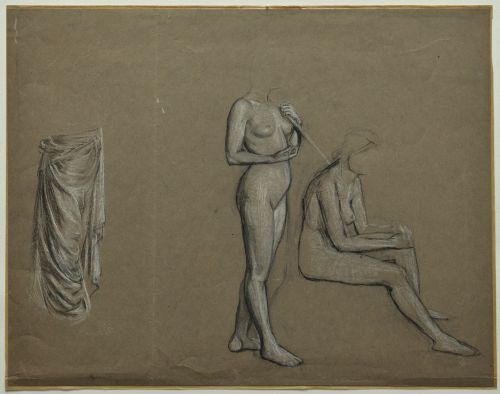
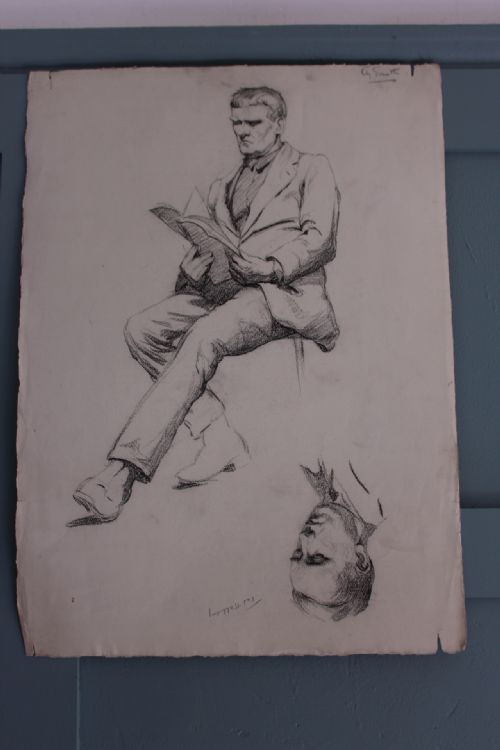
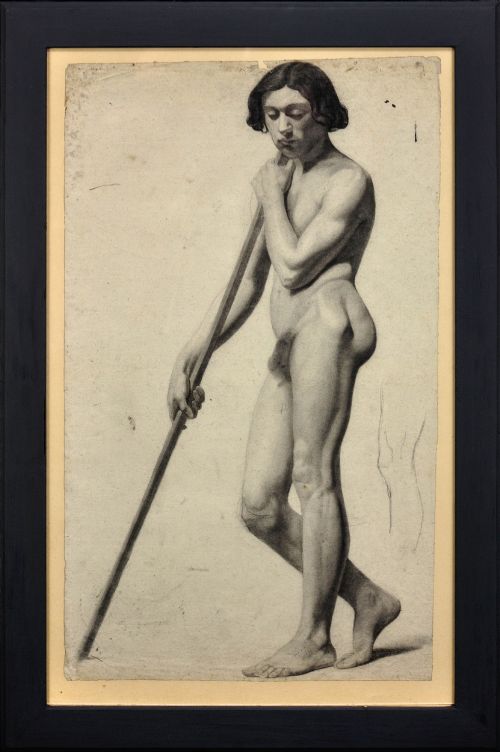
An original charcoal life drawing represents a direct study of the human figure, created by an artist working from a live model in a studio or school setting. These works range from traditional academic interpretations to more expressive modernist pieces spanning the nineteenth and twentieth centuries.
Buyers browsing this selection encounter various subjects, including detailed male and female nude studies, portraits, and gentlemanly studies. The pieces appear in several forms, predominantly as framed artwork or wall art ready for display.
Origins stretch across the Edwardian era through to the mid-century period, encompassing British and French aesthetics. Academic realism and modern British styles dominate the available forms, reflecting rigorous historical training methods.
Materials and Technique
Artists utilise charcoal, often combined with chalk, pastel, or graphite, applied directly onto paper surfaces to build tone, line, and shadow. These monochrome and tinted mediums allow for rapid gestural marks alongside deeply rendered muscular definition.
The resulting works are frequently preserved behind glass within wooden or gilt wood frames that protect the fragile charcoal medium from smudging and environmental damage.
Original Charcoal Life Drawing Retail Price Guide 2026
Typical asking prices for original charcoal life drawing among the pieces listed under this phrase on Sellingantiques today, from the lower quarter to the upper quarter. They describe what is for sale here now, not the wider market.
The selection includes academic life studies and portraits framed in period wood and gilt wood mouldings.
Assessing Quality and Execution
Quality rests upon the sureness of the draughtsmanship and the artist's ability to render human anatomy with convincing proportion and volume. Stronger pieces display confident, expressive line work that captures gesture and shadow without hesitation.
The integrity of the paper support and the sympathetic pairing of the frame contribute to the overall presentation. Works signed by known artists or originating from established French and British periods generally command greater artistic interest.
Henry Arthur Roberts·Winifred Eugene Ballard·Frank Dobson·Jean Betourne
The Original Charcoal Life Drawing Glossary
- Academic realism
- A style of painting and drawing governed by the rules of European art academies, prioritising accurate anatomical study and classical proportion. It forms the basis of traditional life drawing instruction.
- Life study
- A drawing or painting executed directly from a live nude or clothed model. These pieces record the artist's close observation of light and form.
- Charcoal
- A dry drawing medium made from slowly burned organic material, typically vine or willow wood. It produces deep black marks easily smudged for tonal shading.
- Gilt wood
- Wood coated with a thin layer of gold leaf or metallic paint, commonly used for traditional picture framing. It adds warmth and structural weight to works on paper.
Original Charcoal Life Drawing: Frequently Asked Questions
How do I care for a charcoal drawing?
Charcoal is an inherently fragile medium that sits loosely on the paper surface and can easily smudge or flake if disturbed. Keep the artwork securely sealed behind glass within its frame and avoid exposing it to vibrations or damp environments.
Direct sunlight should also be avoided to prevent the paper from yellowing or the charcoal from fading over time. Professional framing with conservation-grade materials ensures the drawing remains stable for decades.
Where were these life drawings created?
Most of these pieces originated inside dedicated art schools, private studios, or academic institutions where artists gathered to hone their figure drawing skills. Working from a live model was a foundational exercise for both students and established practitioners.
French and British studios produced many of these surviving examples during structured academic sessions. These environments fostered rapid observational sketching alongside highly finished tonal studies.
Are all life drawings signed by the artist?
Many studio drawings remain unsigned because they were created as private practice pieces or instructional exercises rather than finished exhibition works. Artists often kept portfolios of anonymous life studies for reference rather than public sale.
Signed pieces usually indicate that the work was considered complete enough to attribute or exhibit. Signatures help place the drawing within a specific artist's known output and working period.
How do I distinguish between an Edwardian and a mid-century drawing?
Edwardian life drawings tend to favour strict academic realism with careful attention to traditional shading, classical proportion, and finished detail. The framing and paper types from this era also reflect turn-of-the-century aesthetic preferences.
Mid-century and modernist works often display looser, more expressive mark-making that prioritises gesture over anatomical exactitude. These later pieces reflect shifting artistic priorities toward abstraction and emotional resonance.