
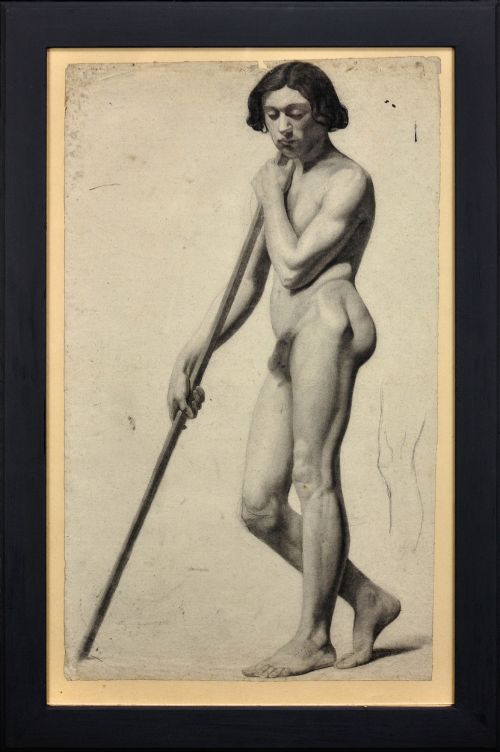


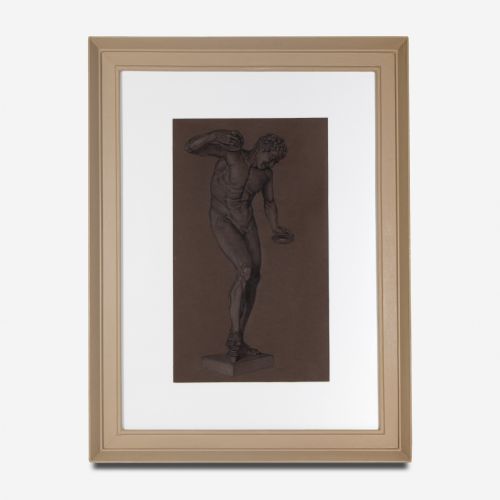


Charcoal Figure Sketch
A charcoal figure sketch captures the immediacy of the human form through expressive mark-making on paper, offering collectors a direct record of academic study and artistic vision.
Charcoal Figure Sketch
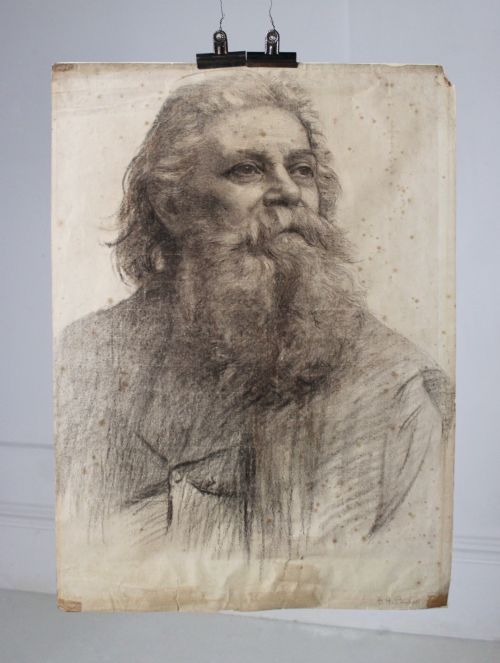
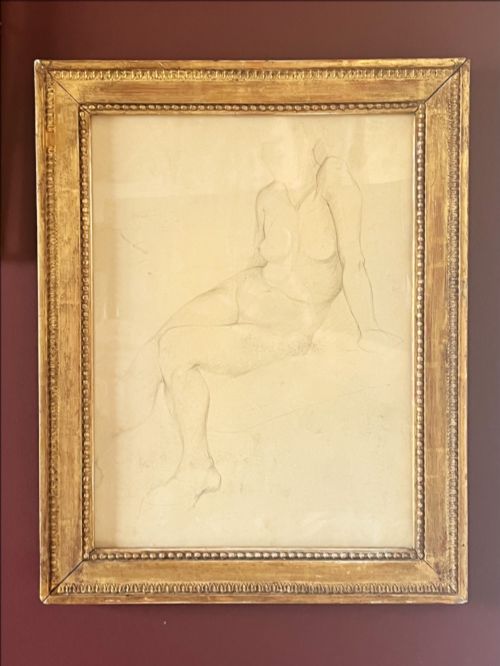
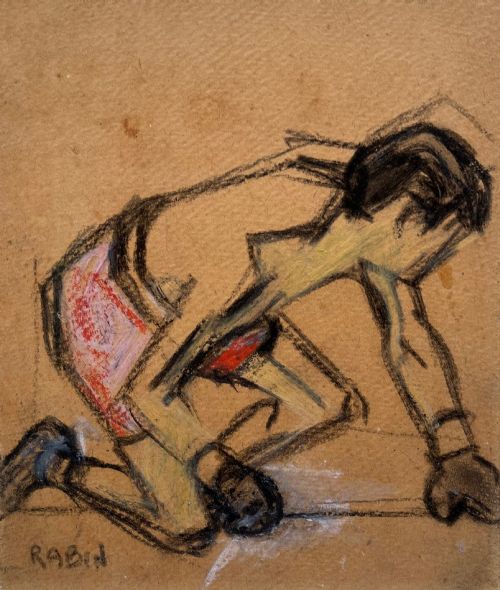
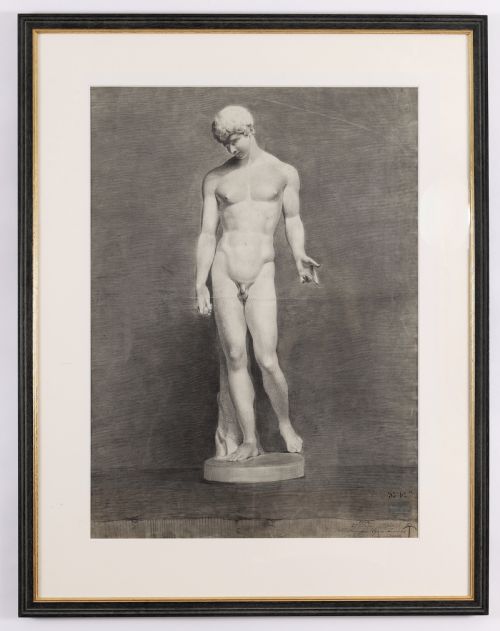
A charcoal figure sketch represents a direct study of the human body, frequently created in academic settings or artist studios across the eighteenth, nineteenth, and twentieth centuries. These works range from detailed life studies of male and female nudes to rapid portrait sketches captured on toned paper or standard drawing sheets.
The selections available here lean heavily toward framed original drawings and academic life studies originating from British, French, and Italian schools. Buyers will encounter both finished gallery-scale pieces and intimate studio fragments executed in mixed media.
Such works serve as foundational expressions of draughtsmanship, showing the artist working through posture, musculature, and expression without the finality of an oil painting.
How They Were Made
Artists typically executed these drawings using charcoal and chalk on paper, often incorporating graphite, pastel, or tinted washes on toned paper to build depth and highlight contours. The friable nature of charcoal allowed for rapid blocking of shadow alongside precise smudging for transitional tones.
Support materials range from standard artist papers to heavier sheets mounted inside period frames made of wood, glass, and carved gilt elements. Many works bear the marks of intensive studio handling, fixed with historical compounds to preserve the delicate medium.
Several elders and pets gaze out from these centuries-old studio scraps, proving that models have been losing their patience since the eighteenth century.
What Varies In Quality
Quality rests upon the sureness of the line and the artist's command of anatomy and light, separating hurried student exercises from confident master studies. The sensitivity shown in rendering musculature, gesture, and facial expression dictates the artistic merit of the sheet.
The preservation of the charcoal medium itself, the stability of the paper support, and the presence of a sympathetic period frame significantly influence the desirability of the piece.
Samuel Rabin·Demetrios Galanis·Winifred Eugene Ballard·Frank Dobson·Francis Dodd
The Charcoal Figure Sketch Glossary
- Academic Realism
- A style of painting and drawing produced under the influence of European academies of art, emphasising precise anatomical accuracy and classical proportions. This approach defines many nineteenth-century life studies.
- Toned Paper
- Paper manufactured or prepared with a neutral or coloured tint rather than a stark white finish. It allows artists to work efficiently with dark charcoal and light chalk simultaneously.
- Life Study
- A drawing or painting executed directly from a live model, serving as a core training exercise for portrait and history painters. These sheets record direct observation of the human form.
- Deux Crayon
- A drawing technique utilising two distinct pencils or chalks, usually black and red or black and white, on tinted paper. This method enhances tonal range and volume.
Charcoal Figure Sketch: Frequently Asked Questions
How do I care for a charcoal sketch?
Keep charcoal works away from direct sunlight and heavy vibrations, as the medium can flake off the paper over time.
Ensure the piece remains behind glass in a sealed frame to protect the delicate surface from moisture and atmospheric dust.
What is an academic life study?
An academic life study is a rigorous drawing made from a live model within an institutional or studio setting.
These pieces document the artist's training in anatomy, proportion, and tonal shadow work.
Why use toned paper for drawing?
Toned paper provides a middle ground value that eliminates the harsh glare of stark white sheets.
Artists can build up deep shadows with charcoal and apply bright highlights with chalk rapidly.
Are these works original or printed?
The pieces featured are original hand-drawn works of art created directly by the artist's hand using dry media.
Each sheet bears unique physical marks, smudges, and paper textures absent from reproduction prints.