

Champagne Bucket Cooler
Selecting a champagne bucket cooler brings centuries of dining elegance and fine metalwork straight to the table.
Champagne Bucket Cooler
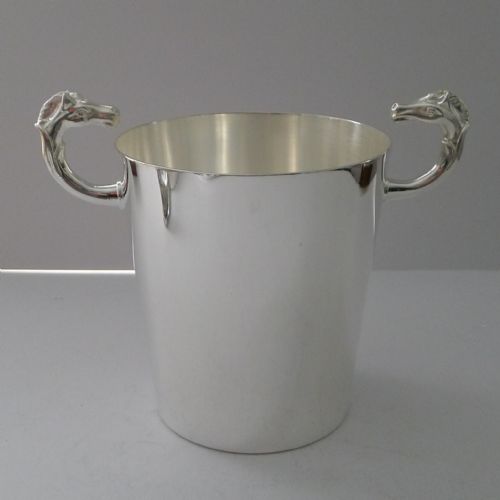
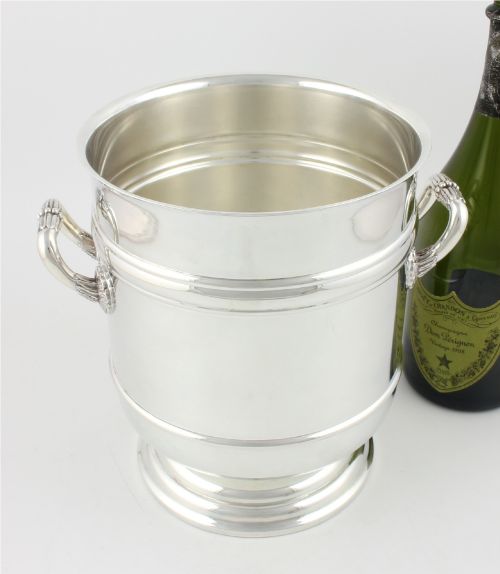
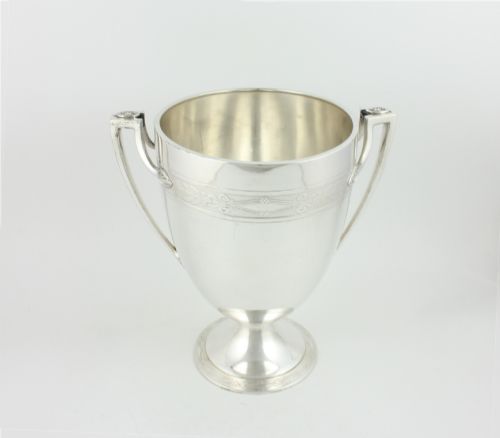
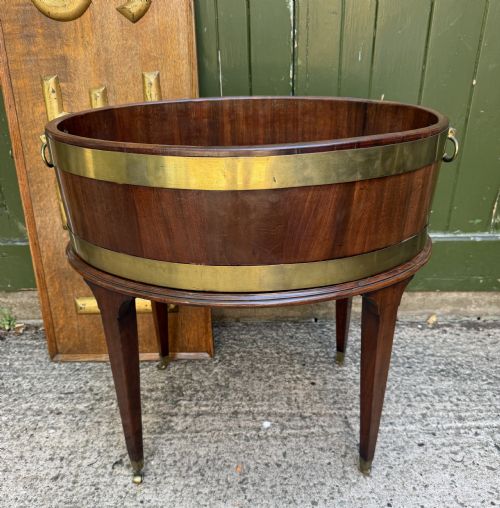
A champagne bucket cooler serves to chill and present bottles during dining, taking various forms from tall table vessels to floor-standing units. Examples range from eighteenth-century mahogany cellar chests on stands to twentieth-century silver-plated vessels.
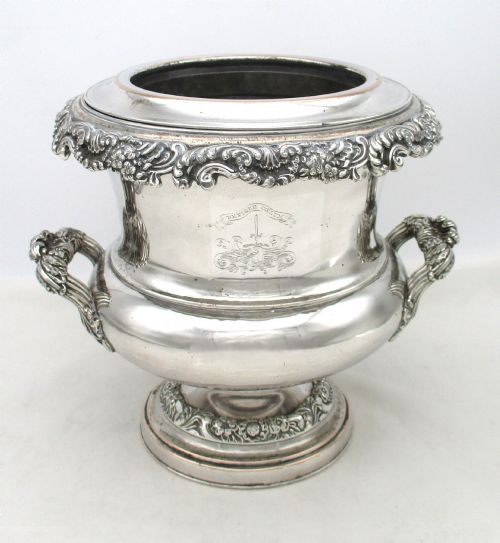
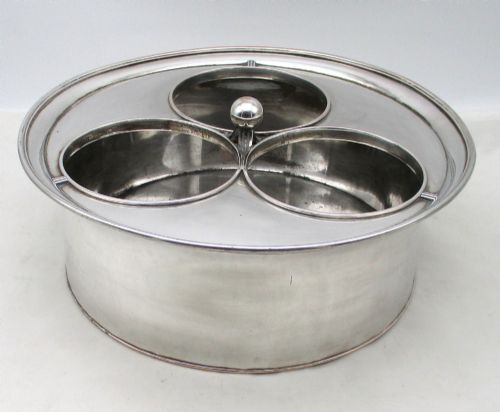
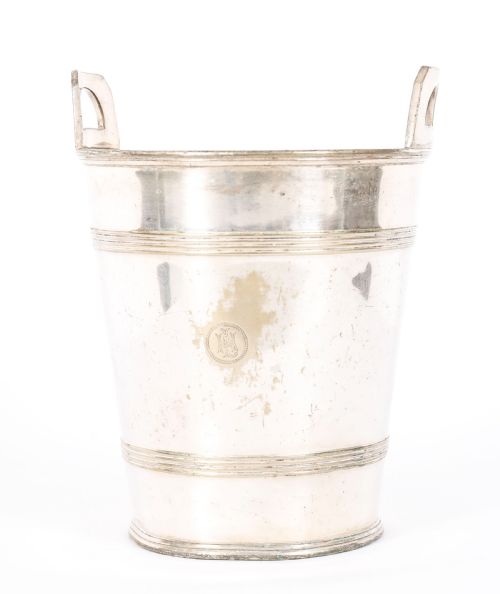
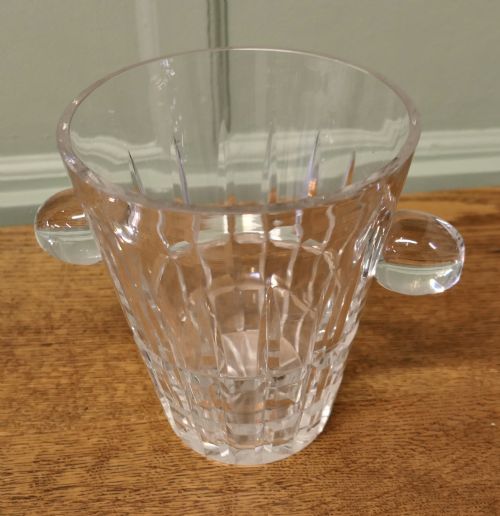
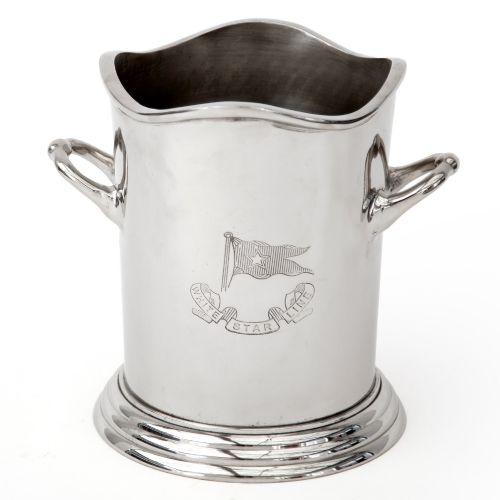
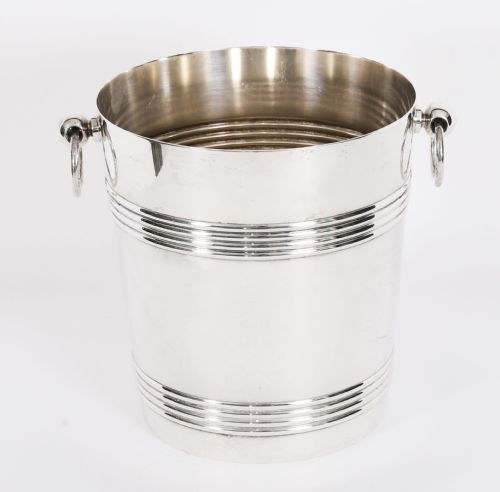
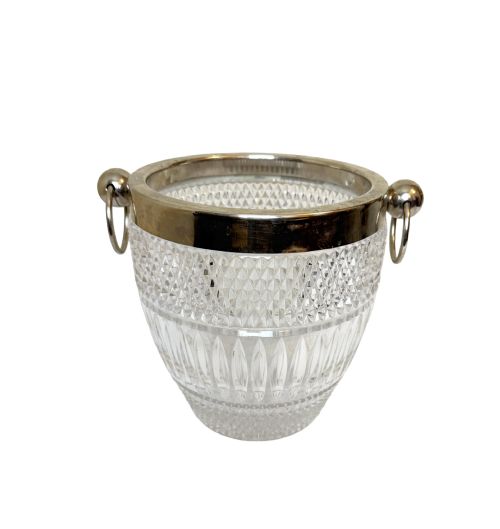
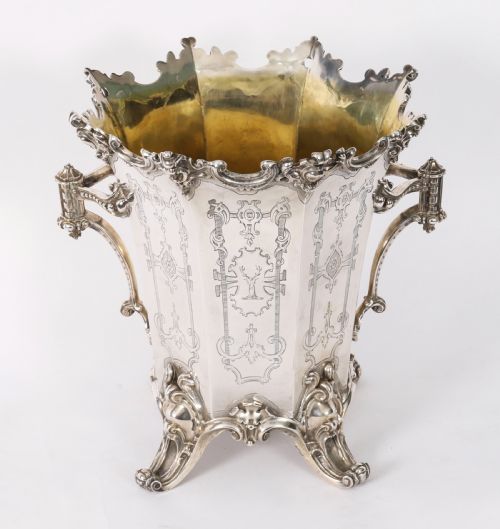
The pieces on this page include nineteenth-century Sheffield plate, French Art Deco silver plate, and heavy cut crystal buckets. Buyers encounter both utilitarian wine vessels and highly decorative presentation pieces carrying family crests or hotel monograms.
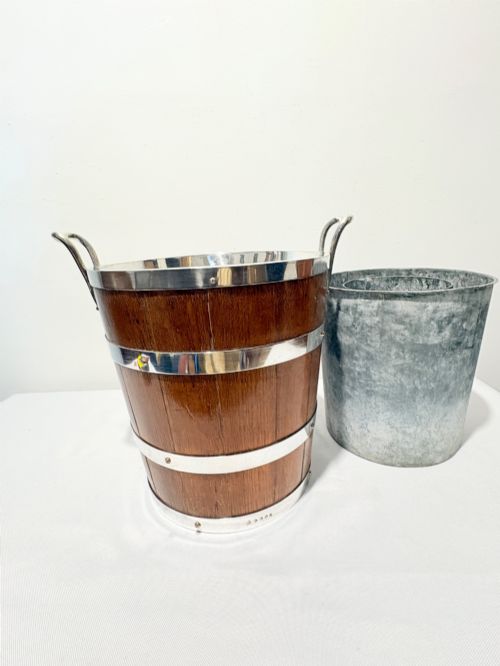
Early specimens often utilise coopered wood banded in brass, while later twentieth-century iterations lean towards streamlined metal alloys and moulded glass. Each design reflects the entertaining customs of its respective period.
Distinctions in craftsmanship
Quality rests in the weight of the metal, the crispness of cast mounts such as lion ring handles or tendrils, and the integrity of the underlying construction. Substantial gauge silver plate resists denting and holds its plating through decades of polishing.
Artisanal execution distinguishes standard utility vessels from bespoke commissions bearing engraved coats of arms or maker signatures from major Parisian and Sheffield workshops. Well-joined wooden staves and intact interior liners demonstrate superior longevity.
Listings feature cooling vessels spanning the Georgian, Victorian, and Art Deco eras, constructed from silver plate, copper, brass, mahogany, and cut crystal.
Hutton Sheffield·Hermes Paris·Christofle·Elkington Mason And Co·WMF·Mappin And Webb·Barker Ellis·Ercuis·Rene Lalique·Puiforcat·St Medard·Asprey London·Wiskemann·Cailar And Bayard
The Champagne Bucket Cooler Glossary
- Old Sheffield Plated
- An early fusion method where a thin sheet of silver is fused to a copper core by heat and pressure. This technique creates a distinctive edge where the underlying copper occasionally shows through with age.
- Coopered
- Constructed from wooden staves fitted together side by side and bound by metal hoops, much like a traditional barrel. This method ensures the vessel can hold liquids safely.
- Gallia
- A high-grade silver-plated metal alloy introduced by the French manufacturer Christofle in the late nineteenth century. It forms the base for many twentieth-century Art Deco designs.
- Jardiniere
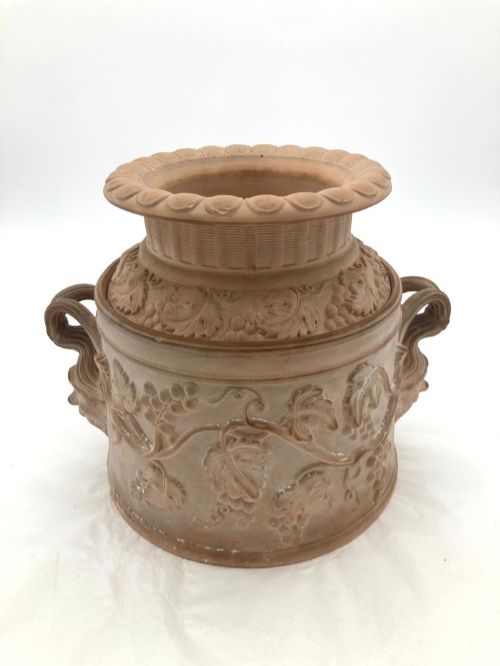
- An ornamental stand or large container designed to hold potted plants or flowers. In early periods, large specimens were frequently adapted for use as wine coolers.
- Pontil mark
- A scar left on the base of blown or moulded glassware where the pontil rod was snapped off after shaping. Its presence indicates traditional hand-manufacturing methods.
Champagne Bucket Cooler: Frequently Asked Questions
What is the difference between a wine cooler and an ice bucket?
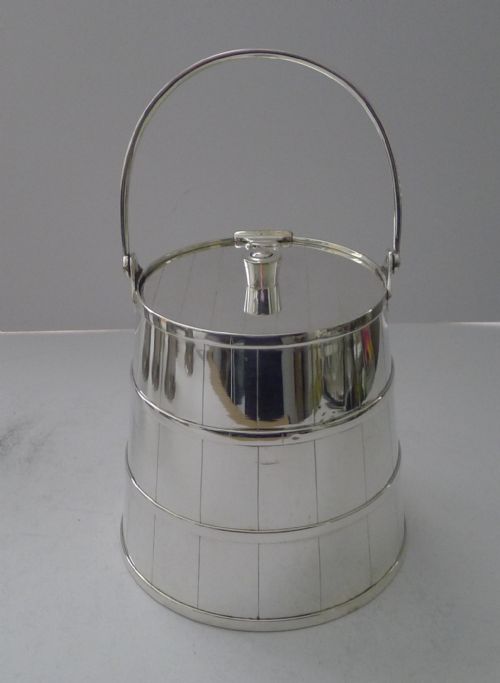
Wine coolers are generally deeper vessels designed to submerge a bottle in ice and water for rapid chilling during a meal. Ice buckets focus on holding ice cubes for individual glasses using tongs or a lid.
Many antique pieces serve both functions interchangeably, depending on their size and whether they feature internal drainage liners.
How do I care for silver-plated champagne coolers?
Maintenance requires gentle cleaning with non-abrasive silver cream and a soft cloth to protect the thin metal layer. Avoid harsh chemical dips that strip away the original patina and underlying plating.
Dry the vessel thoroughly after every use to prevent water spots and tarnishing from developing on the surface.
Can I use antique metal coolers for daily dining?
Silver plate, copper, and brass coolers are durable enough for regular modern entertaining when handled with reasonable care. Placing ice directly inside sturdy metal or glass vessels causes no structural harm.
Wood-staved items require careful management of moisture levels to prevent the timber from warping or drying out over time.
How do I date an unmarked silver-plated cooler?
Dating relies on stylistic clues, such as the geometric lines of Art Deco pieces versus the ornate scrolls of Victorian Rococo revival designs. The weight, manufacturing technique, and type of base metal also provide strong chronological indicators.
Consulting historical hallmarks or comparing construction methods with documented factory catalogues helps narrow down the decade of production.