
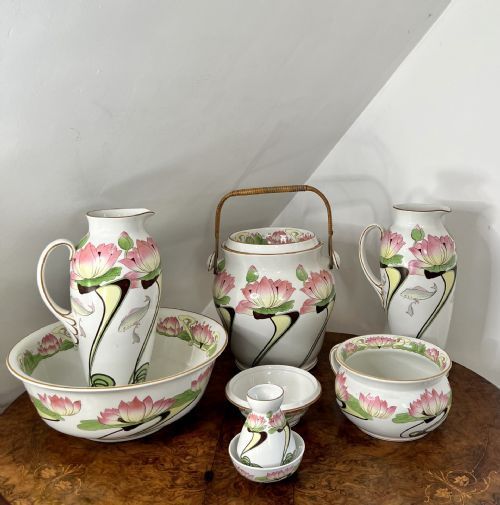


Ceramic Washstand Set
These ceramic washstand set examples bring daily toilet routines of past centuries into focus through matching jugs, basins, and matching accessory pieces.
Ceramic Washstand Set
A ceramic washstand set comprises the essential wash basin and matching pitcher designed for nineteenth and early twentieth-century bedroom hygiene before indoor plumbing became universal. The pieces you meet on this page span the Victorian and Edwardian eras, alongside earlier nineteenth-century examples and later twentieth-century interpretations.
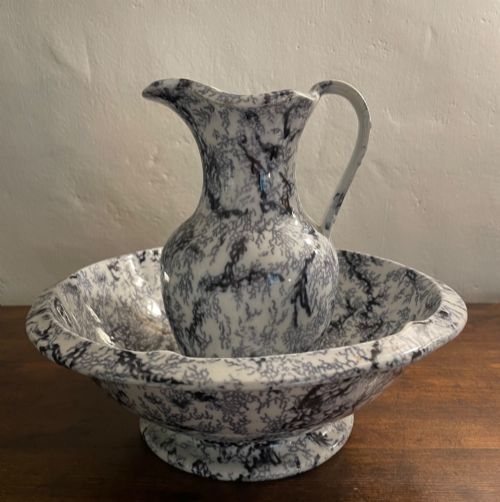
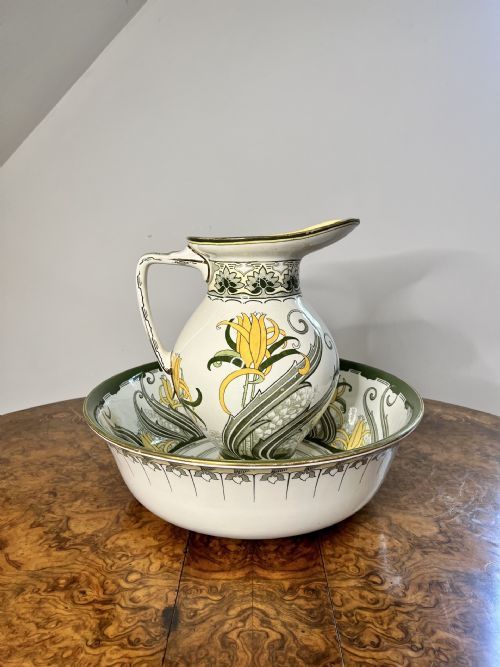
Most configurations found here consist of a large jug and a deep bowl, occasionally accompanied by soap dishes, toothbrush holders, or slop buckets to form a complete bathroom set. They appear in styles ranging from plain ironstone to elaborate floral transferware, Aesthetic Movement designs, and sinuous Art Nouveau motifs.
Materials and methods
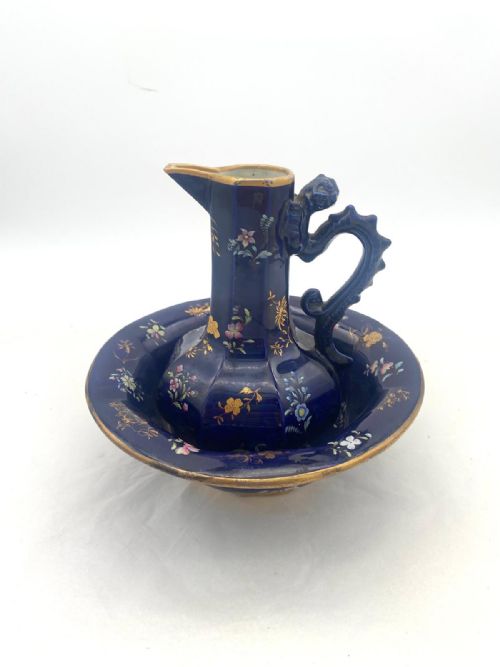
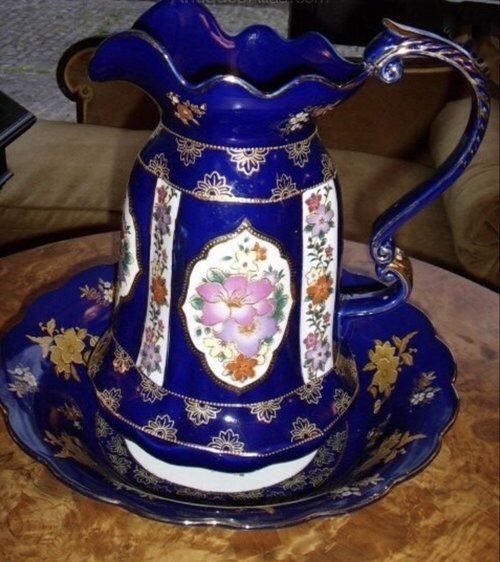
Potters built these vessels using durable earthenware, sturdy ironstone, or refined porcelain, coating the ceramic bodies in glossy protective glazes. Many feature hand-painted details, cobalt blue decoration, or applied gold leaf and gilt accents over transfer-printed patterns.
Makers shaped the heavy basins and tall pitchers to withstand daily washing routines, firing them in kilns to seal the porous clay bodies against water.
The documented styles span Victorian Chinoiserie, Regency, Edwardian, and Art Nouveau periods.
What separates the best from the rest
Quality rests on the crispness of the transfer printing or the skill of the hand-painted flower design, alongside the weight and clarity of the underlying ceramic or ironstone body. Sets that include multiple matching accessory pieces display a higher level of original ambition from the pottery.
The preservation of delicate gilt highlights and unblemished glaze surfaces distinguishes the finest surviving examples from those worn by decades of scrubbing.
Doulon Burslem·Masons Ironstone·Shelley·mark Jones & Sons
The Ceramic Washstand Set Glossary
- Ironstone
- A heavy, durable type of earthenware patented in the nineteenth century. It resists chipping and provided a strong body for large wash jugs and basins.
- Flow blue
- A nineteenth-century transfer printing technique where the cobalt blue pigment blurred slightly into the glaze during firing. This created a soft, misty aesthetic popular on early ceramic washstand set pieces.
- Transferware
- Pottery decorated by applying a printed paper design from an engraved copper plate onto the ceramic surface before glazing. It allowed potteries to produce intricate floral and scenic motifs consistently.
- Aesthetic Movement
- A late nineteenth-century design style that emphasised visual beauty over narrative meaning. Pieces from this period often utilised asymmetrical floral layouts and Japanese-inspired motifs.
- Basin
- A wide, deep bowl designed to hold water for washing the face and hands. It forms the primary lower component of any ceramic washstand set.
Ceramic Washstand Set: Frequently Asked Questions
What pieces belong in a complete set?
A standard set centres on a large water jug and a deep matching basin designed for bedside washing. Additional items often included slop buckets, soap dishes, and toothbrush vases.
Finding every original accessory together remains uncommon due to breakage over decades of domestic use.
How do I date a set?
Pottery marks on the underside offer the most reliable guide to a set's decade of manufacture. Stylistic clues like Art Nouveau curves or heavy Victorian ironstone also point toward specific eras.
Comparing the glaze thickness and transferware style helps narrow down the production period.
Were these sets actually used?
Bedrooms before modern plumbing relied entirely on these ceramic vessels for morning and evening washing routines. Servants filled the jugs with warm water from the kitchen.
Heavier ironstone pieces handled this rigorous daily service well, while finer porcelain versions often saw lighter use.
How can I display a set safely?
Displaying the basin flat on a sturdy surface with the tall jug safely positioned inside prevents tipping. Strong wooden washstands provide the historical context for these ceramic pieces.
Keep them away from high-traffic household areas to protect the handles and rims from accidental knocks.