


Ceramic Vase Lamps
Ceramic vase lamps combine historic vessels with interior lighting, offering a practical way to bring antique artistry into a room.
Ceramic Vase Lamps
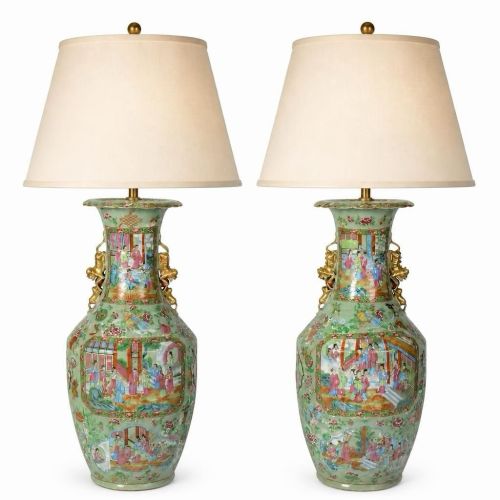
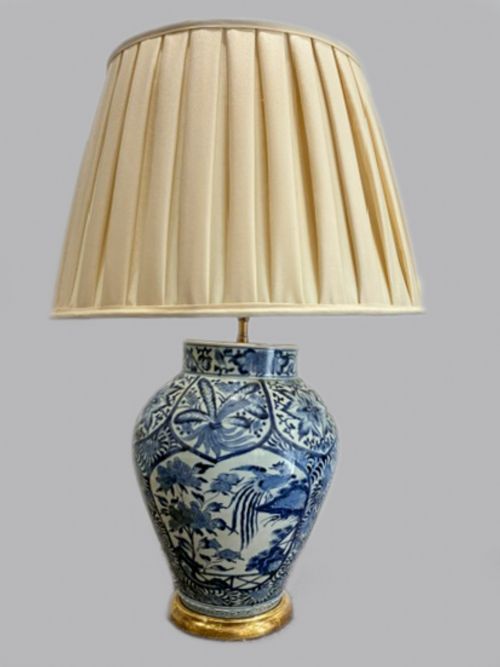
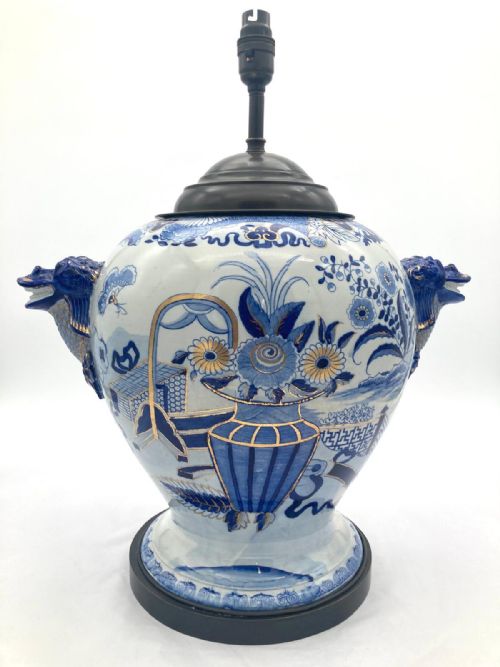
Ceramic vase lamps are constructed by adapting antique and vintage vessels into functional domestic lighting. These pieces take forms such as ginger jars, double gourd vessels, and traditional vases that have been fitted for electrical use.
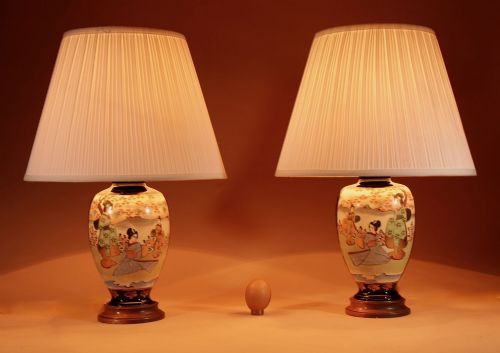
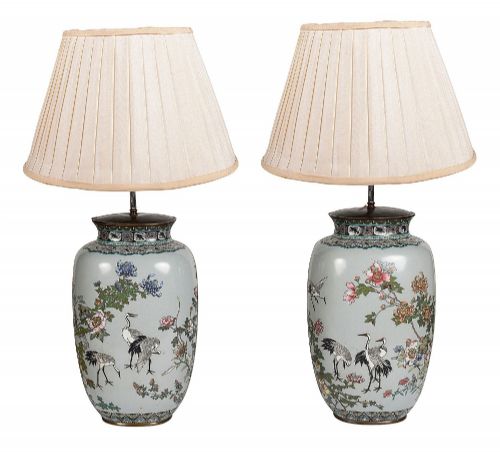
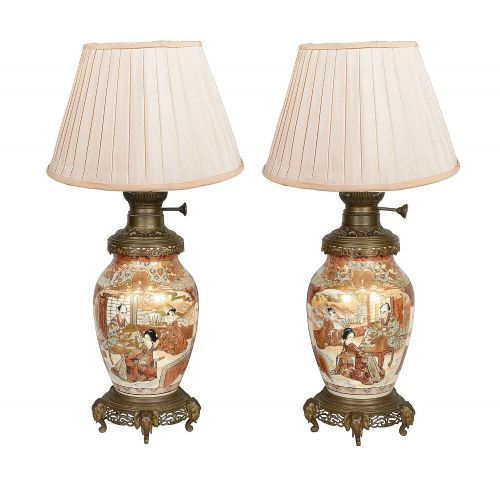
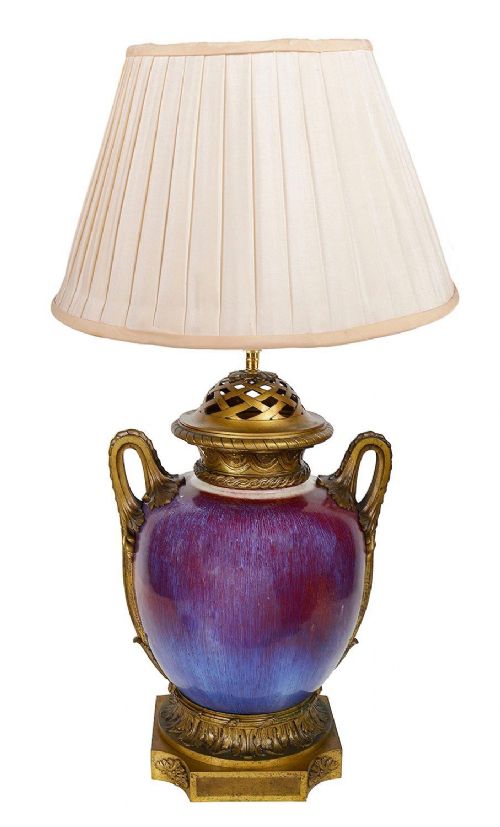
The selection here includes pieces originating from Chinese export workshops, Japanese Meiji and Edo periods, alongside European makers working in Delft, Paris porcelain, and English ironstone. Many examples pair the ceramic body with metal mounts in brass or ormolu.
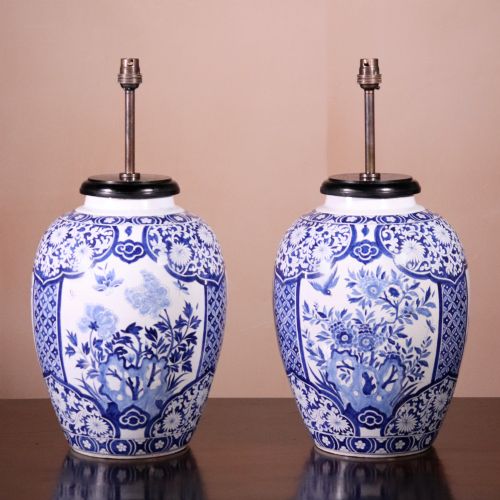
Buyers will encounter single vessels and matched pairs spanning from the seventeenth century through to the early twentieth century. These lamps function as focal points in a room while preserving historical ceramic forms.
Materials and Construction
The manufacture of these items relies on hard-paste porcelain, earthenware, and stoneware bodies decorated with underglaze blue, enamel colours, or celadon glazes. Artisans shaped these ceramics before applying intricate hand-painted motifs such as Famille Rose, Famille Verte, and blue and white designs.
Metalwork plays a structural role in many pieces, incorporating cast gilt bronze or ormolu mounts that secure the ceramic body and support the lighting hardware. Silk and fabric shades frequently complement the textured surfaces of the porcelain and metal bases.
Listings feature ceramics from the 17th Century to the 1930s, incorporating materials such as porcelain, earthenware, brass, and silk.
Evaluating the Pieces
Quality in these conversions rests upon the preservation of the original ceramic vessel and the sensitivity of the mounting work. Pieces where the metal mounts integrate harmoniously with the antique body without damaging the porcelain demonstrate superior craftsmanship.
The precision and detail of the hand-painted decoration on the ceramic surface distinguish standard production from exceptional examples. Furthermore, matched pairs maintain a higher degree of desirability among collectors compared to single converted vessels.
The Ceramic Vase Lamps Glossary
- Famille Rose
- A palette of opaque enamels dominated by pink, used extensively on Chinese porcelain from the eighteenth century onward. The name derives from the French classification for these rose-coloured tones.
- Ormolu
- Gilded bronze mounts applied to furniture and ceramics, providing decorative stability and ornamental enrichment. This technique involves coating cast bronze with a finely ground gold and mercury amalgam.
- Satsuma
- Japanese earthenware pottery featuring a crackle-glaze finish decorated with coloured enamels and gilt. These wares were produced primarily in Satsuma Province and later exported widely during the Meiji period.
- Cloisonné
- An enamelling technique where metal strips are soldered to a base to form compartments filled with coloured paste. Firing hardens the enamel into vibrant decorative patterns across the surface.
- Double Gourd
- A traditional curved vase shape resembling two stacked bulbous spheres, symbolising fortune in various Asian ceramic traditions. This distinctive profile adapts well to upright table lighting.
Ceramic Vase Lamps: Frequently Asked Questions
How are antique vases wired safely?
Most antique vase lamps are converted using professional electrical components that run cord through the centre without drilling destructive holes into the ceramic.
Rewiring allows these historic vessels to meet modern safety standards while retaining their original decorative integrity.
Can I find matched pairs easily?
Matched pairs appear frequently among listings, often originating from nineteenth-century export workshops or European decorative traditions.
Finding a balanced pair of antique ceramic lamps offers symmetry for sideboards, mantelpieces, or large tables.
What periods do these lamps represent?
The selection spans several centuries, including seventeenth-century Japanese vessels, eighteenth-century Delftware, and nineteenth-century Chinese porcelain.
Later adaptations from the early twentieth century also feature alongside Victorian and Regency examples.
How do I clean ceramic lamp bases?
Maintenance requires gentle dusting with a soft, dry cloth to protect the painted glazes and any delicate gilt bronze mounts.
Harsh chemical cleaners and excessive moisture should be avoided to preserve the historic surface finishes.