




Ceramic Urn Garniture
These ceramic urn garniture sets bring symmetry and classical elegance to a room, displayed as matching triads or pairs.
Ceramic Urn Garniture
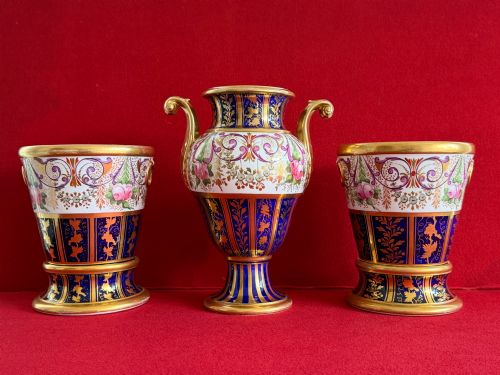
A ceramic urn garniture comprises a matched set of three or more vases and urns designed to sit together on a mantelpiece or sideboard. These decorative arrangements originate predominantly from the nineteenth century, spanning Georgian, Regency, and Victorian periods.
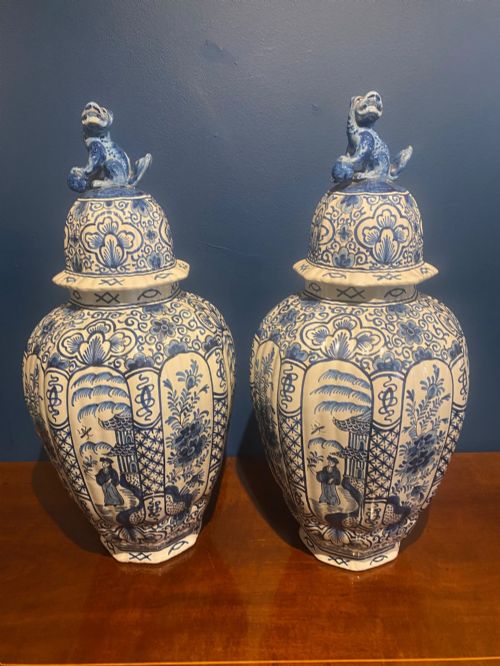
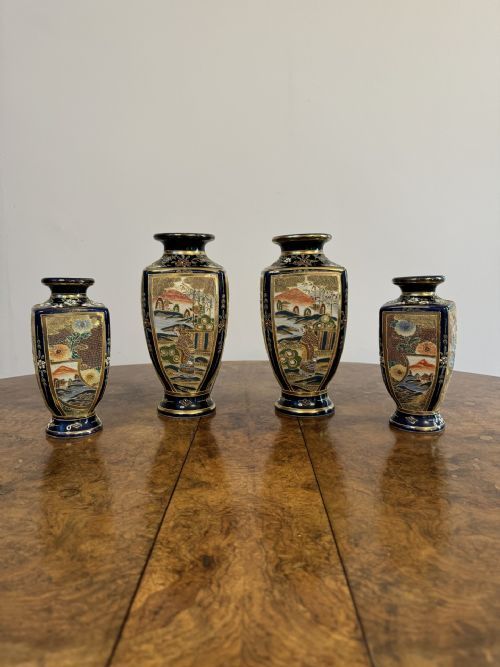
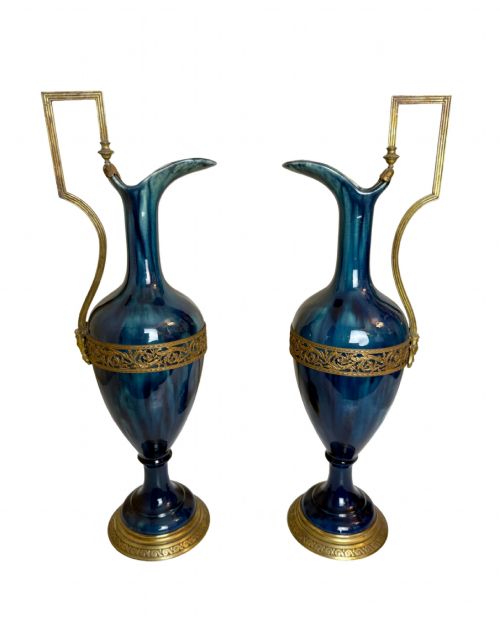
Buyers encounter European porcelain works from factories such as Sèvres, Vienna, and Worcester alongside Japanese Satsuma and Imari pieces. Sets range from straightforward blue and white pairs to elaborate multi-piece arrangements mounted in ormolu and gilt bronze.
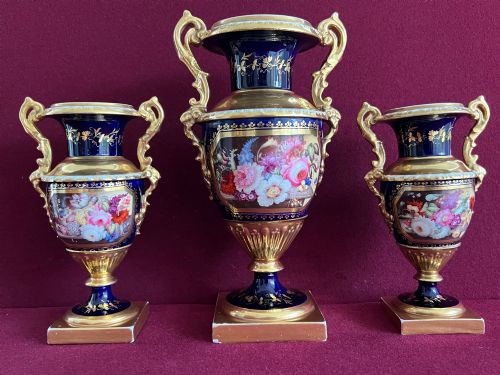
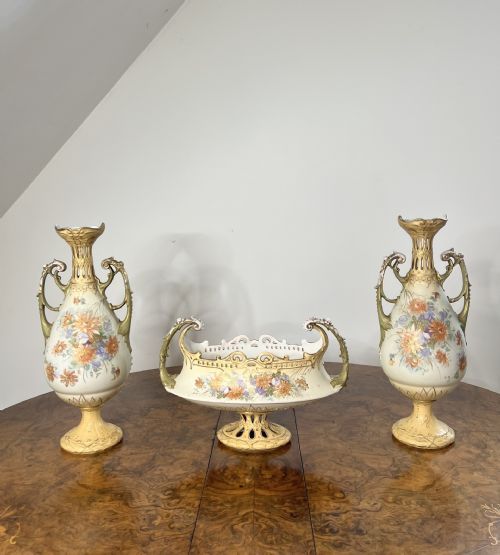
The form typically includes a central taller urn flanked by matching smaller vases, creating a balanced visual focal point. Many pieces incorporate lids and classical handles, drawing on Neoclassical and French Rococo Revival styles.
How they were made
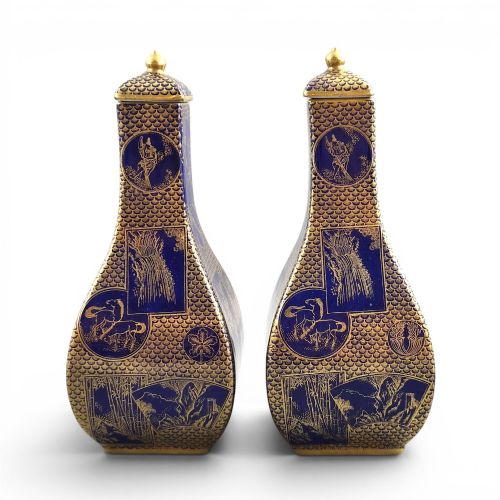
Potters shaped fine porcelain, earthenware, and ironstone on the wheel or in moulds before applying detailed glazes and enamel hand-painting. Artisans integrated gold leaf and gilding to highlight moulded botanical and figural motifs across the ceramic surface.
Metalworkers added cast ormolu and gilt bronze mounts, collars, and handles to secure and elevate the ceramic bodies. These bronze additions required precise foundry work to fit the contours of the fired pottery.
Ceramic Urn Garniture Retail Price Guide 2026
Typical asking prices for ceramic urn garniture among the pieces listed under this phrase on Sellingantiques today, from the lower quarter to the upper quarter. They describe what is for sale here now, not the wider market.
Several sets include custom lids so snug they trap a whisper of nineteenth-century drawing-room air inside the ceramic belly.
What varies in quality
The finesse of the hand-painted enamel decoration and the crispness of the gilt work determine the upper tier of these pieces. Master painters executed intricate botanical scenes and historical subjects with fine brushwork that elevates a garniture well above standard factory output.
The quality of the bronze and ormolu mounts also dictates value, with heavy, finely chased metalwork demonstrating superior craftsmanship. Well-matched sets that retain their original lids and gilding intact represent the finest examples of the type.
Spode·Minton·Thomas Steel·Mason's Patent Ironstone·Flight Barr and Barr·Worcester·Sèvres·Royal Vienna
The Ceramic Urn Garniture Glossary
- Garniture
- A set of matched vases or urns designed to be displayed together as a decorative unit. They typically consist of three or more pieces.
- Ormolu
- Finely ground high-carat gold mercury-gilded onto a bronze object. This technique imparts a rich golden finish to metal mounts on nineteenth-century ceramics.
- Ironstone
- A patented ceramic body developed in Britain to imitate Chinese porcelain. It offers high durability while accepting enamel colours and transfer printing effectively.
- Bleu Celeste
- A bright turquoise blue ground colour used extensively on European porcelain, particularly associated with eighteenth and nineteenth-century Sèvres production.
- Imari palette
- A traditional Japanese decorative scheme utilising underglaze blue, iron red, and gold. European factories frequently copied these distinctive colour combinations during the nineteenth century.
Ceramic Urn Garniture: Frequently Asked Questions
How were garniture sets displayed?
Garniture sets were traditionally arranged along mantelpieces above fireplaces, where their balanced proportions framed the central mirror or architectural woodwork. They also stood atop large cabinets, commodes, and sideboards in formal reception rooms.
The arrangement typically placed the tallest urn in the exact centre, with the matching smaller vases or ewers flanking it symmetrically. This placement created a formal, ordered aesthetic favoured in Neoclassical and Victorian interior design.
How do I care for antique porcelain?
Antique porcelain and earthenware require gentle dusting with a soft, dry brush to prevent the accumulation of dirt on delicate enamel and gilt surfaces. Water and chemical cleaning agents should be avoided, particularly on pieces with exposed ormolu mounts or hand-painted overglaze decoration.
Display these sets away from direct sunlight and sources of heat to protect the colours and prevent crazing in the glaze. Ensure the supporting furniture is stable, as heavy lidded urns and bronze mounts can be top-heavy.
How do I identify different periods?
Identifying the period of a ceramic urn garniture involves examining the paste, glaze, form, and any factory marks stamped or painted on the base. Regency and Georgian examples often feature refined classical shapes with delicate hand-painted flora, whereas later nineteenth-century pieces lean towards heavier Victorian or revivalist proportions.
Stylistic cues such as French Rococo Revival scrollwork or Japanese Satsuma and Imari motifs help narrow down the date and origin. Comparing the mounting techniques, such as the weight and chasing of ormolu trims, also aids in dating the piece accurately.