


Ceramic Mantelpiece Dog Figures
Ceramic mantelpiece dog figures are sculptural shelf ornaments designed to anchor a room, bringing character and domestic history directly to your hearth.
Ceramic Mantelpiece Dog Figures
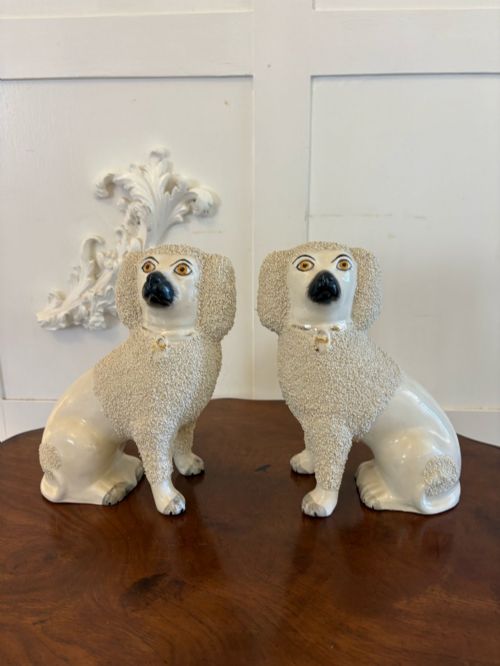
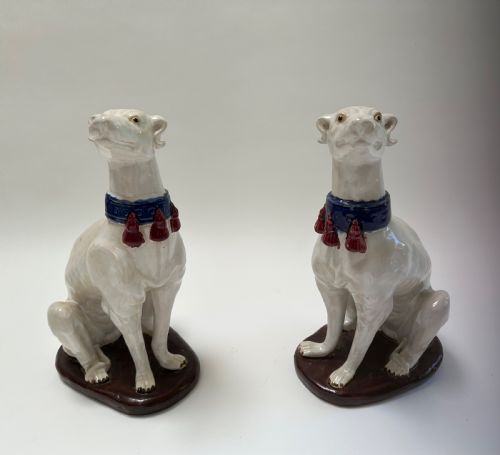
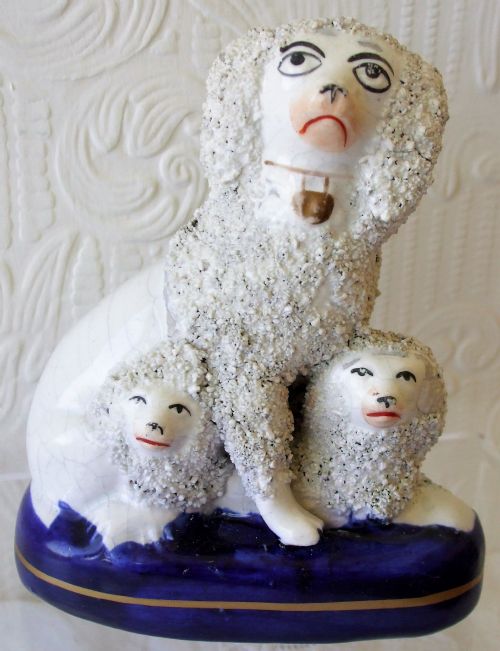
Most examples originate from the Victorian period, showcasing traditional English pottery techniques applied to domestic subjects. Buyers encounter various forms, from miniature poodles to large decorative figures adorned with enamel or copper lustre. Certain pieces incorporate Italian Majolica and Capodimonte styles alongside traditional English pottery designs.
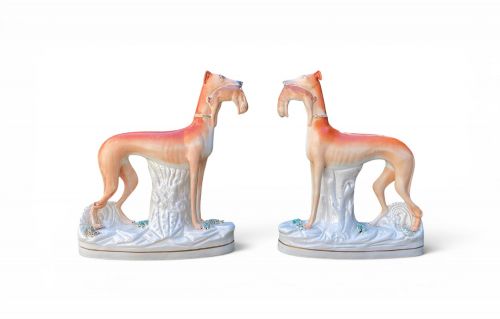
The inventory demonstrates a strong preference for symmetrical pairs designed to sit at either end of a mantel shelf. Formats range from seated spaniels and poodles with pups to greyhounds and hounds associated with musicians. These Staffordshire and factory-produced ornaments reflect the domestic tastes of the nineteenth and early twentieth centuries.
Assessing quality and craftsmanship
The finesse of the ceramic body and the uniformity of the glaze separation distinguish standard production items from workshop outputs of higher artistic ambition.
Objects span from early nineteenth-century Staffordshire spans to mid-century British pottery figures.
Royal Capodimonte Factory·James Dudson·Royal Doulton·Beswick
The Ceramic Mantelpiece Dog Figures Glossary
- Earthenware
- A porous pottery body fired at lower temperatures, commonly used for traditional nineteenth-century figures. It requires a protective glaze to hold liquids and achieve a smooth surface.
- Staffordshire
- A regional description for pottery produced in the towns of the English Midlands. This area dominated the manufacture of mantelpiece figures and animal models during the Victorian era.
- Majolica
- A type of earthenware coated with an opaque tin glaze and painted with metallic oxide colours. It produces vibrant, glossy surfaces often seen in revivalist ceramic designs.
- Copper Lustre
- A metallic glaze application that produces a reflective, coppery sheen across the ceramic surface. This technique was frequently applied to Victorian pottery dogs to catch the firelight.
- Enamel
- Opaque glass-like pigments fused onto the fired ceramic body to add surface decoration. It provides the characteristic spots, eyes, and collars found on pottery spaniels.
Ceramic Mantelpiece Dog Figures: Frequently Asked Questions
What are ceramic mantelpiece dog figures?
These ceramic mantelpiece dog figures are decorative pottery sculptures shaped as popular breeds like spaniels, poodles, and greyhounds. Makers designed them specifically to sit symmetrically on fireplace mantels in Victorian homes.
Potters produced them in pairs so they could frame a clock or mirror properly. They served as affordable domestic ornaments that brought the comfort of pets into the parlor.
How do I date a Staffordshire dog?
Dating these figures requires examining the clay body, glaze characteristics, and the depth of the modelling. Nineteenth-century versions often show heavier earthenware construction and hand-painted enamel details.
Later twentieth-century reproductions tend to have smoother, more uniform glazes and lighter bodies. Comparing the facial expressions and collar styles against documented period examples helps confirm the era.
Why were they made in pairs?
Victorian interior design favoured symmetry, particularly around the central focus of the fireplace. Placing identical or mirror-image dog figures at opposite ends of the mantel created a balanced look.
This arrangement helped anchor the mantelpiece display alongside other garniture sets. One dog faced left while the other faced right to maintain visual harmony.
How should I clean my figures?
Cleaning requires only a soft, dry cloth to remove dust from the glazed surfaces. Avoid using water or chemical cleaners, especially on antique enamel or gilt details that can flake off.
Gentle maintenance preserves the fragile lead glazes and painted decorations accumulated over decades. Regular dusting prevents grime from settling into the crazing lines of the ceramic.