
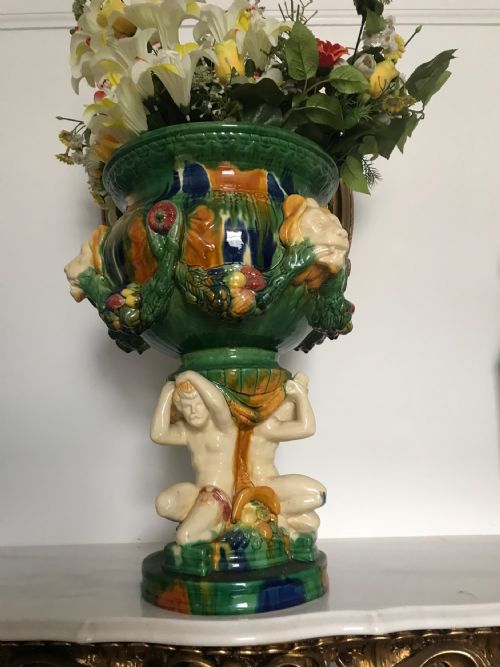


Ceramic Jardiniere Pedestal
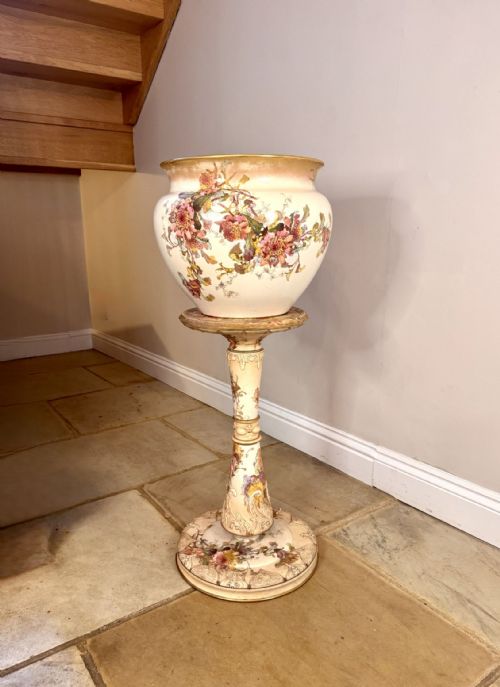
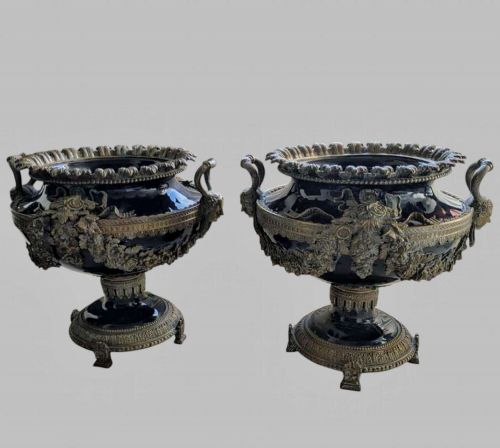
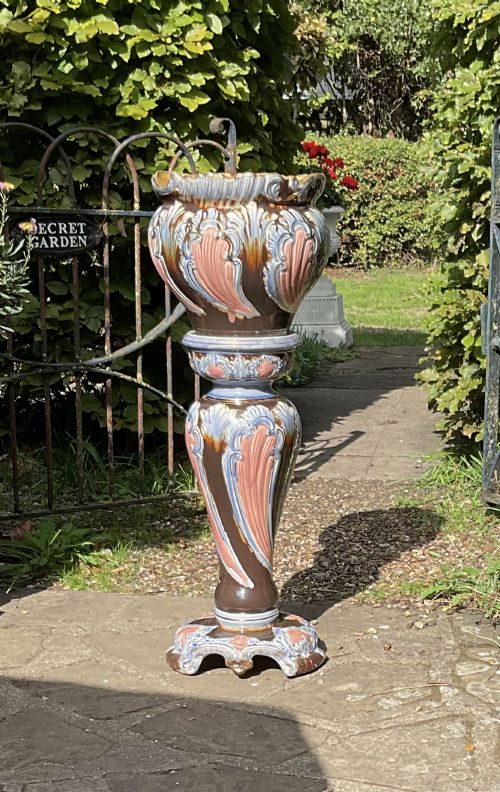
These ceramic jardiniere pedestal pieces bring architectural presence and planted greenery together into one striking display.
Ceramic Jardiniere Pedestal
A ceramic jardiniere pedestal combines a large plant container with a matching floor-standing base, designed to elevate greenery within a room. When you search for this phrase, you find matched pairs and single sets intended for grand interior display.
The pieces span from the late nineteenth century through to the Edwardian period and the early twentieth century. Common forms include majolica majesties on figural stands, glazed earthenware urns, and tall pottery columns supporting naturalistic planters.
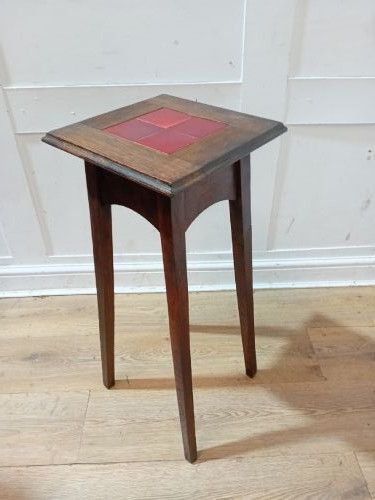
Origins stretch across British art potteries, French workshops, and Italian kilns, alongside occasional oak or ebonised wood stands paired with ceramic vessels. Most examples rely on heavy earthenware or stoneware construction to support wet soil and heavy foliage safely.
Materials and manufacture
Potters shaped these tall vessels using earthenware, terracotta, and stoneware clays, often throwing large columns in sections before joining them securely. Complex figural bases and relief decorations required skilled moulding by hand.
Glazing techniques defined the surface finish, utilising colourful majolica glazes, shimmering lustre effects, and textured slip decoration. Firing at high temperatures ensured the earthenware bodies could hold moisture without seeping.
Materials listed include glazed ceramic, earthenware, and stoneware alongside occasional oak and ebonised wood stands supporting porcelain vessels.
Judging quality in pedestals and pots
Quality rests upon the crispness of the moulded detail and the depth of the glaze, where rich majolica colours and controlled lustre finishes distinguish finer studio output from standard commercial production. Heavier, sturdier clay bodies provide better structural stability for the combined weight of pot and stand.
Artistic ambition sets the upper tier apart, visible in complex figural griffin supports, lion head motifs, and fully articulated Secessionist or Art Nouveau designs. Matched sets where both the jardiniere and its pedestal share identical glazes and maker marks command greater regard than married pieces.
Burmantofts Art Pottery·Royal Doulton Slaterware·Clement Massier·Minton Secessionist·Julius Dressler·Woodlesford Art Pottery
The Ceramic Jardiniere Pedestal Glossary
- Jardiniere
- A large ornamental pot or container for plants, usually designed to sit on the floor, a table, or a dedicated stand. They often feature decorative relief work or colourful glazes.
- Pedestal
- A tall structural column or base that elevates a planter, urn, or sculpture above floor level. In ceramics, these are frequently moulded with matching decorative motifs to form a unified set.
- Majolica
- A type of earthenware coated with an opaque tin-glaze and painted with bright metallic oxide colours, fired to achieve a glossy finish. It gained immense popularity during the Victorian era for bold garden and interior vessels.
- Lustre glaze
- A metallic ceramic glaze that produces an iridescent, shimmering surface effect reflecting different colours in the light. Clement Massier pieces demonstrate this technique.
- Slaterware
- A Victorian ceramic style featuring textured, lace-impressed body surfaces finished with slip trailing and partial gilding or coloured glazes, developed by Royal Doulton.
- Terracotta
- Unglazed or porous fired red clay used for garden ornaments, planters, and Grand Tour decorative urns. It weathers naturally and provides a warm, earthy tone.
Ceramic Jardiniere Pedestal: Frequently Asked Questions
How do I secure the heavy top pot?
Most jardinieres rest steadily on a flat recessed platform built into the top of the matching pedestal, relying on gravity and their substantial combined weight to stay firmly in place.
For added stability on uneven floors, place the assembly away from busy walkways and ensure the base sits completely flat without rocking.
Can I plant directly into the jardiniere?
Many historic ceramic planters lack drainage holes because they were originally designed to hold potted plants concealed inside with a saucer underneath. Planting directly into unglazed or porous earthenware can also risk moisture damage to the antique body.
Using a separate inner plastic pot protects the historic interior glaze and makes watering much simpler without shifting the heavy arrangement.
How do I tell Victorian from Edwardian pieces?
Victorian examples frequently display ornate relief moulding, rich majolica colours, and heavy classical revival influences such as Italian Renaissance or French Rococo motifs. They tend to feel heavier and more opulent in their decorative scheme.
Edwardian and later pieces often lean towards simpler, elongated forms, Arts and Crafts styling, or flowing Art Nouveau and Secessionist abstract patterns with stylized floral motifs.
How do I clean glazed ceramic pedestals?
Dust the surface regularly with a soft, dry cloth to prevent dirt from settling into recessed relief details and glaze crazing. Avoid harsh chemical cleaners or abrasive scouring pads that can dull the historic finish.
For stubborn marks, use a damp cloth with mild soapy water, then dry the ceramic thoroughly with a soft towel.