




Ceramic Figures with Baskets
Ceramic figures with baskets bring domestic charm and sculptural detail to a room, ranging from delicate Georgian porcelain to robust Staffordshire pottery.
Ceramic Figures with Baskets
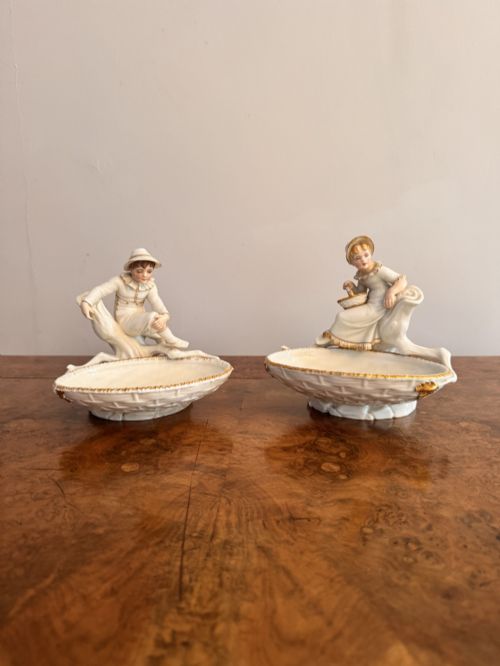
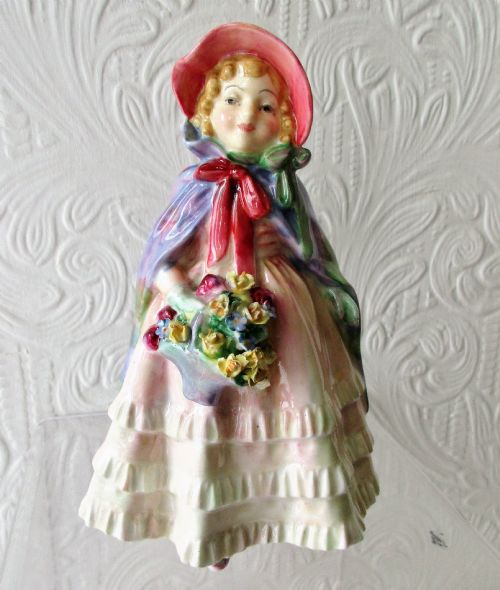
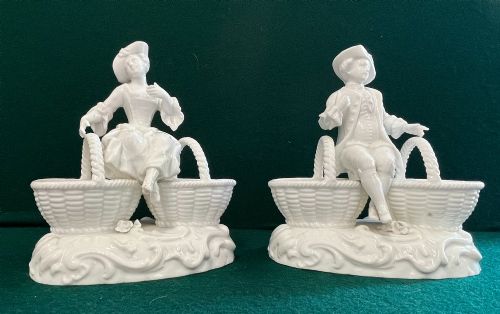
These ceramic figures with baskets depict human figures, cherubs, and animals carrying baskets for flowers, fruit, fish, or garden produce. You will encounter forms ranging from functional quill holders and candlesticks to purely decorative shelf figurines.
The pieces on this page span several centuries and manufacturing traditions, crossing from Georgian and Regency eras through the Victorian period into the early twentieth century. Styles encompass Rococo Revival, Victorian Neoclassical, Art Nouveau, and Chinese Dehua porcelain.
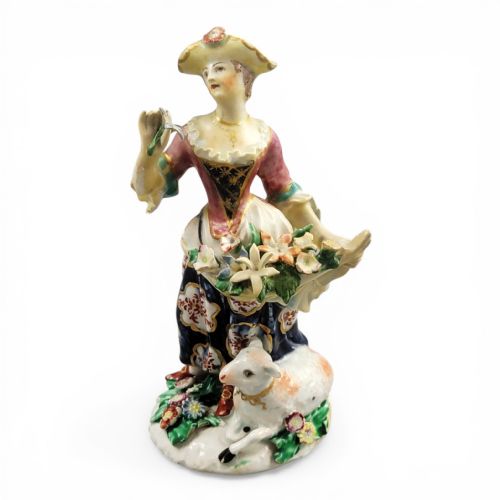
Makers and regional potteries represented include Bow, Limbach, Royal Worcester, Meissen, Sitzendorf, Samson of Paris, Staffordshire, Royal Dux, and Dehua kilns. The subjects include ladies with lambs, street sellers, gardeners, and mythological or religious figures like Guanyin.
Materials and construction methods
Makers utilised various ceramic bodies including soft-paste porcelain, hard-paste porcelain, parian ware, and traditional earthenware pottery. Surface treatment frequently involves hand-painted enamel colours and gilt or gold leaf highlights.
Finer European porcelain figures employ intricate modelling with applied floral elements and detailed wicker basket textures. Dehua kilns produced monochrome blanc de Chine pieces, while Staffordshire workshops favoured robust earthenware bodies suited to functional quill holders.
Ceramic Figures with Baskets Retail Price Guide 2026
Typical asking prices for ceramic figures with baskets among the pieces listed under this phrase on Sellingantiques today, from the lower quarter to the upper quarter. They describe what is for sale here now, not the wider market.
Some nineteenth-century makers evidently decided a sheep simply must have a flower garland to match the lady's basket.
Factors of quality and execution
The application of enamel painting and gilding distinguishes standard production from superior artistic output. Careful hand-painting of floral bases and garments elevates the visual depth of the sculpture.
Bow Porcelain·Limbach Porcelain·Royal Worcester·Meissen Porcelain·Sitzendorf Rococo·Samson of Paris·Royal Dux·Dehua
The Ceramic Figures with Baskets Glossary
- Parian porcelain
- A fine-grained unglazed porcelain developed in the nineteenth century that resembles carved marble. It is particularly noted for its smooth matte finish on figuary subjects.
- Blanc de Chine
- A French term for white Chinese porcelain made at Dehua in Fujian province, featuring a rich milky glaze. This ware is celebrated for religious and secular sculptural figures.
- Soft-paste porcelain
- An artificial porcelain composition fired at lower temperatures than hard-paste porcelain. It produces a warm creamy body often found in eighteenth-century English figures.
- Quill holder
- A desk accessory incorporating a small receptacle for writing feathers alongside a decorative sculptural group. These items combine utility with ornamental ceramic design.
Ceramic Figures with Baskets: Frequently Asked Questions
What are ceramic figures with baskets?
These pieces are sculptural ceramic objects depicting people, children, or mythical figures holding or standing beside woven baskets. They function as mantel ornaments, candlesticks, or desk accessories.
Originating from various European and Asian kilns, they reflect the decorative tastes of the eighteenth, nineteenth, and early twentieth centuries.
How were these figures used historically?
Most served as ornamental displays on drawing-room mantelpieces, console tables, or cabinet shelves to showcase the wealth and taste of the owner. Some specific forms, such as quill holders and candlesticks, combined this decorative display with practical desk or lighting utility.
Domestic interiors of the Georgian and Victorian periods frequently featured such figurative ceramics to add colour and narrative interest.
How do I identify the period of a piece?
Dating relies on observing paste composition, glaze characteristics, style markers, and factory marks where present. Nineteenth-century pieces often display Victorian Neoclassical or Rococo Revival traits, whereas eighteenth-century works exhibit softer pastes and distinct hand-painting.
Comparing the base construction and manufacturing technique helps distinguish early models from later reproductions or revival pieces.
How should I display them at home?
Place these figures on stable surfaces away from high-traffic edges, as protruding elements like baskets, flowers, and applied details are vulnerable to impact. Good lighting helps reveal the fine modelling of the parian paste or the delicate brushwork of the enamel colours.
Keep them out of direct sunlight to preserve the vibrancy of hand-painted enamels and gilt highlights over time.