



Ceramic Female Figurine
When you search for a ceramic female figurine, you find sculpted representations of women spanning neoclassical drapery to art nouveau curves.
Ceramic Female Figurine
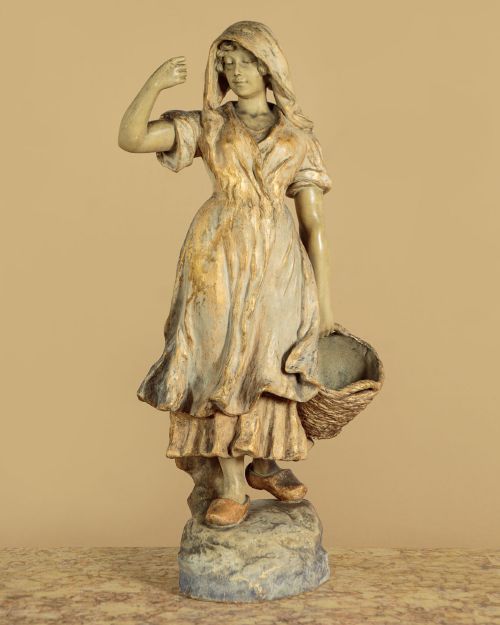
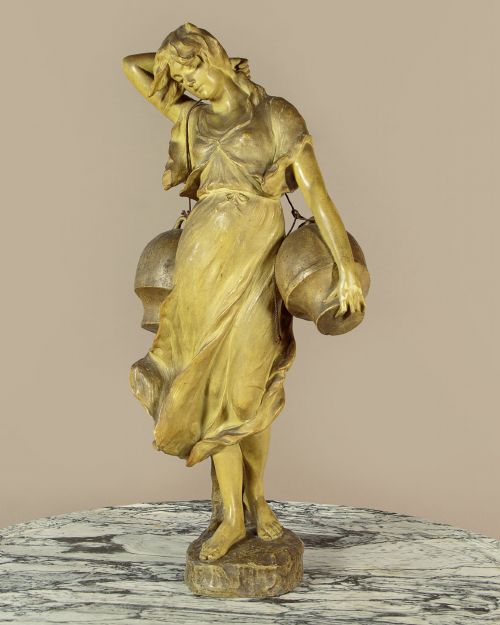
A ceramic female figurine brings sculpted portrayals of women into domestic spaces, taking forms such as water carriers, classical maidens, dancers, and allegorical figures. Buyers seeking these works encounter representations shaped by Victorian, Edwardian, and Art Deco aesthetics.
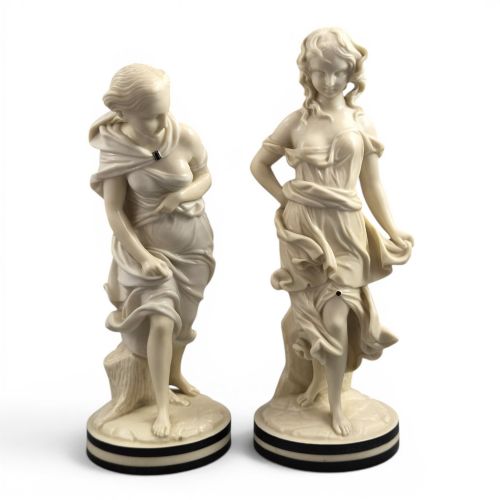
The selections available here range from unglazed parian ware and terracotta to painted and glazed porcelain. Pieces often depict specific cultural archetypes or mythological subjects, varying from small tabletop studies to monumental floor-standing figures.
How They Were Made
Potters and sculptors utilised porcelain, terracotta, and parian ware, shaping the clay through mould-pressing and hand-modelling techniques. Surface decoration involved applied enamel, gold leaf, and painted details before firing in kilns.
Factories employed specialised glaze formulations, including sancai glazes and shot enamel effects, to achieve specific surface textures. Bisque porcelain remained unglazed to mimic the matte finish of carved marble.
One nineteenth-century figure balances a lizard on a tree stump while a classical maiden gazes onward.
What Varies in Quality
Quality rests in the crispness of the moulding and the sensitivity of the hand-finishing, where finer examples preserve delicate facial expressions and intricate drapery folds. The sophistication of the ceramic body and the depth of the painted or enamelled palette distinguish standard production pieces from masterworks.
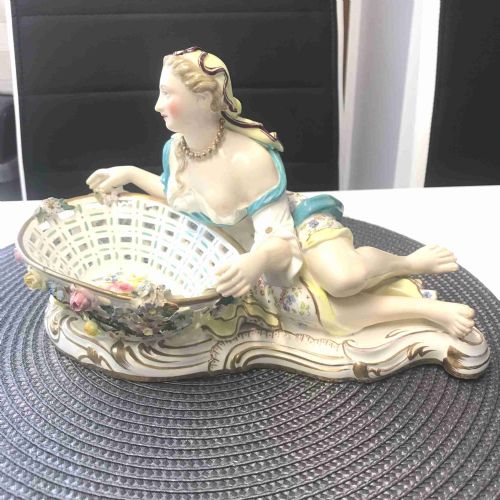
Artistic collaboration dictates distinction, as works modelled by named sculptors for prominent potteries command greater regard. The preservation of fragile elements, such as outstretched fingers, baskets, and floral garlands, influences the integrity of the piece.
Goldscheider·Meissen·Royal Worcester·Royal Dux Bohemia·Bernard Bloch·Volkstedt·Achille Mollica·Ernst Wahliss
The Ceramic Female Figurine Glossary
- Parian ware
- A fine-grained, unglazed porcelain developed in the nineteenth century to imitate carved marble. It gained popularity for classical statuary due to its smooth, matte appearance.
- Terracotta
- A porous, fired clay body ranging in colour from pale buff to deep reddish-brown. Sculptors often utilised it directly for finished figures without applying a glaze.
- Bisque porcelain
- Unglazed ceramic fired once to create a vitrified body with a matte, biscuit-like texture. It allowed makers to capture sharp, clean lines in human forms.
- Shot enamel
- A specialised surface treatment that produces an iridescent, shifting colour effect across ceramic drapery. This technique appeared on decorative porcelain figures around the turn of the twentieth century.
- Bouquetiere
- A decorative vessel or figural composition incorporating holders for flower arrangements. These pieces frequently depicted maidens holding baskets or cornucopias.
Ceramic Female Figurine: Frequently Asked Questions
What periods do these ceramic figures come from?
The listings span the eighteenth, nineteenth, and early twentieth centuries, encompassing Georgian, Victorian, Edwardian, and Art Deco eras.
Production methods and stylistic influences shifted across these periods from classical revivalism to flowing organic art nouveau lines.
How were parian figures displayed?
Parian ware pieces served as parlour ornaments, often displayed on mantelpieces, occasional tables, or dedicated pedestals.
Their marble-like appearance suited the formal interior decoration schemes of nineteenth-century homes.
Are these figures glazed or unglazed?
Finishes vary considerably depending on the material and period of manufacture. Parian ware and bisque porcelain remain unglazed to highlight sculptural detail.
Other works feature high-gloss glazes, polychrome enamel painting, or metallic highlights.
How can I identify the maker?
Makers typically marked their work with impressed stamps, painted factory symbols, or model numbers on the underside. Researching these specific ciphers reveals the producing pottery and approximate date of creation.