




Ceramic Beer Jug
A ceramic beer jug is a robust vessel built for serving ale, spanning robust salt-glazed stoneware to characterful Staffordshire figures.
Ceramic Beer Jug
When you search for a ceramic beer jug, you encounter a robust range of pouring vessels designed for serving ale at the table or tavern. The pieces gathered here cross several centuries and traditions, offering a tangible connection to historical drinking customs.
You are most likely to meet 19th-century English Staffordshire pottery and sturdy German stoneware examples on this page. These forms vary from characterful Toby jugs depicting seated figures to salt-glazed pitchers adorned with cobalt blue decoration.
The selection also includes Dutch Delft faience and Georgian relief-moulded ale jugs, showing how potters across Europe shaped everyday drinkware into objects of decorative interest. Each piece reflects the specific material preferences and manufacturing centres of its origin.
How they were made
Potters utilised durable earthenware and dense stoneware bodies, shaping them on the wheel or forming them in moulds to achieve robust walls suitable for containing liquid. Salt-glazed stoneware pieces received a handful of salt thrown into the kiln during firing, creating a distinctive orange-peel texture on the surface.
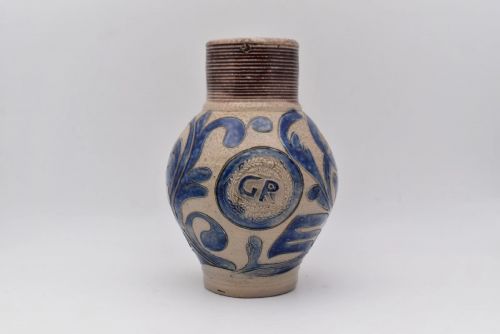
Makers applied cobalt oxide pigments directly to the clay body or beneath the glaze to produce striking blue designs, particularly visible on German Westerwald vessels. Tin-glazed earthenware, characteristic of Delftware, provided a smooth white ground for colourful hand-painted polychrome scenes.
Ceramic Beer Jug Retail Price Guide 2026
Typical asking prices for ceramic beer jug among the pieces listed under this phrase on Sellingantiques today, from the lower quarter to the upper quarter. They describe what is for sale here now, not the wider market.
Listings feature earthenware, stoneware, and tin-glazed earthenware spanning the Georgian and Victorian eras.
What varies in quality
The application of the glaze and the stability of the handle attachment further distinguish finer pieces from standard utilitarian ware. Additions such as hallmarked silver rims on stoneware jugs elevate the status and finish of the object.
Simon Peter Gerz·Doulton Lambeth
The Ceramic Beer Jug Glossary
- Salt-Glazed Stoneware
- A ceramic type fired at high temperatures where salt is introduced into the kiln, producing a glossy, textured surface resembling orange peel.
- Toby Jug
- A pottery jug modelled in the form of a stout, cheerful man, usually wearing a 18th-century costume and holding a mug of beer.
- Cobalt Oxide
- A mineral pigment utilised by potters to create deep blue designs under or over the glaze, highly stable at high firing temperatures.
- Tin-Glazed Earthenware
- Pottery covered with a lead glaze made opaque by the addition of tin oxide, providing a white surface for painting.
- Relief Moulded
- A technique where clay is pressed into a carved mould to raise decorative patterns, foliage, or figures above the main surface of the vessel.
Ceramic Beer Jug: Frequently Asked Questions
What is a ceramic beer jug used for?
These vessels served primarily for drawing, holding, and pouring ale at the table or in public houses.
Over time, many of these jugs transitioned from functional tavern equipment to decorative display pieces collected for their regional character and historical interest.
How do I identify a Staffordshire Toby jug?
Staffordshire Toby jugs typically depict a seated, full-figured character in period attire, often holding a jug of beer or a pipe.
They are modelled in earthenware and frequently feature hand-painted glazes, capturing distinct personalities ranging from local squires to festive figures.
What is Westerwald stoneware?
Westerwald stoneware originates from the famous German pottery region and is known for its dense, impervious salt-glazed body.
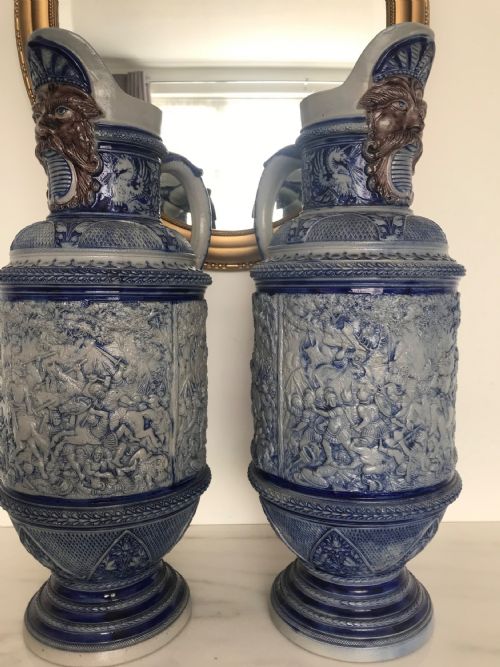
These pieces frequently feature cobalt blue incisions and stamped ornamentation, depicting historical scenes, royal ciphers, or battle motifs.
How do I care for antique ceramic jugs?
Handle these pieces with care, supporting the base and avoiding pressure on applied handles or delicate silver rims.
Keep them away from direct sunlight and clean them only with a soft, dry cloth to preserve the historic glaze and pigment.