




Cavalier Bronze Figures
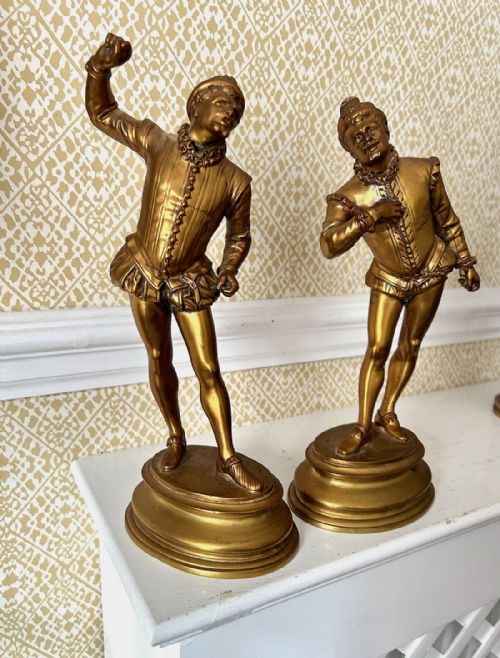
These cavalier bronze figures capture the romantic martial swagger of the seventeenth century in solid metal, offering dramatic period presence for a mantel or desk.
Cavalier Bronze Figures
When you search for cavalier bronze figures, you are looking at nineteenth-century sculptural interpretations of seventeenth-century soldiers, swordsmen, and musketeers, often modelled in pairs. These pieces draw heavily on French Academic and Victorian historicism, translating historical swagger into decorative domestic art.
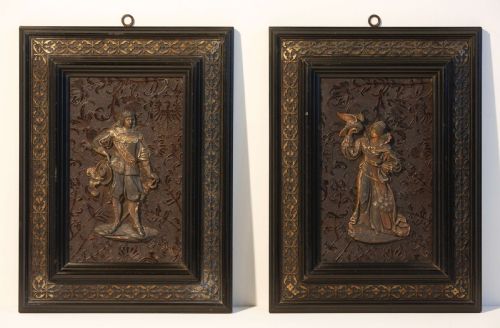
The versions you are most likely to meet on this page span the mid to late nineteenth century, predominantly taking the form of free-standing sculptures, candlesticks, and wall plaques. They appear in true bronze, patinated bronze, and gilded bronze, alongside more affordable contemporary alternatives like spelter and white metal.
Makers and sculptors of the period utilised these military subjects to demonstrate dexterity in capturing ruffled collars, feathered hats, and layered doublets. The resulting works range from modest cast iron doorstops to finely detailed cabinet bronzes and monumental pairs.
How they were made
Most pieces in this category rely on the lost-wax casting method for bronze or standard foundry casting for spelter and cast iron. This technique allowed makers to achieve the crisp surface detail visible on intricate lace collars, chainmail, and ornate sword hilts.
Patination and finishing define the surface character of these sculptures, with makers applying chemical treatments to achieve dark brown patinas or adding partial gilding to highlight specific garments. Base materials such as ebonised wood occasionally serve as pedestals to ground the metal figures.
Cavalier Bronze Figures Retail Price Guide 2026
Typical asking prices for cavalier bronze figures among the pieces listed under this phrase on Sellingantiques today, from the lower quarter to the upper quarter. They describe what is for sale here now, not the wider market.
Listings demonstrate a strong preference for French and Austrian origin, spanning the decades from the mid-nineteenth century through to eighteen-ninety.
What varies in quality
The distinction between ordinary and superior pieces rests entirely upon the crispness of the chase work and the fidelity of the casting. Better examples retain sharp facial expressions and clean definition in the folds of fabric, whereas weaker casts blur these textures.
Material choice marks another clear tier in quality, separating heavy patinated or gilt bronze editions from lighter white metal and spelter alternatives. The depth of the patination and the stability of any integrated mounting also indicate the original workshop standards.
Emile-Coriolan Guillemin·Edouard Drouot·Salmson
The Cavalier Bronze Figures Glossary
- Spelter
- A zinc alloy commonly used in the nineteenth century as an economical substitute for bronze. It takes a surface finish well but is significantly softer and lighter than true bronze.
- Patination
- The chemical or natural surface coloration applied to metal objects. On these figures, patinas range from deep brown tones to polished metallic highlights.
- Carolean
- Pertaining to the reign of King Charles II of England, a period whose cavalier aesthetics strongly influenced Victorian historicism and revival design.
- Gilt Bronze
- Bronze that has been coated with a thin layer of gold or gold-coloured alloy. This technique emphasises decorative details and adds warmth to military regalia.
- French Academic
- The style and standards taught by the Académie des Beaux-Arts in Paris, favouring classical precision and high technical finish in nineteenth-century sculpture.
Cavalier Bronze Figures: Frequently Asked Questions
What materials were used for these figures?
The pieces utilise a range of metals, predominantly true bronze, patinated bronze, and gilt bronze. Other examples employ spelter or white metal for more accessible production.
Additional supporting materials include cast iron for functional items like doorstops and ebonised wood for bases or framing elements.
How do I identify a spelter copy?
Spelter is significantly lighter than bronze and possesses a softer metal composition that is easily scratched beneath the surface finish. It tends to show wear more readily on high points and exposed edges.
True bronze maintains a heavier weight and a more resonant feel, holding intricate cold-chased surface details far more sharply than alloy alternatives.
What periods do these sculptures represent?
While the subjects depict seventeenth-century cavaliers, musketeers, and duellists, the physical objects themselves originate from the nineteenth century. The prevailing aesthetics reflect Victorian historicism and Baroque Revival tastes.
Dates cluster around the mid to late nineteenth century, driven by European foundry production and a widespread fascination with historical romance.
Were these figures made as pairs?
Many of the sculptural groups and plaques were produced as matching pairs representing opposing duelists, soldiers, or complementary characters. This formatting suited nineteenth-century mantelpieces and display shelves.
Single figures also appear frequently, often functioning as standalone cabinet bronzes, candlesticks, or desk accessories rather than paired compositions.