


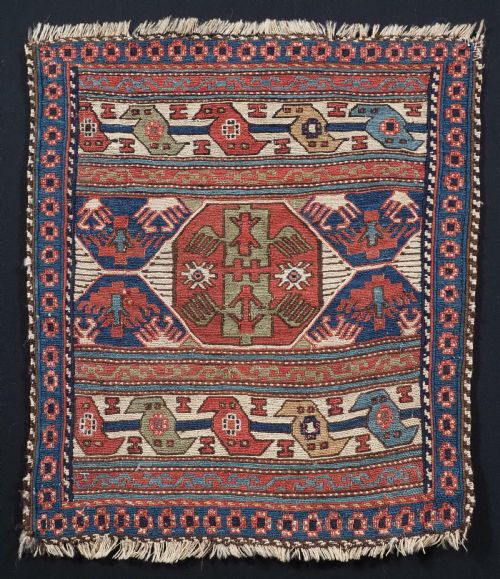


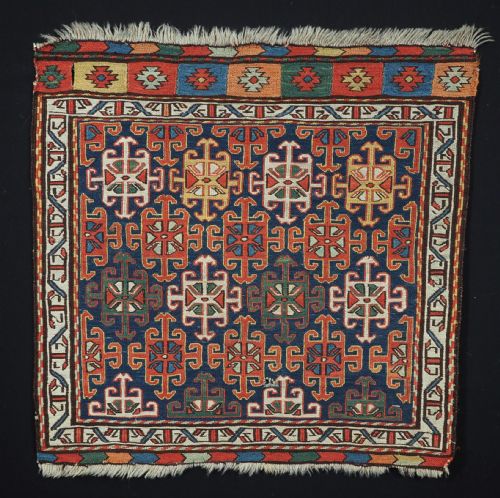
Caucasian Weave Panel
A caucasian weave panel brings rich tribal geometry into a room through flatweave textiles and structural bag faces.
Caucasian Weave Panel
A caucasian weave panel represents traditional textile art originating from tribal makers, often encountered here in the form of flatweave fragments, bag faces, and storage panels. These pieces span the nineteenth century, capturing designs from regions including the Caucasus and Persia.
The inventory on this page largely consists of Shahsavan, Yomud, and Kazak examples, translating nomadic heritage into wall-mounted panels or mounted textiles. Buyers find items ranging from mid-nineteenth century Khorjin faces to later kilim fragments.
Each piece reflects tribal weaving traditions, utilising geometric patterns, bird motifs, and dragon designs to create striking visual displays. These items function primarily as decorative textile art for modern interiors.
Materials and construction
The construction relies heavily on hand-spun wool and occasional silk, paired with natural vegetable dyes to achieve deep colour palettes. Weavers employed specialised flatweave techniques such as soumak and sumac, wrapping weft threads around warp threads to produce textured surfaces.
Many items originate as structural components of nomadic baggage, such as mafrash storage panels or khorjin saddlebags, which later find new life as mounted textile art. The integration of wool and natural dyes ensures lasting structural integrity and rich hues.
Caucasian Weave Panel Retail Price Guide 2026
Typical asking prices for caucasian weave panel among the pieces listed under this phrase on Sellingantiques today, from the lower quarter to the upper quarter. They describe what is for sale here now, not the wider market.
Listings span the nineteenth century, predominantly featuring wool, natural dyes, and hand-spun materials within tribal weaving traditions.
Factors of quality
Quality in these textiles rests upon the precision of the flatweave technique and the complexity of the tribal iconography, such as distinct bird and dragon motifs. Tighter structural density and finer hand-spun wool elevate certain panels above standard examples.
The vibrancy and depth of the natural vegetable dyes also dictate the visual standing of a piece, distinguishing master-weaver output from simpler utilitarian items.
The Caucasian Weave Panel Glossary
- Soumak
- A flatweave technique involving intricate weft-wrapping that creates a textured, durable surface resembling embroidery. This method allows weavers to produce sharp geometric lines and complex motifs.
- Mafrash
- A large rectangular storage container or travel chest made by nomadic tribes, typically constructed from four side panels and a base. Panels from these containers are frequently mounted as standalone textile art.
- Khorjin
- A traditional pair of double saddlebags used for nomadic transport, featuring decorative woven faces that survive today as collectors' pieces.
- Kilim
- A flatweave textile produced without pile, resulting in a smooth, tapestry-like fabric used across rugs and wall hangings.
- Jajim
- A strong, durable flatweave textile traditionally utilised for bedding, covers, or utility bands, woven in colourful stripes.
Caucasian Weave Panel: Frequently Asked Questions
What is a caucasian weave panel?
A caucasian weave panel is a flatweave textile fragment or structural bag face originating from tribal weaving traditions in the Caucasus region. These pieces showcase traditional geometric designs and natural dyes.
They serve primarily as decorative wall art, preserving nomadic heritage through hand-spun wool and intricate weaving techniques.
How were these panels originally used?
Nomadic tribes utilised these woven structures as functional storage containers, saddlebags, and utilitarian household items for daily life. Pieces like mafrash panels formed the sides of baggage chests used during seasonal migrations.
Over time, surviving examples are removed from their original context and mounted for preservation and display in domestic interiors.
How do I care for a textile panel?
Protect mounted textile panels from direct sunlight to prevent natural dyes from fading over the years. Gentle vacuuming through a mesh screen helps remove dust without disturbing fragile wool fibres.
Avoid moisture and high humidity environments to maintain the structural integrity of historical flatweaves.
How are periods identified on panels?
Dating relies on stylistic analysis, material composition, and structural characteristics typical of nineteenth-century tribal output. The presence of specific hand-spun wool types and natural vegetable dye palettes provides strong indicators of age.
Comparative study of known Shahsavan, Yomud, and Kazak motifs helps experts place pieces within specific decades.