

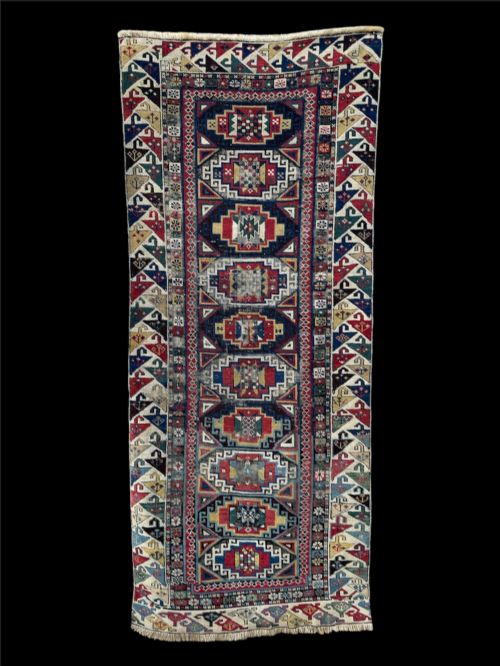


Caucasian Shirvan Carpet
A caucasian shirvan carpet brings geometric discipline and saturated dye work from the Eastern Caucasus straight to the floor.
Caucasian Shirvan Carpet
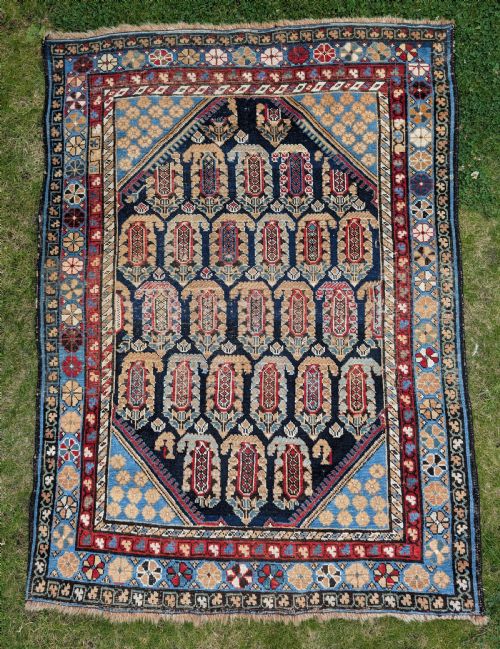
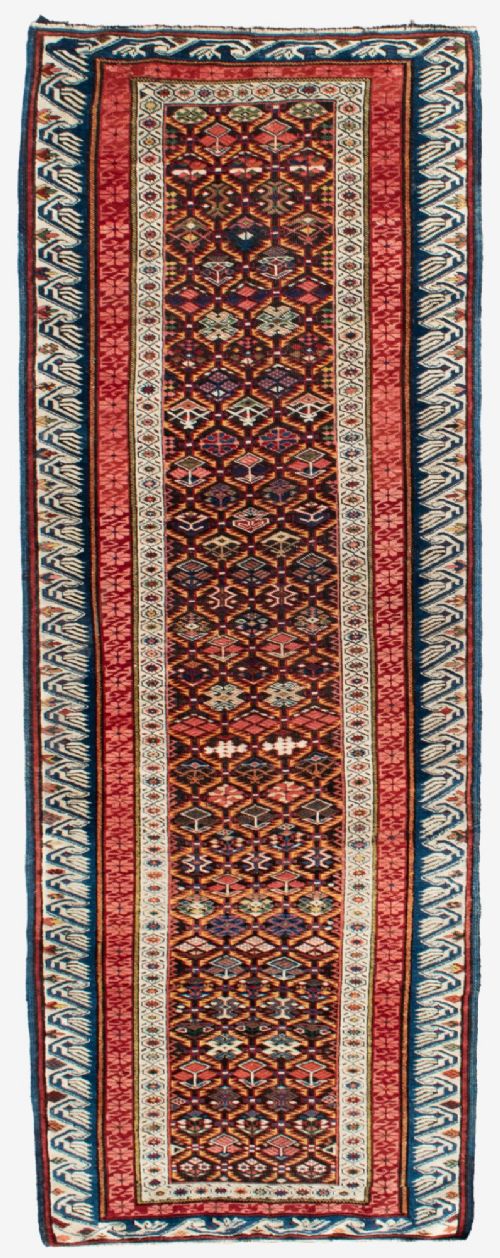
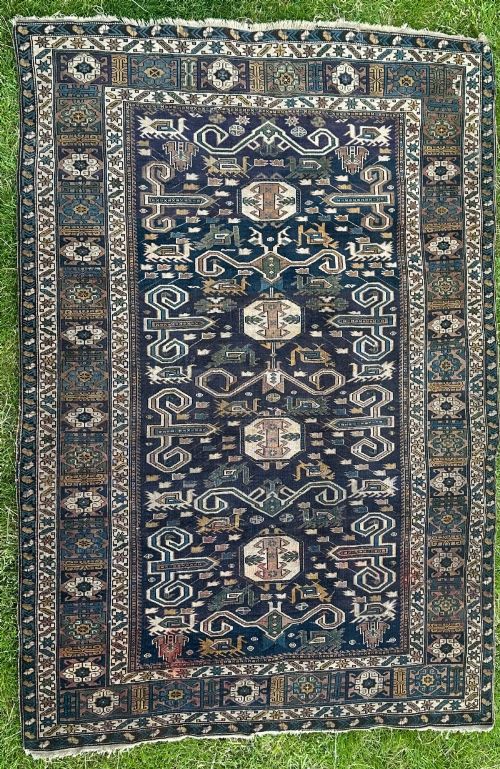
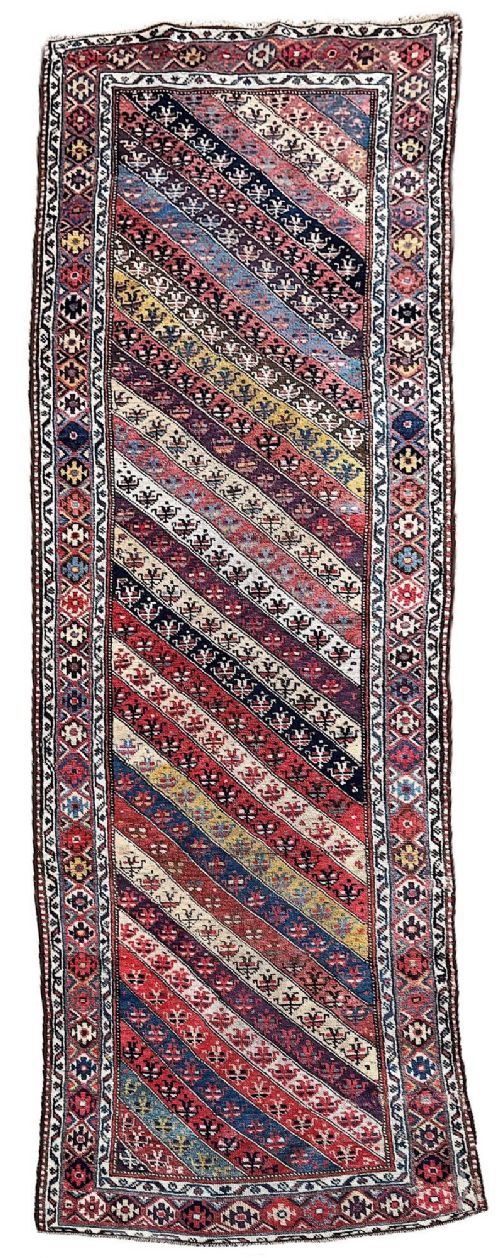
A caucasian shirvan carpet represents woven artistry originating from the Caucasus region during the nineteenth and early twentieth centuries. These floor coverings arrive in various formats, from compact prayer rugs and kilims to long runners designed for narrow corridors.
Most examples encountered on this page date from the decades surrounding nineteen hundred, displaying traditional tribal motifs unique to the Shirvan region. Buyers frequently discover specific village variants such as Marasali, Khila, and Bidjov pieces alongside standard geometric formats.
The assortment includes flatwoven kilims and pile-woven carpets featuring characteristic star patterns, floral lattices, and bird borders. Such textiles reflect the rich weaving heritage of East Caucasian workshops operating across the nineteenth century.
How they were made
Weavers utilised hand-spun wool for the pile and structure, pairing it with cotton foundations in specific regional formats. These natural fibres provide the durable physical structure that has allowed pieces to survive from the eighteen-fifties onward.
Makers applied natural dyes to colour the wool, producing deep blues, yellows, and soft faded tones that age with distinct character. The interaction of these organic colorants creates the characteristic palette observed across nineteenth-century Caucasian weaving.
Several runners showcase surprisingly oversized peacocks staring down the length of the corridor.
What varies in quality
Quality rests upon the crispness of the geometric drawing and the complexity of the internal motifs, such as the arrangement of boteh or Lesghi stars. Tighter knotting and precise execution distinguish superior village weaving from simpler commercial output.
The condition of the wool pile and the survival of original borders heavily influence the desirability of a piece. Examples retaining untrimmed edges and vibrant, unfaded natural dyes sit firmly at the upper end of the scale.
The Caucasian Shirvan Carpet Glossary
- Kilim
- A flatwoven textile produced without a pile, often featuring banded geometric designs. These pieces serve as lightweight floor coverings or wall hangings.
- Prayer Rug
- A small format rug featuring a mihrab or niche design used historically for daily devotions. These pieces often display centralized floral lattices or symbolic arches.
- Boteh
- A stylised almond or pear-shaped motif representing a floral spray or cypress tree. This ancient Persian design appears frequently in Shirvan and Marasali weaving.
- Runner
- A long, narrow carpet format designed for hallways and corridors. Such pieces scale down the complex borders and field patterns of larger carpets.
- Kufic Border
- A border style inspired by angular Arabic script, characterised by geometric interlocking shapes. This decorative band frequently frames nineteenth-century Caucasian rugs.
Caucasian Shirvan Carpet: Frequently Asked Questions
What is a Shirvan rug?
A Shirvan rug is a hand-knotted textile produced in the eastern region of the Caucasus during the nineteenth and early twentieth centuries. These pieces are known for their geometric precision and distinct tribal vocabulary.
Weavers in this area employed wool and natural dyes to create structured floor coverings featuring stars, crosses, and floral lattices. Their compact sizes made them practical for domestic use.
How do I care for an antique carpet?
Antique wool carpets require gentle maintenance, including regular low-suction vacuuming without a rotating brush bar. Keeping them out of direct sunlight preserves the natural dyes.
Professional cleaning tailored to antique textiles helps maintain the integrity of hand-spun wool foundations. Placing a proper underlay beneath the piece prevents sliding and reduces fibre wear.
How do I identify a prayer rug?
A prayer rug is identified by the presence of a pointed arch or niche, known as a mihrab, at one end of the field. This architectural motif directed the user towards Mecca during prayer.
These compact rugs often feature directional designs and specific central symbols like floral lattices or small urns. Their scale accommodated individual use rather than room-sized placement.
What are natural dyes?
Natural dyes are colorants derived from plant, insect, and mineral sources before the invention of synthetic aniline dyes in the mid-nineteenth century. They yield rich, complex tones that mellow gracefully over decades.
In Caucasian weaving, these organic materials produce the characteristic soft blues, yellows, and reds found on nineteenth-century pieces. Subtle variations in shade often occur across a single rug due to dye batch shifts.