
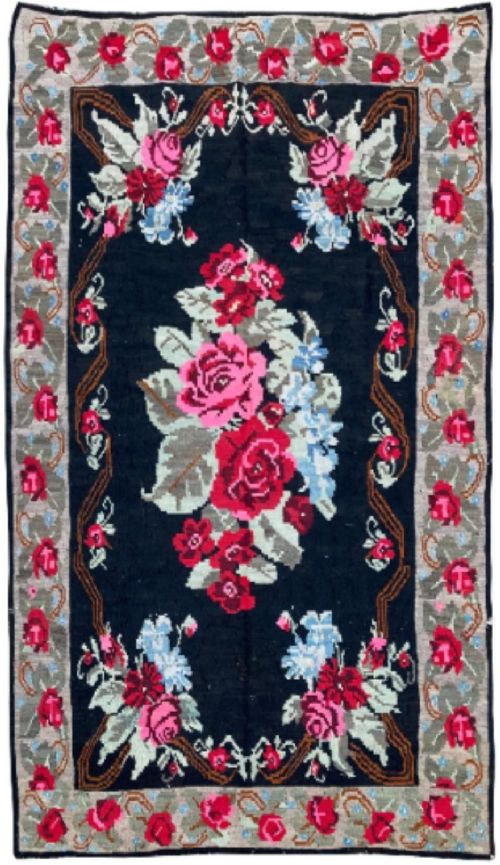
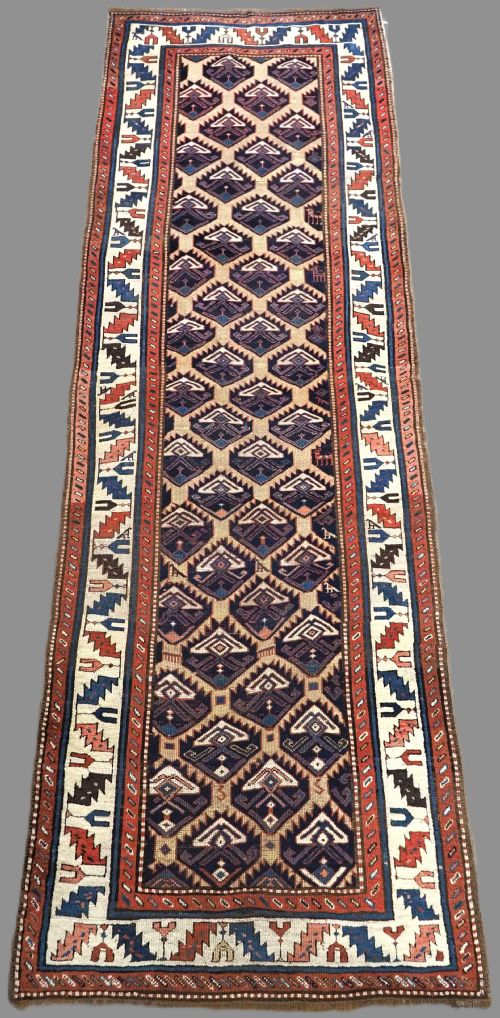
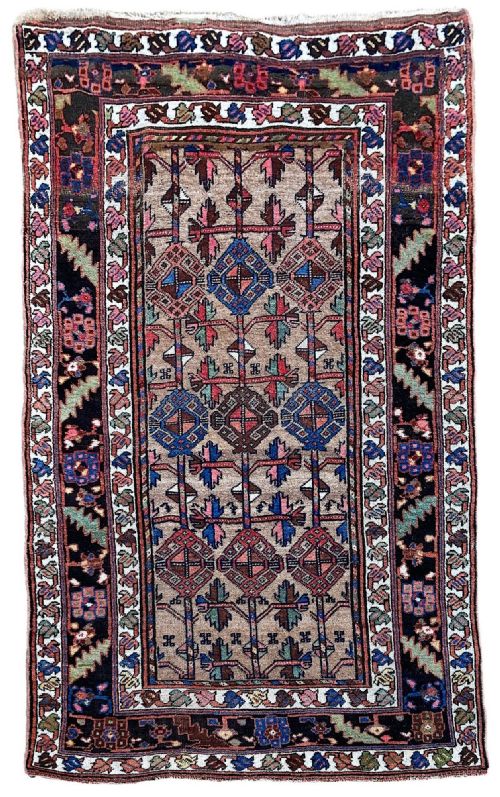

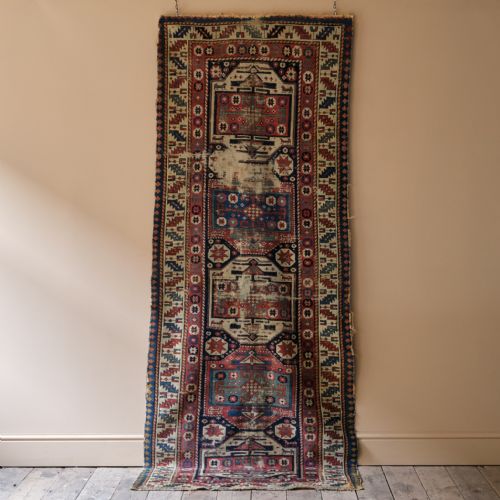
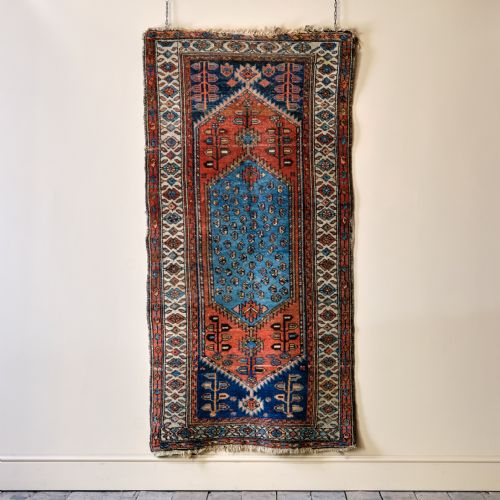


Caucasian Pattern Runner
A caucasian pattern runner brings bold geometric motifs and rich dye work straight to a hallway, offering durable warmth through traditional weaving.
Caucasian Pattern Runner
A caucasian pattern runner is a long, narrow textile designed for corridors and passages, drawing on traditional designs from regions such as Gendje, Karabagh, Kazak, and Shirvan. These pieces frequently display geometric lattices, boteh motifs, and star patterns that reflect tribal and nomadic artistry from the nineteenth and early twentieth centuries. Buyers seeking this aesthetic will encounter long formats suited to hallways, alongside related tribal formats from Kurdish and Persian traditions.
The selections span from the 1870s through to the 1930s, encompassing both flat-woven kilims and hand-knotted pile carpets. Narrow proportions dominate these floor coverings, engineered specifically to fit functional spaces while delivering strong visual impact through repeating motifs. Pieces range from crooked Kazak runners to structured Gendje and Shahsavan weaves, anchoring interior spaces with historical depth.
What varies in quality
Quality rests in the precision of the geometric execution, the clarity of the natural dyes, and the integrity of the weave. Tightly knotted piles and sharp, well-defined lattice or boteh motifs indicate superior regional craftsmanship compared to looser, simpler constructions.
The depth and vibrancy of the natural colour palette further distinguish finer examples, where skilled dyeing produces lasting richness across the wool fibres. Additionally, structural straightness and uniform narrow widths in longer formats demonstrate masterly loom work from regions like Karabagh and Shirvan.
Listings span production dates from the 1870s through to the 1930s, utilising wool, hand-spun wool, cotton, and natural dyes.
The Caucasian Pattern Runner Glossary
- Boteh
- A stylised almond, pear, or shrub motif denoting a seed or flame, frequently repeated across Caucasian and Persian runners.
- Kilim
- A flat-woven carpet or rug produced without a pile, resulting in a lightweight, reversible textile with sharp geometric patterns.
- Kazak
- A regional classification for robust, boldly patterned hand-knotted rugs originating from the Caucasus.
- Gendje
- A recognised weaving origin in the Caucasus known for structured lattice designs and colourful boteh arrangements.
- Hand-knotted
- A technique where individual strands of wool are tied by hand onto the warp threads to form a dense pile surface.
Caucasian Pattern Runner: Frequently Asked Questions
Where do caucasian pattern runners work best?
These long, narrow textiles suit hallways, corridors, and narrow passageways where traditional floor coverings add warmth and visual structure.
Their elongated proportions bridge rooms effectively while protecting high-traffic wooden or tiled floors with dense wool pile.
How do I identify a Kazak runner?
Kazak pieces typically exhibit bold geometric medallions, primary colour palettes, and heavy wool construction with a robust pile.
They share visual traits with Gendje and Karabagh weaves but lean towards larger, more assertive tribal motifs.
How should I care for an antique runner?
Protect the textile by placing a quality underlay beneath it to prevent slipping and reduce friction against the floorboards.
Vacuum gently without using rotating brush bars, and seek professional textile cleaning when required to preserve the natural dyes.