

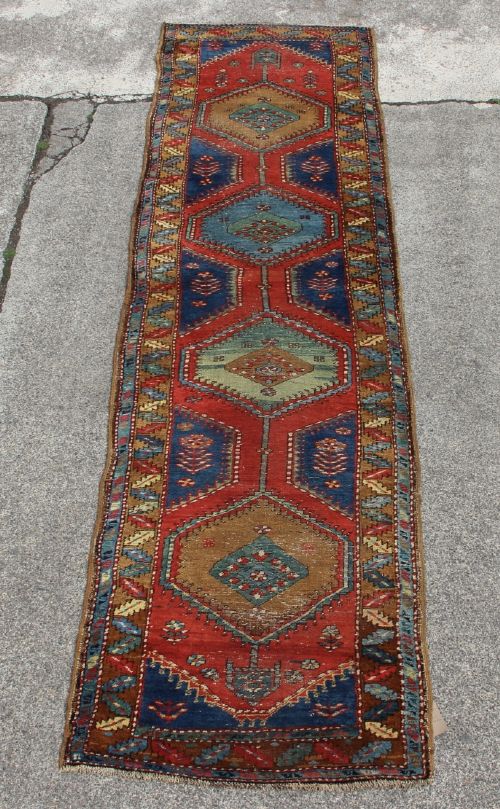


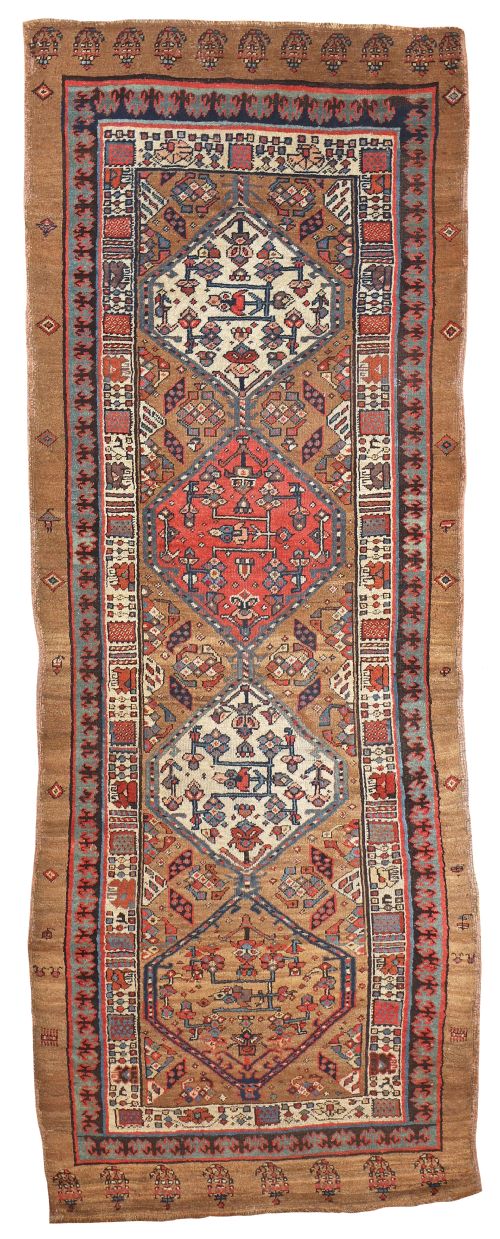


Caucasian Narrow Runner
A caucasian narrow runner brings geometric strength and deep tribal history straight to long hallways and narrow galleries.
Caucasian Narrow Runner
A caucasian narrow runner provides an elongated format defined by tribal patterns originating from nineteenth-century weaving traditions. Buyers searching for a caucasian narrow runner seek substantial hallway floor coverings that span lengths exceeding three to five metres while maintaining narrow proportions.
The selections encountered here encompass regional names such as Shirvan and Kuba alongside wider Persian tribal formats including Heriz, Kurdish, Afshar, and Sarab. These pieces serve as practical floor coverings designed originally for domestic transit spaces, utilising striking geometric motifs rather than floral court designs.
Dating ranges primarily across the late nineteenth century and into the early twentieth century, spanning from eighteen seventy to nineteen ten. The format consistently delivers heavy woolen construction combined with tribal iconography suited to high-traffic domestic environments.
Materials and Construction
These textiles rely entirely on traditional hand-knotted wool pile secured upon cotton foundations. Artisans knotted dyed wool yarns tightly to withstand generations of floor use.
Weavers employed regional wool qualities yielding dense piles, paired alongside flat-woven kilim structures where non-pile tapestry techniques were preferred. Natural dyestuffs produced the saturated indigo, madder red, and earthy tones characteristic of the period.
Caucasian Narrow Runner Retail Price Guide 2026
Typical asking prices for caucasian narrow runner among the pieces listed under this phrase on Sellingantiques today, from the lower quarter to the upper quarter. They describe what is for sale here now, not the wider market.
Listings feature woolen pile and cotton foundations spanning production dates from eighteen seventy through nineteen ten.
Distinctions in Quality
The finer examples demonstrate greater knot density, sharper execution of geometric medallions, and superior integrity of the wool pile across extreme lengths. Proportion also dictates desirability, with exceptionally long and exceptionally narrow dimensions commanding distinct architectural value.
Preservation of original selvedges and end finishes separates pieces retaining factory-fresh structural integrity from those altered by historical repairs. The clarity of natural dye colours and crispness of tribal symbols distinguish standard village work from master workshop output.
The Caucasian Narrow Runner Glossary
- Runner
- A long, narrow carpet format specifically proportioned for corridors, hallways, and staircases. It guides movement through domestic architecture.
- Kilim
- A flat-woven carpet produced without a pile by tightly interweaving warp and weft threads. This technique yields a lightweight, reversible textile.
- Pile
- The upright cut or looped wool fibres forming the usable surface of a knotted rug. Density of this layer determines durability and tactile weight.
- Medallion
- A central ornamental motif dominating the field of the textile. These geometric focal points anchor the tribal composition.
- Selvedge
- The finished side edges of a rug formed by wrapping lateral warp threads. Proper binding prevents the pile from unravelling.
Caucasian Narrow Runner: Frequently Asked Questions
Where should I place a narrow runner?
These pieces suit long corridors, entrance halls, and narrow galleries where linear floor coverage enhances narrow spaces.
Their elongated proportions bridge rooms effectively while protecting high-traffic wooden floorboards.
How do I care for antique wool runners?
Regular gentle vacuuming without rotating brush heads prevents fibre degradation and removes grit. Professional cleaning by specialists in antique textiles maintains the natural lanolin in the wool.
Using a quality underlay prevents slipping and cushions the weave against hard subfloors.
Are these runners durable for daily use?
The dense wool construction and tight knotting of nineteenth-century village pieces withstand standard domestic foot traffic.
Their historical endurance proves their practical utility for modern hallways.
How do I distinguish tribal styles?
Regional weaving groups utilised distinct palettes and geometric symbol sets passed down through generations. Shirvan and Kuba pieces lean toward crisp rectilinear panels, whereas Kurdish and Heriz designs incorporate bold medallions and earthy tones.
Examining the knotting style and edge finish reveals the specific tribal origin.