





Caucasian Boteh Carpet
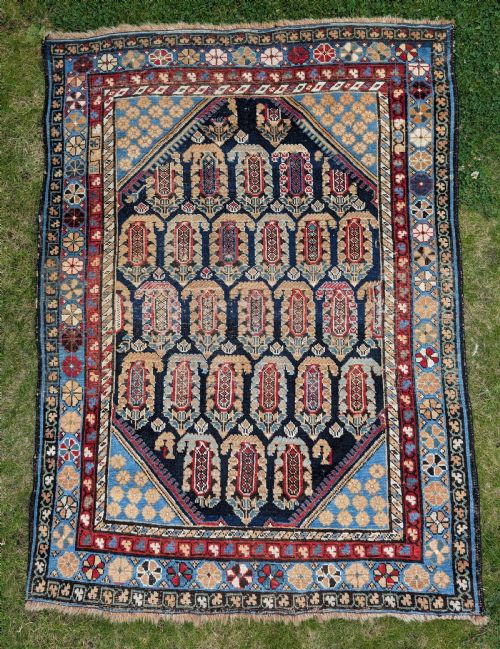
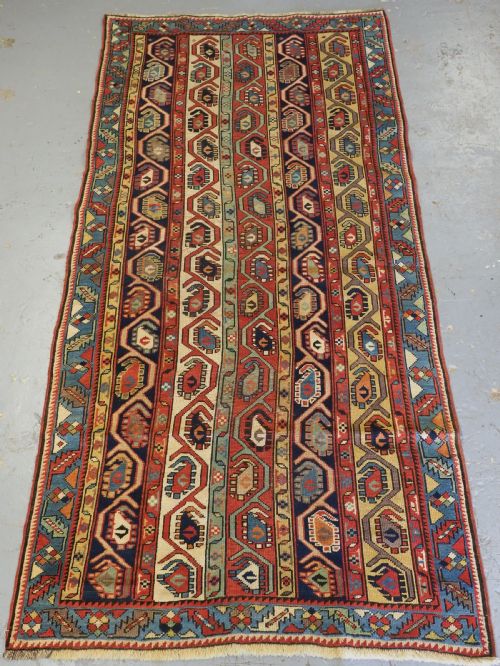
A caucasian boteh carpet brings rich village weaving into a room through geometric borders and repeating seed motifs.
Caucasian Boteh Carpet
When searching for a caucasian boteh carpet, buyers encounter hand-knotted village and tribal floor coverings originating from the Caucasus region. These textiles date from the mid-nineteenth century through to around nineteen hundred, reflecting traditional regional designs.
The most common versions on this page are runners and long rugs displaying characteristic boteh motifs, often woven in regions such as Gendje, Karabagh, and Kazak. These pieces span formats from compact area rugs to longer formats designed for hallways and galleries.
Stylistic influences range from classic Caucasian patterns to Persian tribal designs, encompassing striped layouts, diagonal arrangements, and prayer mihrabs. Each piece demonstrates the distinct regional weaving traditions of nineteenth-century Caucasian workshops.
How they were made
These carpets are constructed using hand-spun wool for the pile and foundation structure, yielding a dense and hard-wearing surface. The reliance on natural dyes produces deep, variegated tones that mellow gracefully over decades of use.
Weavers utilised traditional upright looms to tie symmetrical or asymmetrical knots, binding the woolen yarns tightly against the warp and weft threads. This meticulous knotting technique allowed makers to execute intricate geometric boteh patterns with sharp definition.
Caucasian Boteh Carpet Retail Price Guide 2026
Typical asking prices for caucasian boteh carpet among the pieces listed under this phrase on Sellingantiques today, from the lower quarter to the upper quarter. They describe what is for sale here now, not the wider market.
What varies in quality
Quality in these rugs is determined by the crispness of the drawing and the complexity of the boteh layout, whether arranged in diagonal lines, stripes, or dense fields. Finer examples display meticulous handling of secondary borders and balanced proportions.
The choice and saturation of natural dyes heavily influence visual appeal, with scarce yellow grounds or vibrant multicoloured palettes elevating the piece. Pile integrity and the retention of original outer selvedges and end finishes also distinguish superior survivals.
The Caucasian Boteh Carpet Glossary
- Boteh
- A stylised teardrop or almond-shaped motif representing a seed, floral sprout, or flame. It appears widely across Caucasian and Persian weaving traditions.
- Kazak
- A designation for rugs woven by various tribal groups in the western Caucasus, known for bold geometric designs and primary colour palettes.
- Gendje
- A town and weaving region in the southern Caucasus producing distinctive runners and long rugs with balanced geometric formats.
- Karabagh
- A highland region in the eastern Caucasus noted for striped compositions, rich natural dye colours, and expressive tribal motifs.
- Marasali
- A specific attribution for Shirvan or Caucasian prayer rugs featuring detailed small boteh patterns arranged in vertical columns.
Caucasian Boteh Carpet: Frequently Asked Questions
Where should I place a long runner?
These narrow formats suit hallways, corridors, and gallery spaces where linear floor coverage enhances the room layout. Their sturdy construction handles moderate foot traffic well.
Ensure you use an appropriate underlay to protect the historic wool foundation and prevent slipping on smooth timber or stone floors.
How do I clean an antique wool rug?
Gentle surface brushing and careful vacuuming without a rotating beater bar remove loose grit from the pile. Professional textile conservators should handle deep washing.
Keep these natural dye wool pieces away from prolonged direct sunlight to prevent fading of the historic colours over time.
What does a boteh motif represent?
The motif symbolises life, eternity, and vegetation, often interpreted as a stylised cypress tree bending in the wind or a sprouting seed. It remains a foundational element in Near Eastern textile design.
Weavers arranged these symbols in rows, diagonal bands, or dense fields to create rhythmic visual movement across the rug surface.
How can I tell a Gendje from a Karabagh?
Gendje rugs frequently feature structured field patterns and crisp geometric borders, while Karabagh pieces often showcase striped layouts or varied colour grounds. Both originate from distinct nineteenth-century Caucasian weaving centres.
Comparing the specific wool texture, dye palette, and secondary guard stripes helps clarify the regional attribution.