



Catholic Gold Medal
A catholic gold medal brings small devotion into bright focus through French artistry spanning the late nineteenth to mid-twentieth centuries.
Catholic Gold Medal
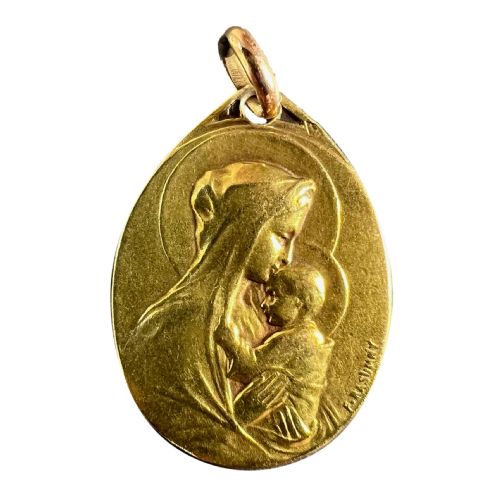
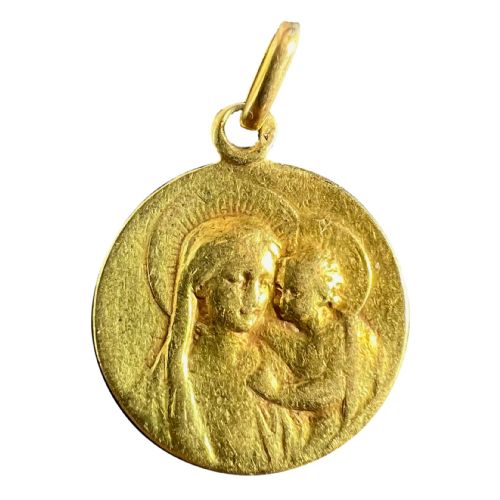
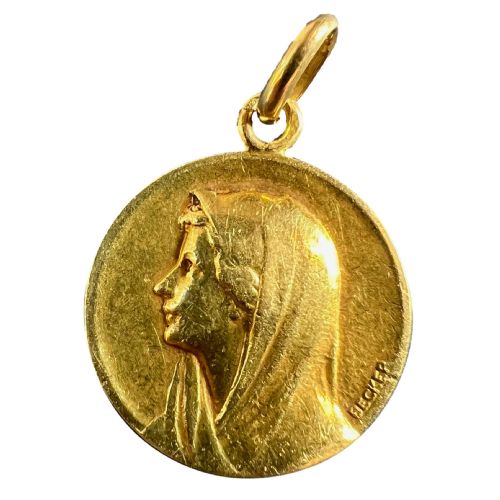
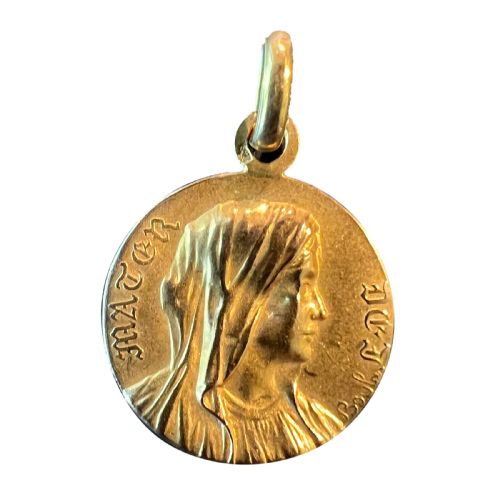
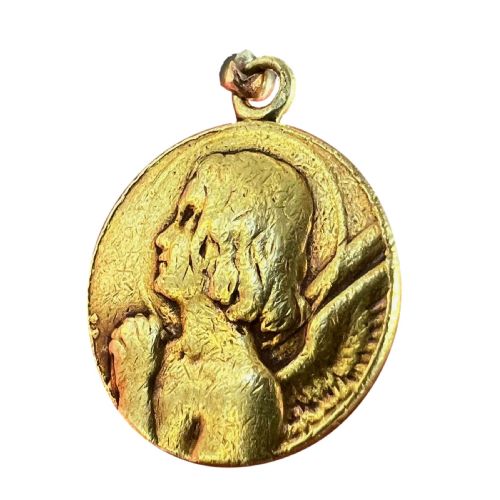
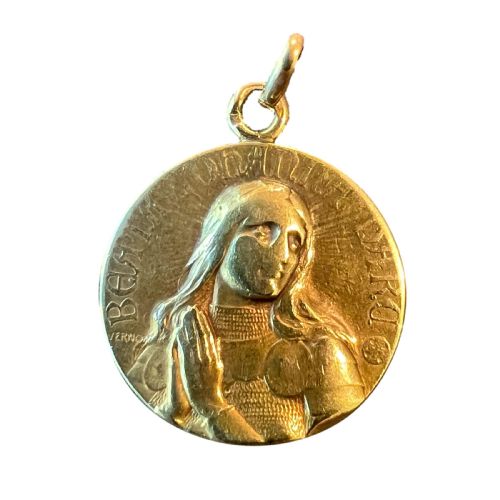
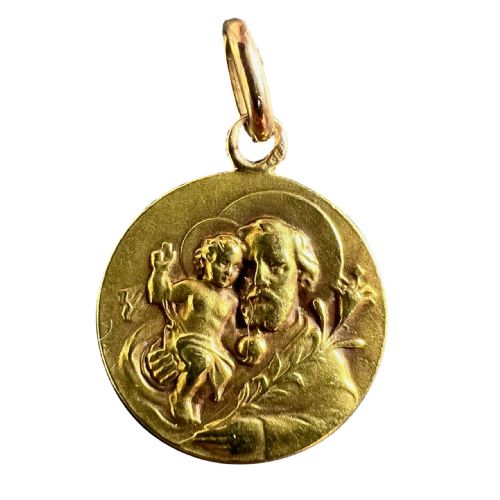
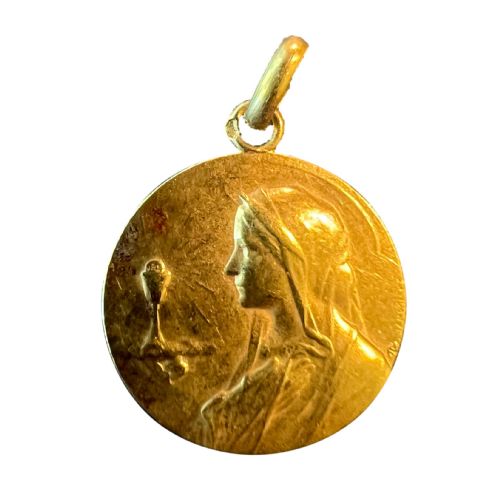
A catholic gold medal on this page typically takes the form of a pendant or charm designed for devotional wear. These pieces originate predominantly from French workshops active across several decades from eighteen-ninety to nineteen-fifty, reflecting distinct religious iconography.
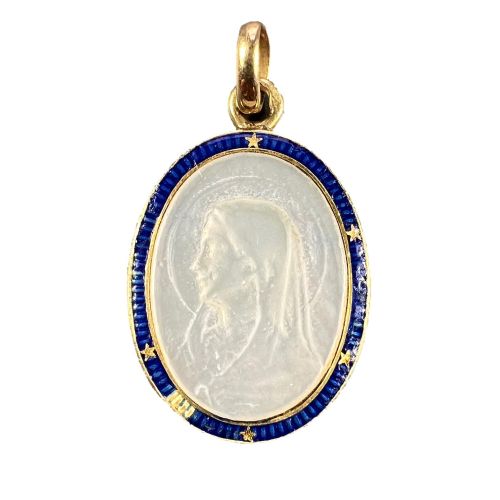
The most common version met here depicts the Virgin Mary, the Madonna and Child, or figures such as Saint Christopher and Saint John the Baptist. Makers utilised yellow gold, rose gold, and occasionally white gold to shape oval and circular medallions destined for necklaces.
Art Nouveau and French devotional styles dominate the selection, bringing floral motifs and radiant sunburst designs together with sacred subjects. Buyers encounter items that combine traditional imagery with the decorative sensibilities of early twentieth-century jewellery.
Materials and Technique
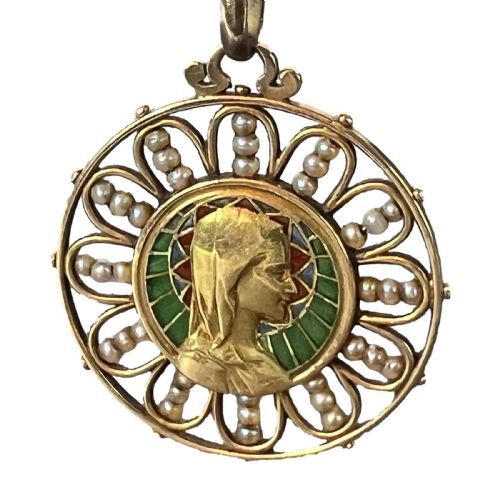
Goldsmiths constructed these medals primarily in eighteen-karat yellow and rose gold, providing a warm metallic ground for detailed engraving and relief work. Artisans applied specialised techniques such as plique-à-jour enamel to create translucent coloured sections that catch the light behind holy figures.
Catholic Gold Medal Retail Price Guide 2026
Typical asking prices for catholic gold medal among the pieces listed under this phrase on Sellingantiques today, from the lower quarter to the upper quarter. They describe what is for sale here now, not the wider market.
Listings span seven decades from eighteen-ninety to nineteen-fifty, showcasing consistent French production in eighteen-karat yellow, rose, and white gold.
Craftsmanship and Detail
Quality separates through the crispness of the artisan's relief work and the complexity of decorative embellishments like enamel or pearl work. Superior examples display sharply defined facial expressions on figures and precise placement of translucent enamel panels.
The integration of materials such as mother of pearl and seed pearls influences the overall finish, where secure stone settings and balanced proportions distinguish finer studio output from standard production.
Emile Monier·Mazzoni·Pageli Perriat·Dropsy·Guilbert·Vernon·Sellier·Tairac·Pageri Perroud·Becker
The Catholic Gold Medal Glossary
- Plique-a-jour
- An enamelling technique where enamel is applied without a backing, resembling miniature stained glass. This method allows light to pass directly through the translucent coloured sections.
- Mother of pearl
- The iridescent internal layer of mollusc shells used as a backing or base for gold reliefs. It introduces a subtle shimmering depth behind the central figures.
- Seed pearl
- Very small natural or cultured pearls integrated into jewellery decoration. They often accent the outer borders of religious medals.
- Sacred Heart
- A devotional representation of the physical heart of Jesus Christ as a symbol of divine love. It frequently appears alongside flames and radiating sunburst motifs.
Catholic Gold Medal: Frequently Asked Questions
What is a catholic gold medal?
A catholic gold medal is a small religious pendant fashioned from gold, typically worn around the neck for personal devotion. These pieces often depict sacred figures such as the Virgin Mary or specific saints.
Created primarily in France during the late nineteenth and early twentieth centuries, they combine spiritual iconography with fine metalwork and decorative enamel.
How were these medals worn?
Wearers suspended these items from chains as pendants or attached them to charm bracelets alongside other personal tokens. Their compact size made them suitable for daily close wear against the body.
Many incorporate integrated loops or rings specifically designed for attachment to neckchains or devotional beads.
How do I identify the period?
Dating relies on stylistic clues such as Art Nouveau curves, maker signatures stamped into the metal, and specific material combinations. Pieces from eighteen-ninety often show different engraving styles compared to items from nineteen-fifty.
France was the primary source for the medals listed here, with distinct artistic movements influencing each decade from nineteen-ten onwards.
What materials are used?
These items utilise eighteen-karat yellow gold, rose gold, and occasionally white gold as the primary structural metal. Artisans frequently added mother of pearl, seed pearls, and enamel to enhance the visual impact.
The combination of polished precious metal with translucent enamel creates distinct contrasts characteristic of French devotional jewellery.