
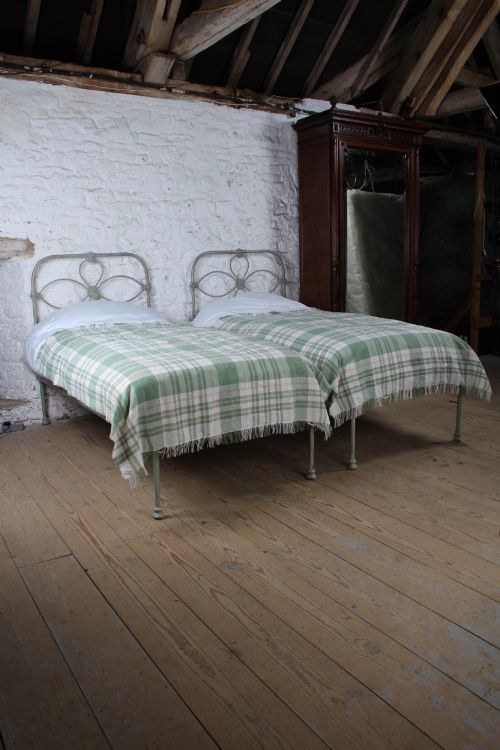


Cast Metal Single Bed
A cast metal single bed brings enduring nineteenth and early twentieth century character into a compact sleeping space through robust iron and polished brass construction.
Cast Metal Single Bed
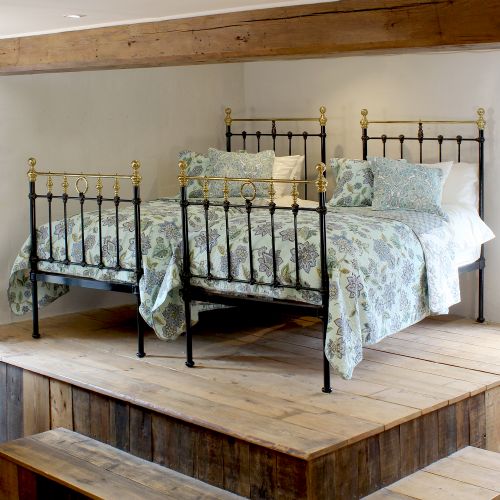
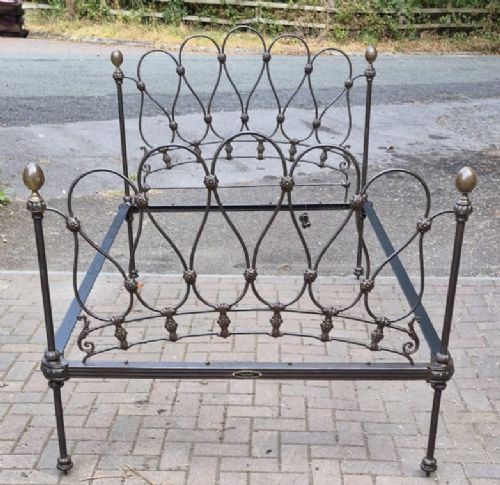
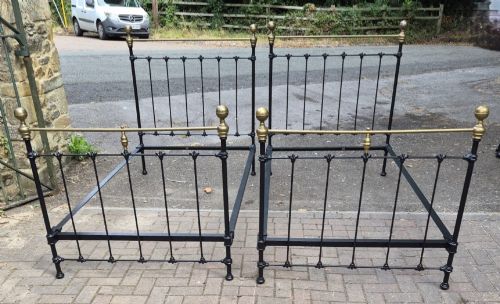
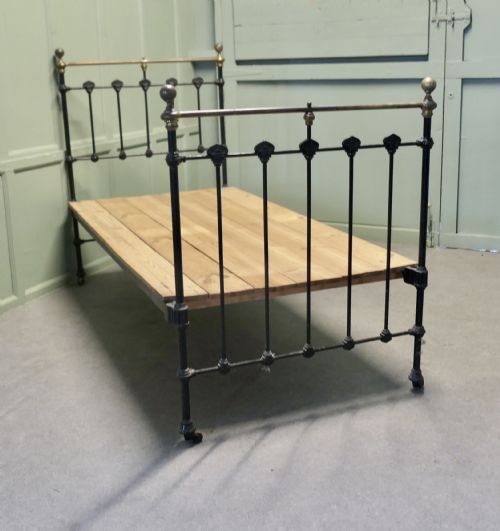
A cast metal single bed is a sturdy sleeping frame designed for one person, incorporating structural metal work typical of the Victorian, Edwardian and early twentieth century periods. These pieces appear in forms such as bedsteads, bed frames and platform beds, often measuring three feet wide.
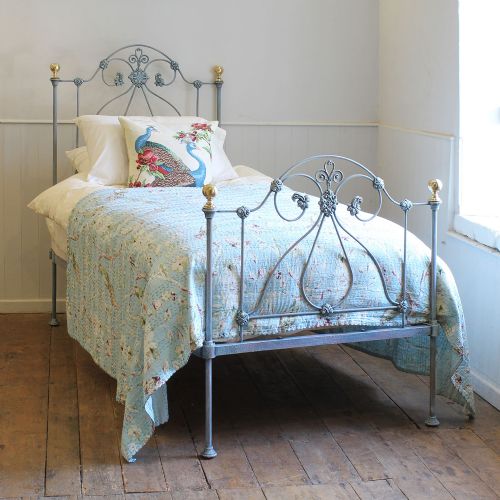
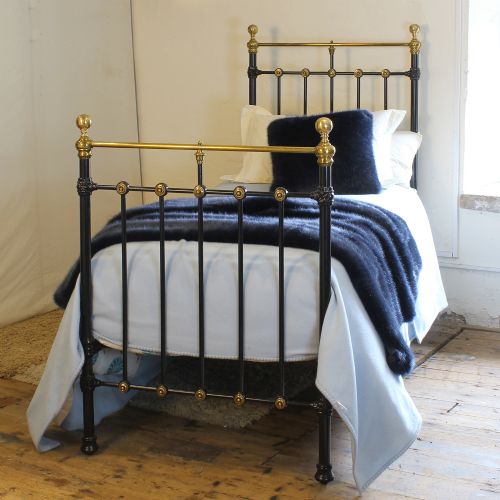
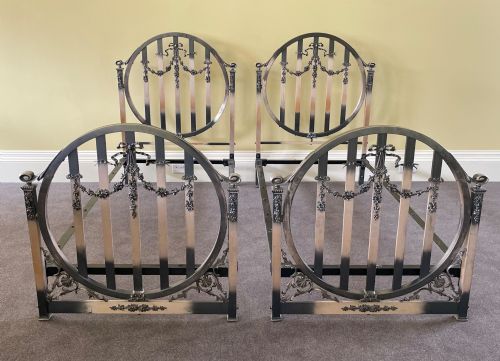
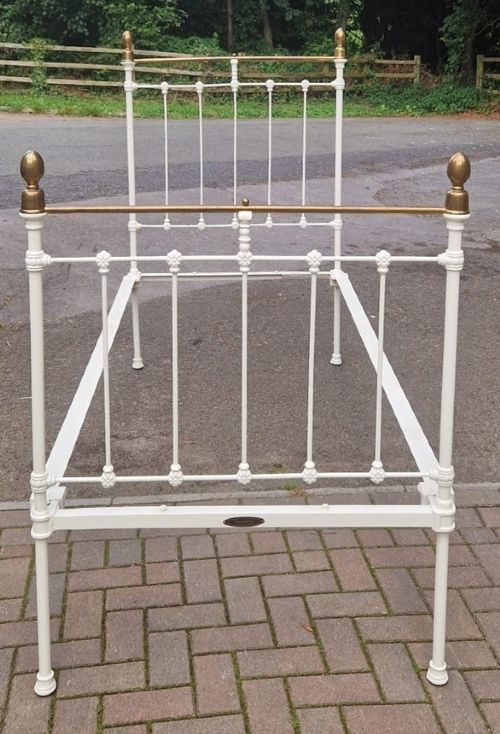
Makers utilised durable metals to create single beds that range from plain, utilitarian iron frames to ornate combinations of cast iron and shining brass. Many survive in painted finishes including black, cream and blue verdigris, alongside bright nickel plating.
Buyers seeking a cast metal single bed frequently encounter matching pairs and designs that can be joined together or fitted with rings and Celtic motifs. The selections span from the middle decades of the nineteenth century up to nineteen twenty.
Materials and construction methods
Makers built these frames using heavy cast iron and wrought iron for structural integrity, often pairing them with gleaming brass components and decorative fittings. Nickel plating and hand forged elements also feature prominently across the inventory.
Surfaces were finished with protective paint in tones like black and cream, or left as polished metal, occasionally accented with ceramic details.
Construction involved joining durable metal parts to form stable headboards and footboards, creating single beds sturdy enough to endure for generations.
The inventory spans from eighteen fifty to nineteen twenty, covering Victorian and Edwardian periods with materials including cast iron, brass and ceramic.
Distinctions in quality and execution
Quality in a cast metal single bed rests upon the weight and complexity of the metalwork, distinguishing standard utility frames from finer examples featuring substantial brass decorations and intricate castings.
Finer pieces display careful attention to joint construction and decorative elements such as brass finials and applied rings, while simpler utilitarian models rely on straightforward, unadorned iron tubing.
Maker attribution elevates certain pieces, particularly marked works from established firms like R W Winfield, which combine robust engineering with refined aesthetic detailing.
R W Winfield
The Cast Metal Single Bed Glossary
- Bedstead
- The complete framework of a bed, including headboard, footboard and side rails, designed to support a mattress. These metal examples rely on sturdy iron or brass components.
- Cast iron
- Molten iron poured into a mould to create rigid, durable shapes with decorative detail. It forms the heavy structural core of many nineteenth century sleeping frames.
- Wrought iron
- Iron beaten and worked into shape by hand, valued for its toughness and fibrous structure. It appears in hand forged elements across various period frames.
- Nickel plating
- A protective and decorative coating of nickel applied to a metal base to give a bright, silvery finish. This technique adds a polished sheen to Edwardian frames.
- Verdigris
- A green patina formed naturally on copper, brass or bronze through atmospheric oxidation. On these listings, it appears as a specific blue verdigris surface colour.
Cast Metal Single Bed: Frequently Asked Questions
Can these single beds be taken apart easily?
Most period metal beds utilise wedge and socket joints on the side rails, allowing the headboard and footboard to detach completely for transport.
This modular construction makes moving and assembling these heavy iron frames straightforward in modern homes.
Do standard modern mattresses fit these antique frames?
Many listings specify a three foot width, which aligns closely with standard modern single mattresses, though older frames can vary slightly in dimensions.
Buyers should verify the exact internal measurements between the side rails before purchasing a contemporary mattress.
How do I care for the painted iron finish?
Painted iron surfaces require gentle dusting with a dry or slightly damp cloth to prevent moisture accumulation.
Avoid harsh chemical cleaners that might strip the historic paintwork, whether it is original black, cream or verdigris.
How do I distinguish Victorian from Edwardian metal beds?
Victorian models often feature heavier cast iron construction with robust brass finials and darker painted finishes, dating from the mid to late nineteenth century.
Edwardian examples frequently introduce lighter proportions, art nouveau influences or bright nickel plating reflective of early twentieth century tastes.