

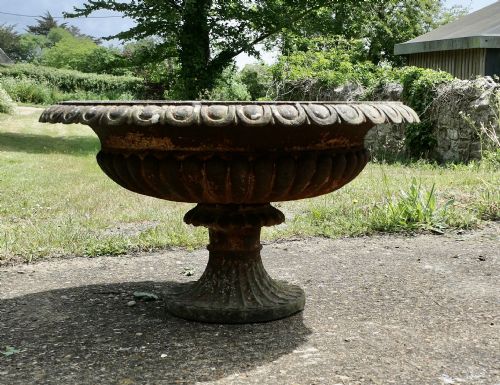

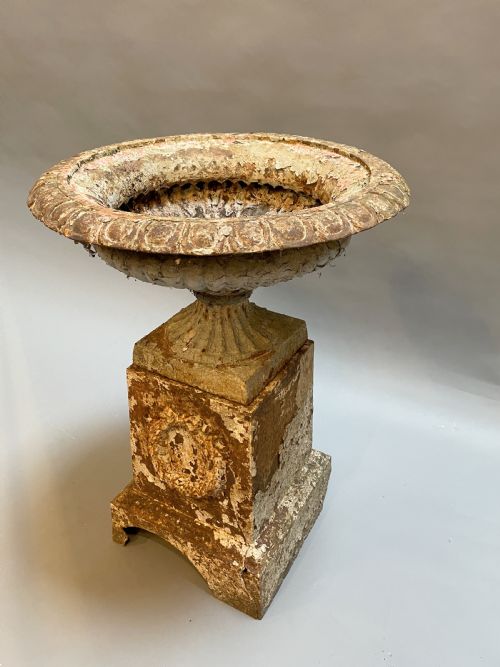
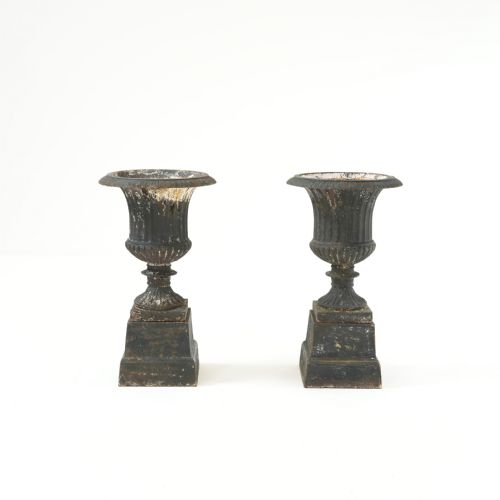


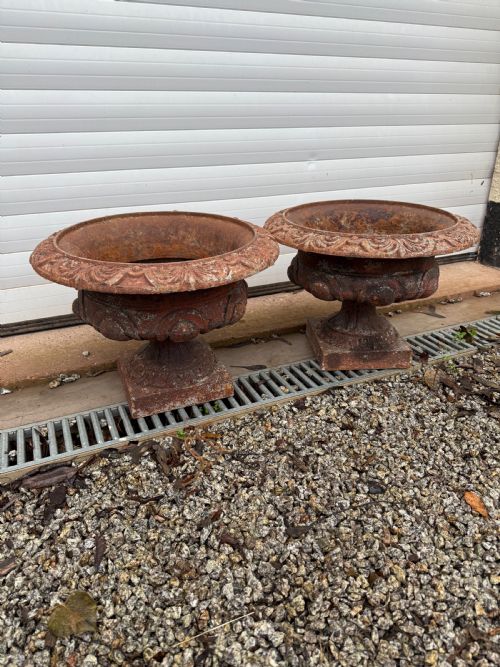

Cast Iron Pedestal Urn
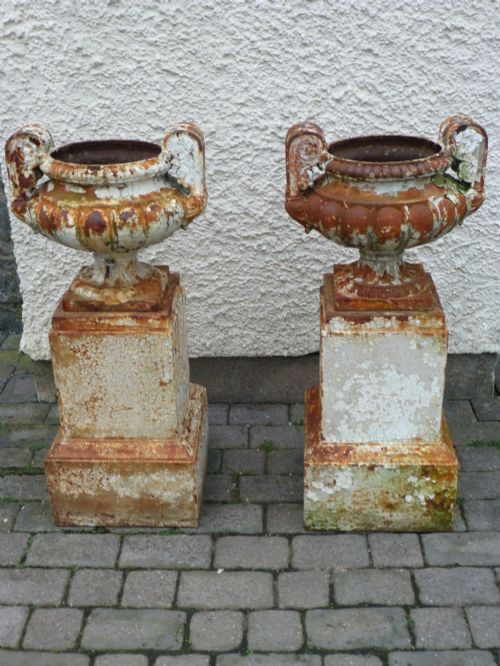
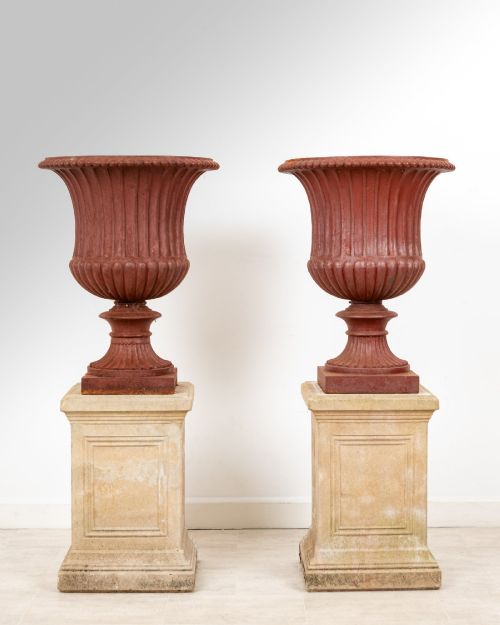
These cast iron pedestal urns are substantial garden ornaments designed to elevate outdoor planting with classical form.
Cast Iron Pedestal Urn
A cast iron pedestal urn is a heavy metal vessel raised upon a matching plinth or stand, designed primarily for garden display and outdoor planting. You will most frequently encounter nineteenth century and Victorian examples shaped in the classical campana silhouette, often offered in matched pairs.
The selection ranges across several periods including Regency, Georgian, and Edwardian eras, alongside pieces dated around eighteen sixty, nineteen ten, and nineteen twenty. Makers such as Falkirk Carron, Coalbrookdale, and Andrew Handyside appear among these heavy metal garden ornaments.
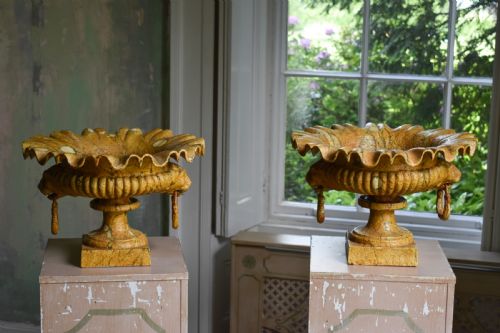
Forms span from simple garden planters and jardiniere vessels to gadrooned urns resting on stone pedestals or integral plinth bases. These sturdy vessels serve to anchor terrace corners and frame garden pathways with enduring architectural weight.
Materials and construction
Foundries produced these pieces using molten iron poured into sand moulds, creating thick metal walls capable of withstanding decades of outdoor exposure. Many surviving examples retain layers of old paint applied to protect the metal from weathering.
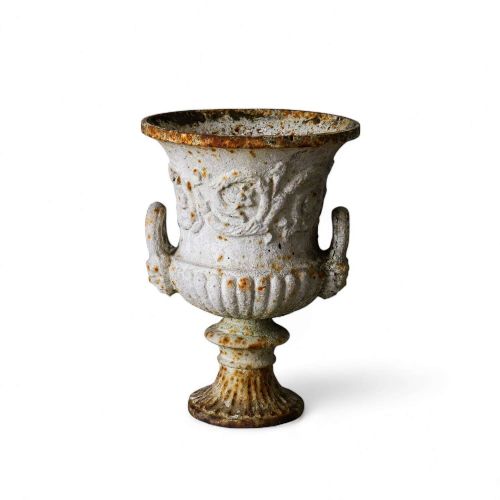
Certain models incorporate complementary materials, pairing the heavy metal bowls with stone pedestals or plinth bases to elevate the planting height. The casting process allowed for crisp decorative details like acanthus leaves and gadrooning to emerge directly from the metal.
Listings feature items from the Georgian, Regency, Victorian, and Edwardian periods, constructed primarily from cast iron with occasional stone elements.
Assessing quality
Quality rests in the crispness of the cast ornament, where sharply defined acanthus foliage and deep gadrooning distinguish superior foundry work from softer, worn impressions. The presence of an original matching plinth or stand elevates a piece, as complete matched pairs hold greater sculptural presence.
The weight and thickness of the iron contribute significantly to desirability, alongside documented foundry marks from notable makers like Coalbrookdale or Andrew Handyside. Surface preservation also matters, with weathered paint and honest oxidation showing a long history of outdoor use.
Falkirk Carron foundry·Coalbrookdale·Andrew Handyside
The Cast Iron Pedestal Urn Glossary
- Campana urn
- A bell-shaped garden vessel with an everted rim, widely produced in iron and stone during the nineteenth century. This classic profile resembles an inverted bell.
- Plinth base
- A square or rectangular block that elevates an urn above ground level, providing a solid foundation for display. Many period examples sit upon these matching supports.
- Gadrooning
- A decorative carved or cast band of convex curves or fluting that ornaments the lower body of an urn. This classical motif adds texture and visual rhythm to the metal surface.
- Jardiniere
- A large ornamental pot or container intended to hold growing plants or flowers. These garden vessels often share the classic proportions of pedestal urns.
- Acanthus leaf
- A classical ornamentation motif modeled after the leaves of the Mediterranean plant, frequently cast into the bowls of Victorian urns. It provides a rich, organic border around the rim or base.
Cast Iron Pedestal Urn: Frequently Asked Questions
How do I care for a cast iron urn?
Keep the metal coated with suitable outdoor paint to prevent deep corrosion from compromising the structural integrity over decades of garden exposure.
Ensure proper drainage inside the bowl so standing water and freezing winter ice do not expand and crack the heavy metal walls.
Were these urns meant for indoor use?
Period pieces were cast primarily for outdoor display on terraces, lawns, and garden pathways where their heavy weight provided stability against wind and weather.
Interior placement occurred occasionally in grand entrance halls or conservatories, though their substantial iron construction suited exterior architecture best.
How can I date a cast iron urn?
Examine the surface texture, casting seams, and stylistic details such as Victorian acanthus moulding or Regency proportions to determine the likely period of manufacture.
Foundry stamps or registration marks can occasionally provide a more precise year or maker, though many older pieces bear only generic numbers.
Can these urns stay outside in winter?
Cast iron handles cold temperatures well, but trapped soil moisture freezing inside the vessel can exert immense pressure on the old metal walls.
Protect the urns by emptying heavy compost during freezing months or ensuring the drainage holes remain completely clear of debris.